Alexander Fleming’s name appears on countless hospital plaques and medical textbooks, but the man behind penicillin’s discovery was far from the methodical scientist one might expect. A Scottish bacteriologist with a talent for observation and a notoriously messy laboratory, Fleming stumbled upon what would become the most important medical breakthrough of the 20th century through a combination of accident, insight, and stubborn curiosity.
The Accidental Revolutionary
Born in rural Ayrshire, Scotland, in 1881, Fleming took an unconventional path to scientific fame. After working as a shipping clerk in London, he used a small inheritance to attend medical school at St. Mary’s Hospital. His early career was unremarkable—he joined the hospital’s research department in 1906, served in World War I as a military doctor, and returned to study bacteria and wound infections. Fleming was known among colleagues for two things: his skill with a rifle (he had joined the research team partly to stay on their shooting club) and his chronically disorganized workspace.
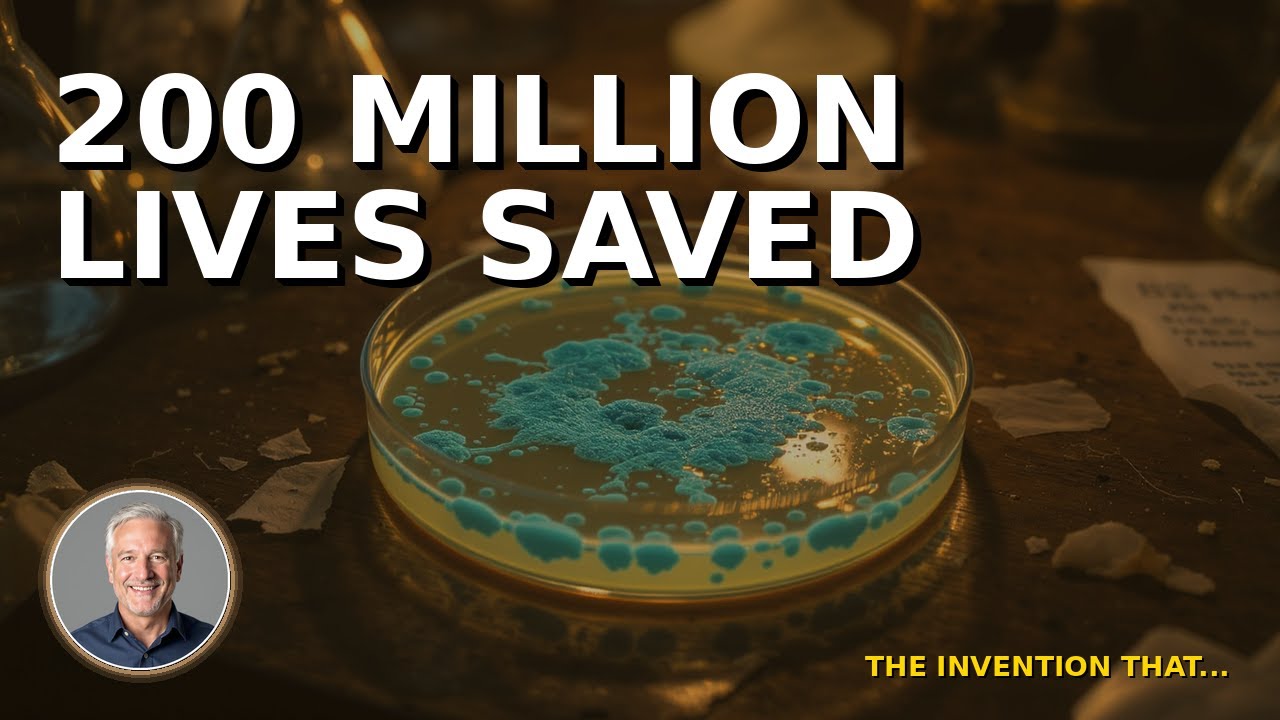
On September 3, 1928, that messy laboratory became the site of medical history. Fleming had left a stack of bacterial culture plates on his bench before departing for a vacation. Upon his return, most researchers would have simply discarded the contaminated dishes. Fleming, however, noticed something peculiar: a mold had contaminated one of his Staphylococcus cultures, and around the mold, the bacteria had mysteriously died. Instead of throwing away the ruined experiment, he studied it.
From Mold to Medicine
Fleming identified the contaminating mold as belonging to the genus Penicillium and discovered that it produced a substance lethal to many dangerous bacteria. He named this substance penicillin and published his findings in 1929. Yet here lies one of history’s great ironies: Fleming, despite making the initial discovery, lacked the chemical expertise and resources to develop penicillin into a practical medicine. His early attempts to purify and concentrate the substance failed, and medical interest remained minimal.
The true transformation of penicillin from laboratory curiosity to life-saving drug would require the work of Howard Florey and Ernst Boris Chain at Oxford University more than a decade later. In 1940, facing the medical demands of World War II, Florey’s team successfully purified penicillin and demonstrated its remarkable effectiveness in treating bacterial infections. By 1943, mass production was underway, primarily in American pharmaceutical facilities.
The timing proved crucial. Before penicillin, bacterial infections killed indiscriminately—pneumonia claimed one in three victims, and simple wounds could prove fatal through sepsis. During World War II, penicillin reduced death rates from bacterial pneumonia from 18% to less than 1%. Soldiers who would have died from infected wounds survived to return home.
The Antibiotic Age
Fleming’s accidental discovery launched the antibiotic age, fundamentally altering human civilization’s relationship with infectious disease. Diseases that had terrorized humanity for millennia—tuberculosis, syphilis, scarlet fever, pneumonia—suddenly became treatable conditions rather than death sentences. The discovery enabled more aggressive surgical procedures, as post-operative infections became manageable. It facilitated population growth, extended life expectancy, and freed medical resources to tackle other challenges.
Fleming, Florey, and Chain shared the 1945 Nobel Prize in Physiology or Medicine, though Fleming received the lion’s share of public recognition. He spent his later years warning about antibiotic resistance, presciently noting that bacteria could adapt to overcome penicillin’s effects—a prediction that proved remarkably accurate as resistant strains emerged within decades.
Fleming died in 1955, but his legacy extends far beyond a single discovery. Penicillin is estimated to have saved over 200 million lives, making Fleming’s messy laboratory accident arguably the most consequential scientific observation in human history. His story reminds us that breakthrough discoveries often emerge not from grand designs, but from prepared minds recognizing the significance of unexpected results.