The City That Died
50,000 People Were Given 3 Hours to Leave Forever
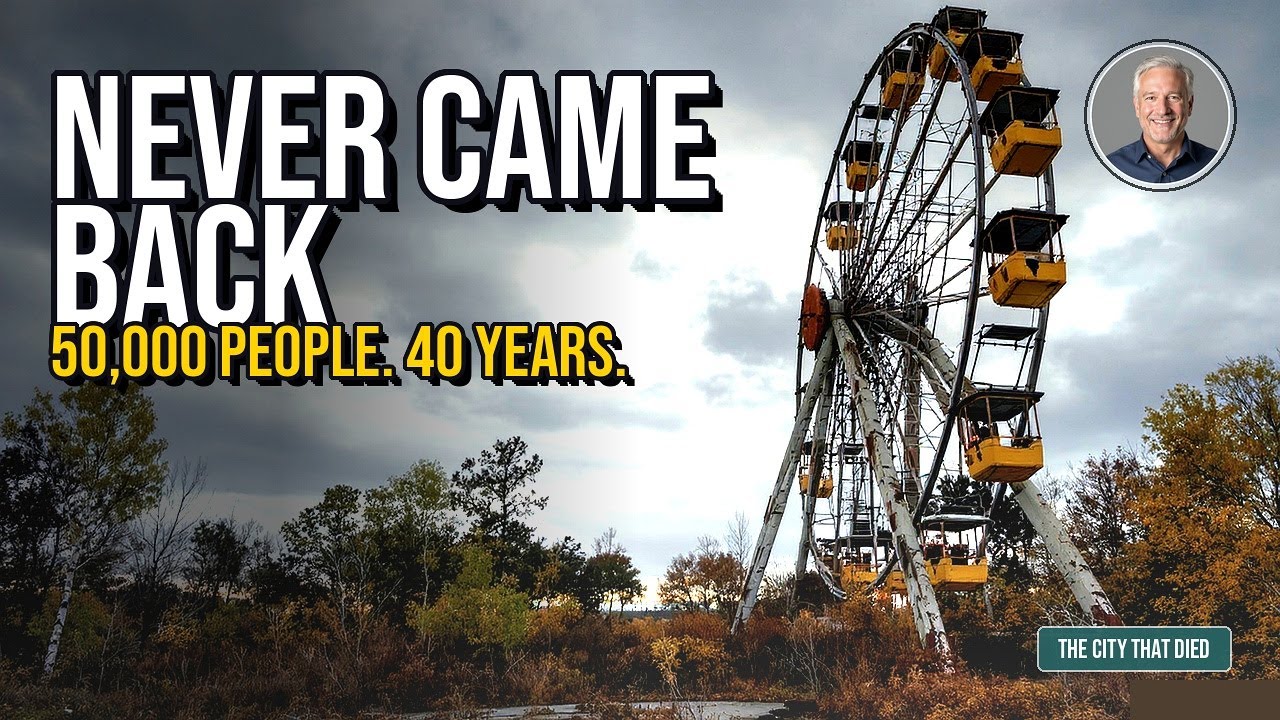
The amusement park was scheduled to open on May 1, 1986 — five days after the disaster. It never welcomed a single child.
Chernobyl nuclear disaster supervisor
1931-1995
Appears in 1 documentary
Anatoly Stepanovich Dyatlov remains one of the most controversial figures in the history of nuclear power. As deputy chief engineer at the Chernobyl Nuclear Power Plant, his decisions on the night of April 26, 1986, contributed to the world’s worst nuclear disaster. Yet his story reveals not just individual failings, but the systemic problems that made catastrophe inevitable in the Soviet nuclear program.
Born in 1931 in the Krasnoyarsk region of Siberia, Dyatlov embodied the Soviet Union’s faith in nuclear technology. He graduated from the Moscow Engineering Physics Institute in 1959, joining the first generation of Soviet nuclear engineers tasked with proving their system’s superiority over the West. His early career included work on nuclear submarine reactors, where he survived a serious radiation accident in 1961 that hospitalized him for months—an experience that paradoxically may have made him less cautious about radiation risks.
By the 1970s, Dyatlov had risen through the ranks to become deputy chief engineer at Chernobyl, one of the Soviet Union’s flagship nuclear facilities. He was known for his technical competence and unwavering confidence in Soviet reactor design. This confidence would prove fatal. The RBMK reactors at Chernobyl had serious safety flaws, including a tendency to surge when control rods were inserted during certain conditions—a design secret kept even from the plant’s operators.
On April 25-26, 1986, Dyatlov supervised a safety test on Reactor 4 that spiraled into catastrophe. The test, designed to determine if the reactor’s turbines could provide emergency power during a blackout, had been delayed and was running behind schedule. Despite mounting technical problems and subordinates’ concerns, Dyatlov insisted the test continue. His authoritarian management style, typical of Soviet hierarchies, silenced dissent in the control room.
When operators reported dangerous conditions, Dyatlov dismissed their warnings. “I was responsible for everything,” he later acknowledged, but his memoirs reveal a man who never fully grasped how Soviet nuclear culture—with its emphasis on meeting deadlines over safety, its suppression of design flaws, and its punitive atmosphere—created the conditions for disaster. At 1:23 AM, Reactor 4 exploded, releasing radioactive material across Europe and forcing the evacuation of over 100,000 people.
Dyatlov was sentenced to ten years in prison for criminal negligence, serving five before his release in 1991. He spent his final years writing memoirs that blamed the reactor’s design rather than his own decisions—a perspective that, while self-serving, contained important truths about systemic failures in Soviet nuclear engineering.
His story illuminates how individual responsibility intersects with institutional dysfunction. While Dyatlov’s arrogance and poor judgment were undeniable, he was also a product of a system that prioritized political goals over safety, concealed design flaws from operators, and created a culture where admitting problems was career suicide. The disaster exposed not just the dangers of nuclear power when mismanaged, but the broader failures of Soviet technical culture in its final decades.
Dyatlov died in 1995, his health destroyed by radiation exposure from both the 1961 submarine accident and Chernobyl. His legacy serves as a cautionary tale about the human factors in technological disasters—how individual failings, institutional pressure, and systemic secrecy can combine with devastating consequences. The lessons of his story remain relevant wherever complex technologies intersect with human decision-making under pressure.
Provides the most detailed account of Dyatlov's role in the disaster, based on extensive interviews and archival research.
Uses newly declassified Soviet archives to examine how institutional failures enabled Dyatlov's fatal decisions.
Includes testimony from plant workers who witnessed Dyatlov's actions during the disaster firsthand.
The amusement park was scheduled to open on May 1, 1986 — five days after the disaster. It never welcomed a single child.