The Scientist Who Challenged Authority
Beverly Paigen was a cancer research biochemist at Roswell Park Cancer Institute when the Love Canal crisis erupted in 1978. Unlike the government health officials who dismissed residents’ concerns, Paigen possessed both the scientific credentials and moral courage to validate what families were experiencing. When housewife-turned-activist Lois Gibbs approached her with health surveys showing patterns of illness, Paigen didn’t retreat behind institutional walls—she analyzed the data and confirmed residents’ worst fears.
Paigen’s involvement transformed Love Canal from a local nuisance into a national emergency. Her scientific analysis revealed that families living closest to former creek beds and swales—the underground pathways where chemicals had migrated—suffered dramatically higher rates of miscarriages, birth defects, and childhood illnesses. When she presented these findings in August 1978, state health officials attacked her methodology rather than address her conclusions. The New York State Department of Health accused her of conducting “studies that cannot be taken seriously by the scientific community.”
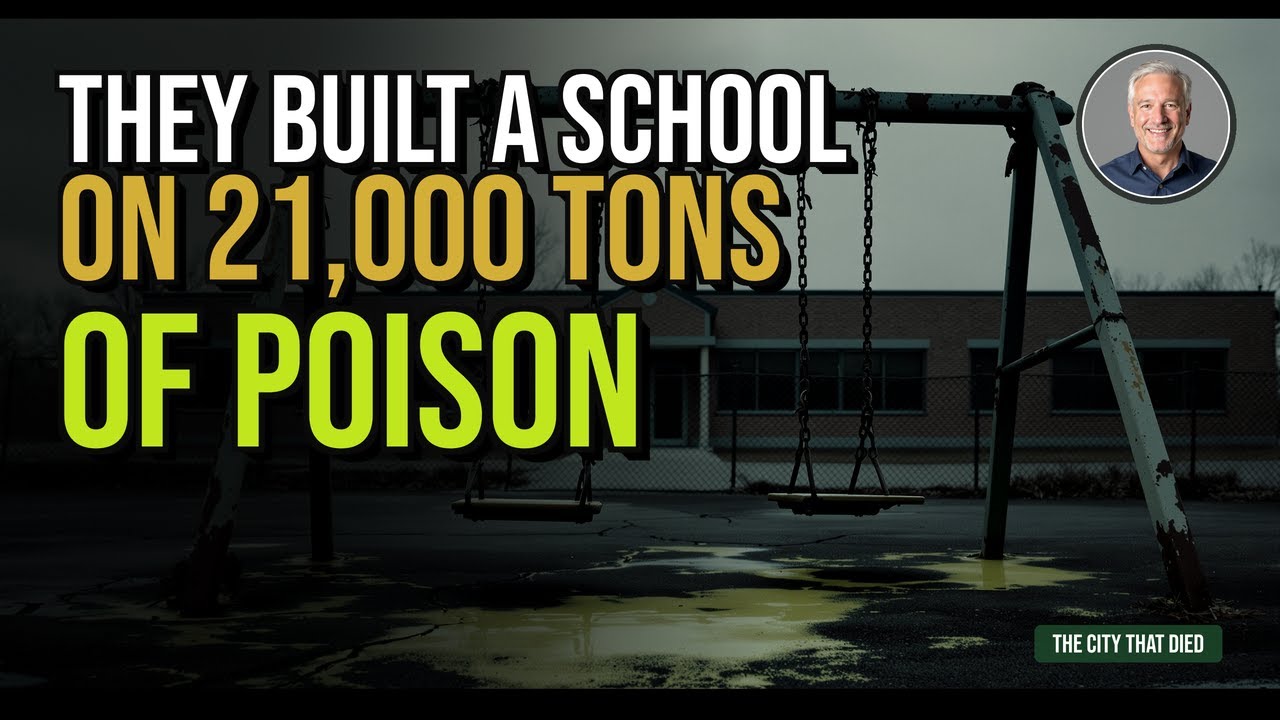
But Paigen refused to back down. She understood that traditional epidemiological studies—which might take decades to complete—were inadequate when families were living on top of 21,000 tons of buried chemical waste. Children were developing rare liver disorders. Pregnant women were suffering miscarriages at three times the normal rate. The time for cautious, peer-reviewed analysis had passed.
Scientific Courage Under Fire
Paigen’s decision to support Love Canal residents came at enormous personal cost. Her supervisors at Roswell Park pressured her to distance herself from the controversy. State officials questioned her competence and suggested her research was compromised by advocacy. The scientific establishment—comfortable with gradual processes and institutional hierarchies—viewed her public statements as unseemly activism.
Yet Paigen recognized what many of her colleagues missed: science serves no purpose if it cannot protect public health when protection is desperately needed. Her willingness to translate complex chemical exposure data into terms families could understand bridged the gap between laboratory research and lived experience. She attended community meetings, explained health risks in plain language, and provided residents with the scientific credibility their fight required.
Her support proved crucial when President Carter declared Love Canal a federal emergency in August 1978, authorizing the evacuation of 239 families. But Paigen’s work continued as officials debated whether to evacuate an additional 710 families in the outer ring. Her ongoing health studies documented continued risks, contributing to Carter’s second emergency declaration in May 1980 that relocated all remaining families who wanted to leave.
Legacy of Scientific Advocacy
Paigen’s courage at Love Canal helped establish a new model of scientific responsibility in environmental health crises. She demonstrated that researchers have obligations beyond publishing papers—they must speak truth to power when public health is at stake. Her work influenced the creation of the Superfund program in 1980, which has since cleaned up over 400 toxic waste sites across America.
More broadly, Paigen’s example inspired a generation of scientists to engage directly with affected communities rather than limiting themselves to academic journals. Her approach—combining rigorous analysis with clear public communication—became a template for environmental health advocacy. She showed that scientific expertise carries moral weight, and that expertise unused in moments of crisis becomes complicit in harm.
Beverly Paigen proved that sometimes the most important scientific work happens not in laboratories, but in elementary school gyms where frightened parents seek answers their government won’t provide.