Capt. George Williams

Captain of the SS Sultana disaster

Appears in 1 documentary

Capt. George Williams — Captain of the SS Sultana whose decision to overload the steamboat with Union prisoners led to America's deadliest maritime disaster in 1865.

Captain George Williams stands as one of the most morally complex figures in American maritime history—a man whose decisions in the final days of the Civil War would lead to the deadliest disaster on American waterways. As captain of the steamboat SS Sultana, Williams made a fateful choice that cost over 1,800 lives, yet his story reveals the systemic corruption and desperate circumstances that defined the war’s chaotic end.

The Captain’s Dilemma

Williams commanded the Sultana during a period when riverboat captains faced intense financial pressures. The Civil War had disrupted normal commercial traffic on the Mississippi River, making military contracts essential for survival. In April 1865, Williams found himself in Vicksburg, Mississippi, competing for the lucrative government contract to transport recently freed Union prisoners of war northward.

The standard rate was five dollars per enlisted man and ten dollars per officer—substantial money that could save his struggling steamboat operation. Williams allegedly paid Captain Reuben Hatch, the corrupt Union quartermaster, a kickback to secure the contract. What should have been a routine passenger run became a death sentence when Williams agreed to transport 2,427 passengers on a vessel legally certified for only 376.

A Ship Pushed Beyond Its Limits

The Sultana was already in poor condition when Williams took on this massive human cargo. The boat’s boilers had been showing signs of stress, and a makeshift repair in Vicksburg should have been a warning. But with thousands of Union soldiers desperate to reach home after surviving Confederate prison camps like Andersonville, Williams faced enormous pressure to proceed.

On April 27, 1865—just four days after Lincoln’s assassination—the overloaded vessel’s boilers exploded near Memphis, Tennessee. The explosion tore through the overcrowded decks where emaciated former prisoners slept. Many survivors of Andersonville’s horrors, who had endured months of starvation and disease, found themselves fighting for their lives in the cold Mississippi waters.

Williams died in the disaster, becoming both perpetrator and victim of his own decisions. Witnesses reported seeing him in the water after the explosion, but his body was never recovered. His death meant that the full truth about the kickback scheme and decision-making process died with him.

Legacy of a Forgotten Tragedy

Williams’ story illuminates how individual moral failures intersected with systemic corruption to create catastrophe. His willingness to overload the Sultana reflected broader patterns of war profiteering that plagued the Civil War era. The disaster’s timing—overshadowed by Lincoln’s assassination and the war’s end—allowed both the corruption and the tragedy to fade from national memory.

The captain’s decisions also highlight the impossible choices faced by those trying to help thousands of former prisoners reach home. While Williams bears responsibility for prioritizing profit over safety, he operated within a system that incentivized such deadly compromises. The tragedy remains America’s worst maritime disaster, yet Captain George Williams and his victims have been largely forgotten—a testament to how the timing of tragedy can determine whether history remembers or forgets.

Further Reading

Arthur's Pick

The most detailed account of Captain Williams' decisions and the corruption that led to the Sultana disaster.

Essential reading on Williams' role in the deadliest maritime disaster in American history.

Learn More About Capt. George Williams

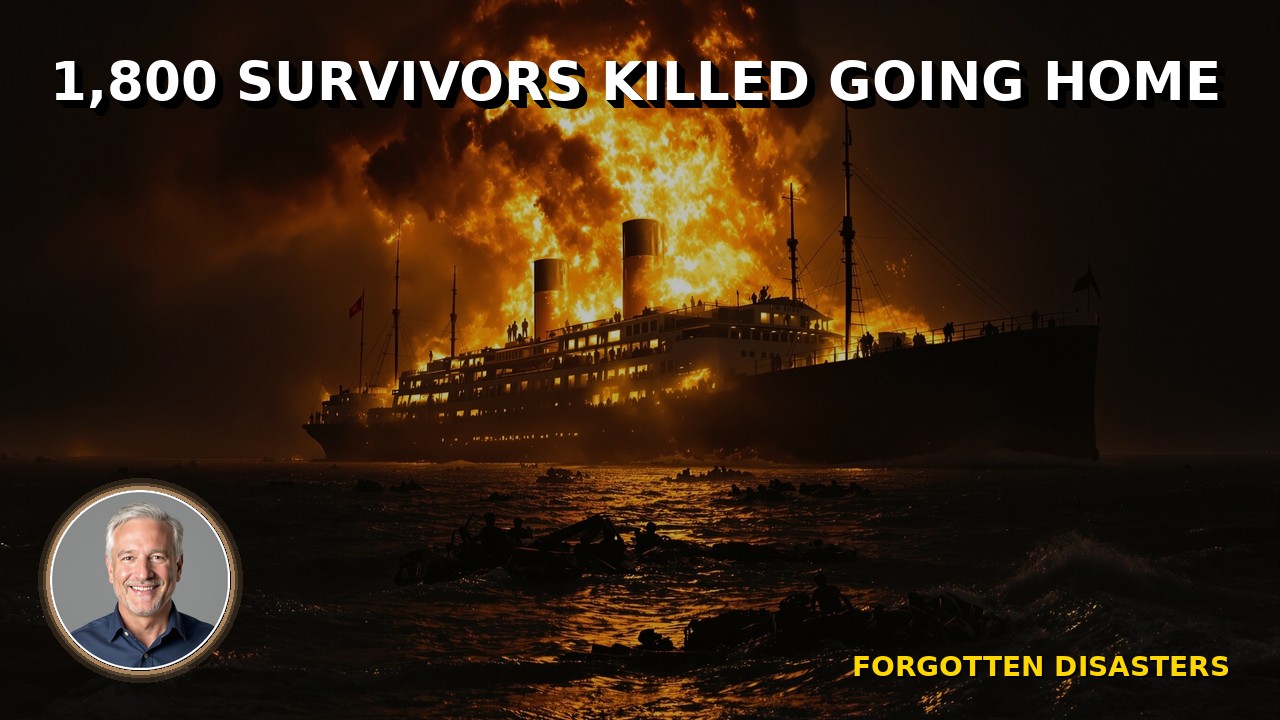
Thumbnail for The Boat That Killed 1,800 Union POWs — Four Days After Lincoln Died
America's Forgotten Disasters

The Boat That Killed 1,800 Union POWs — Four Days After Lincoln Died

On April 27, 1865, the SS Sultana exploded on the Mississippi River killing over 1,800 people — more Americans than the Titanic. It happened four days after John Wilkes Booth was shot, while every newspaper was still covering Lincoln's funeral. The story was buried so completely that no national day of mourning was ever declared, no federal investigation ever concluded, and most Americans have never heard of it.

1865 Mississippi River, near Memphis, Tennessee