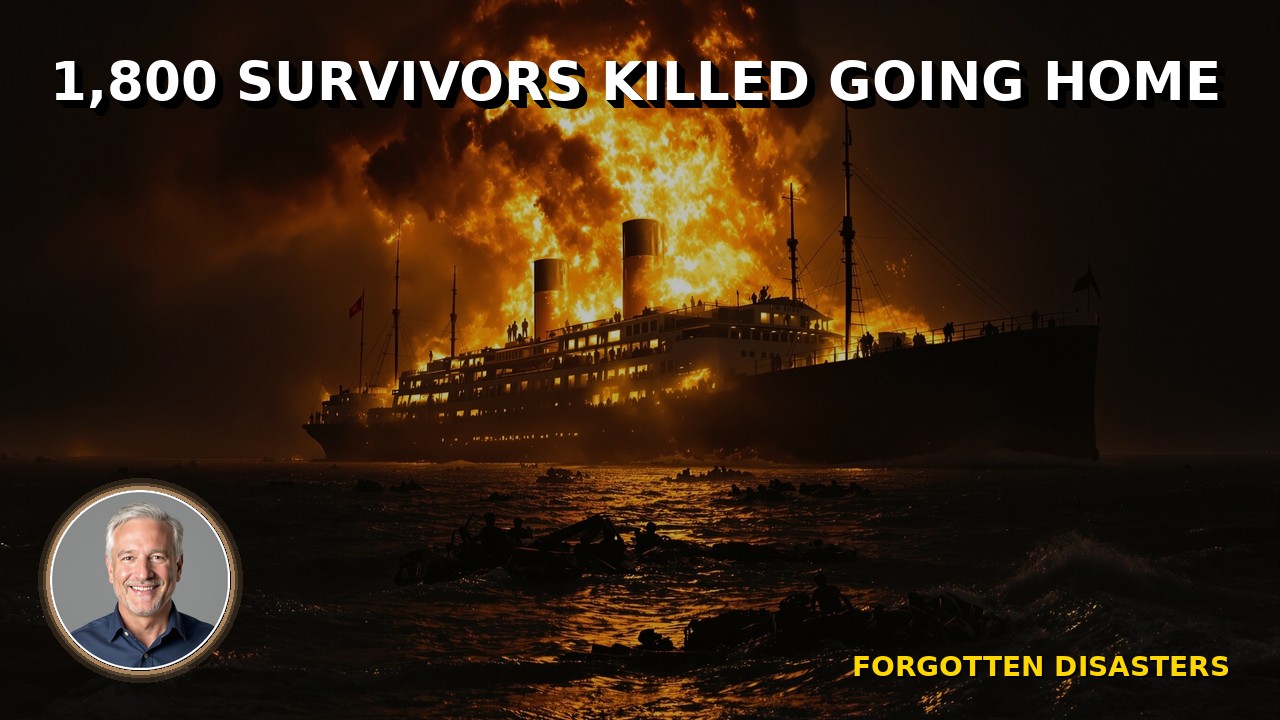
Captain Frederic Speed commanded the SS Sultana during what became the deadliest maritime disaster in American history, yet his name remains largely unknown to most Americans. On April 27, 1865, just four days after Abraham Lincoln’s assassination, Speed’s overcrowded steamboat exploded on the Mississippi River, killing over 1,800 passengers—mostly Union soldiers finally heading home from Confederate prison camps. The tragedy’s timing buried it beneath the national trauma of Lincoln’s death, leaving Speed and his decisions to fade into historical obscurity despite their catastrophic consequences.
The Fatal Decision
Speed faced an impossible choice in April 1865 as nearly 2,400 recently released prisoners of war crowded onto his vessel at Vicksburg, Mississippi. The Sultana was legally certified to carry just 376 passengers, but Speed agreed to transport the massive overflow of soldiers desperate to reach home after surviving the horrors of Confederate prisons like Andersonville and Cahaba. These men had already endured starvation, disease, and brutality—many weighing barely 100 pounds when liberated. Speed knew his boat was dangerously overloaded, but military officials pressed him to take as many soldiers as possible, and the $5 per head federal payment for transportation made the financial incentive enormous.
The captain’s decision reflected the chaotic aftermath of war’s end. Federal authorities were desperate to clear overcrowded staging areas of exchanged prisoners, while steamboat operators saw unprecedented profit opportunities. Speed had already delayed departure to repair the Sultana’s leaking boilers—a warning sign he ultimately ignored under pressure to depart. His chief engineer had repeatedly expressed concerns about the hastily patched boilers, but Speed ordered the boat north toward Memphis and St. Louis anyway. The overcrowding made the vessel top-heavy and unstable, while the extra weight strained the already compromised steam system beyond its limits.
Disaster on the Mississippi
At 2:00 AM on April 27, roughly seven miles north of Memphis, the Sultana’s patched boiler exploded with devastating force. The blast instantly killed hundreds of sleeping passengers and set the wooden superstructure ablaze. Speed, sleeping in his cabin near the explosion’s epicenter, was likely among the first victims. Survivors described a scene of unimaginable horror as the overcrowded decks collapsed into the river, trapping victims beneath debris while others burned alive in the inferno that consumed the vessel.
The disaster exposed the corruption and negligence that characterized war profiteering in 1865. Military officials had taken bribes to direct prisoners to specific boats, while steamboat captains regularly violated safety regulations for profit. Speed’s willingness to overload his vessel reflected an industry culture that prioritized quick money over passenger safety, particularly when transporting soldiers whom officials viewed as expendable after their service ended.
A Forgotten Legacy
Speed’s story illustrates how individual decisions during historical transitions can have massive consequences while being overshadowed by larger events. His choice to depart with a dangerously overloaded vessel killed more Americans than the Titanic disaster, yet the timing—amid national mourning for Lincoln and celebration of war’s end—ensured the tragedy received minimal attention. No federal investigation was ever completed, no memorial was erected, and no national day of mourning was declared.
The captain’s legacy serves as a reminder of how easily historical tragedies can be forgotten when they don’t fit convenient narratives about American progress and heroism. These soldiers had survived the war’s worst horrors only to die in a preventable disaster caused by greed and negligence—a conclusion too uncomfortable for a nation eager to move beyond the war’s trauma and celebrate reunion and reconstruction.