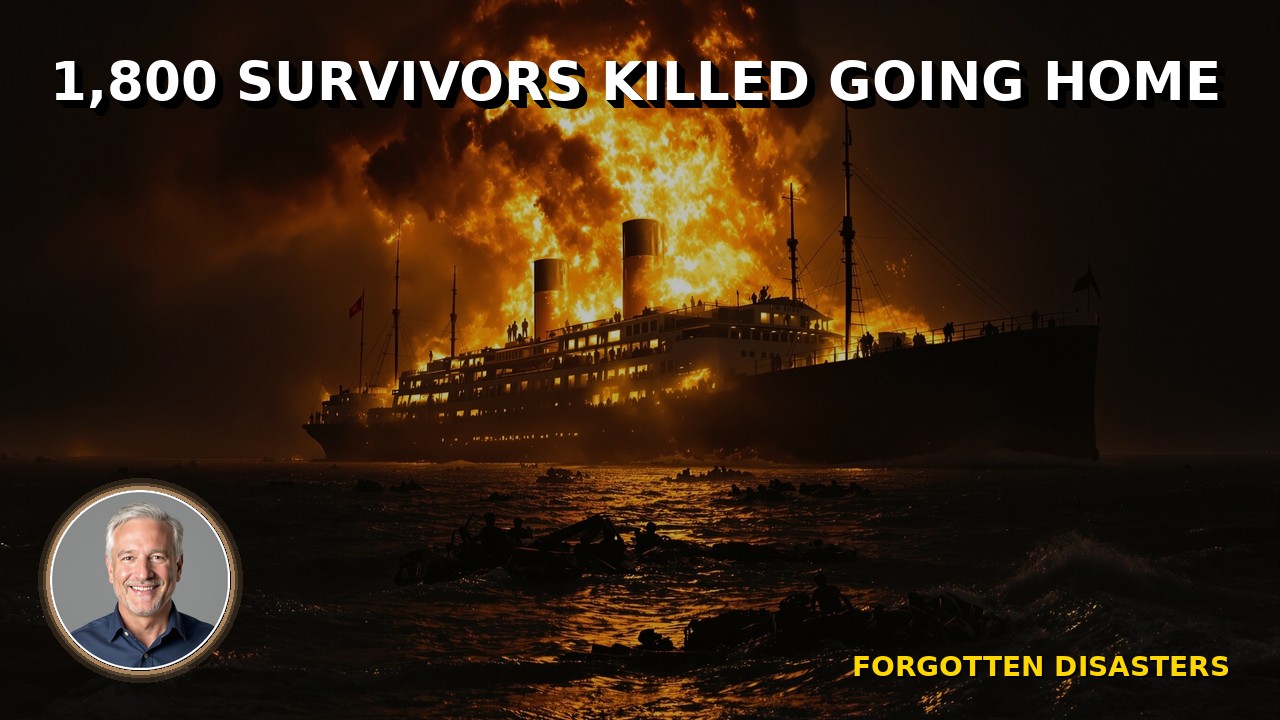
Captain J.C. Mason stood at the center of one of the most catastrophic decisions in American maritime history, yet his name remains largely forgotten alongside the disaster he helped create. As captain of the steamboat SS Sultana, Mason made choices driven by financial desperation that would ultimately cost more than 1,800 lives in the deadliest maritime disaster in United States history.
A Captain Under Pressure
Mason commanded the Sultana during the chaotic final weeks of the Civil War, when the steamboat business along the Mississippi River had been devastated by four years of conflict. Like many riverboat captains in 1865, he faced mounting financial pressures as the war wound down and regular commerce remained disrupted. The Sultana itself was showing its age and strain—the boat’s boilers had been patched and repaired multiple times, creating a mechanical situation that required constant vigilance.
When the opportunity arose in late April 1865 to transport thousands of recently released Union prisoners of war from Confederate camps like Andersonville and Cahaba, Mason saw a chance to salvage his financial situation. The federal government was paying $5 per enlisted man and $10 per officer for transportation north. However, the standard rate applied only if captains agreed to take their assigned quota of passengers. Mason made the fateful decision to vastly overload his vessel, cramming approximately 2,400 people aboard a steamboat legally certified to carry just 376 passengers.
The Weight of Greed
Mason’s decision reflected broader patterns of corruption and corner-cutting that plagued Reconstruction-era America, but the human cost would prove unprecedented. The released prisoners, many weighing barely 100 pounds after months of starvation in Confederate prison camps, packed every available inch of the Sultana’s deck space. Mason knew his boilers were compromised—they had been hastily patched in Vicksburg just days before—yet he proceeded upriver with his dangerously overloaded cargo of human beings desperate to reach home.
On April 27, 1865, roughly seven miles north of Memphis, the inevitable occurred. The Sultana’s boilers exploded with devastating force, instantly killing hundreds and throwing the vessel into flames. Mason himself was among the victims, dying in the disaster that his decisions had created. Most passengers couldn’t swim, and many were too weak from their imprisonment to fight the Mississippi’s cold current. The death toll exceeded that of the Titanic, making it the worst maritime disaster in American history.
Legacy of a Forgotten Tragedy
Mason’s story illuminates how individual choices, driven by economic desperation and moral compromise, can cascade into historical tragedy. His decision to overload the Sultana occurred during a moment when American institutions were strained beyond their limits, oversight was minimal, and the human cost of cutting corners could be catastrophic. The disaster was overshadowed by the assassination of Abraham Lincoln just days before, ensuring that Mason’s role in the tragedy—and the tragedy itself—would be largely erased from national memory.
Today, Captain J.C. Mason represents the forgotten perpetrators of America’s forgotten disasters. His story serves as a reminder that some of history’s greatest catastrophes stem not from malicious intent, but from ordinary people making extraordinarily poor decisions under pressure. The Sultana disaster stands as a testament to what happens when financial incentives override basic safety—a lesson that resonates far beyond the Mississippi River.