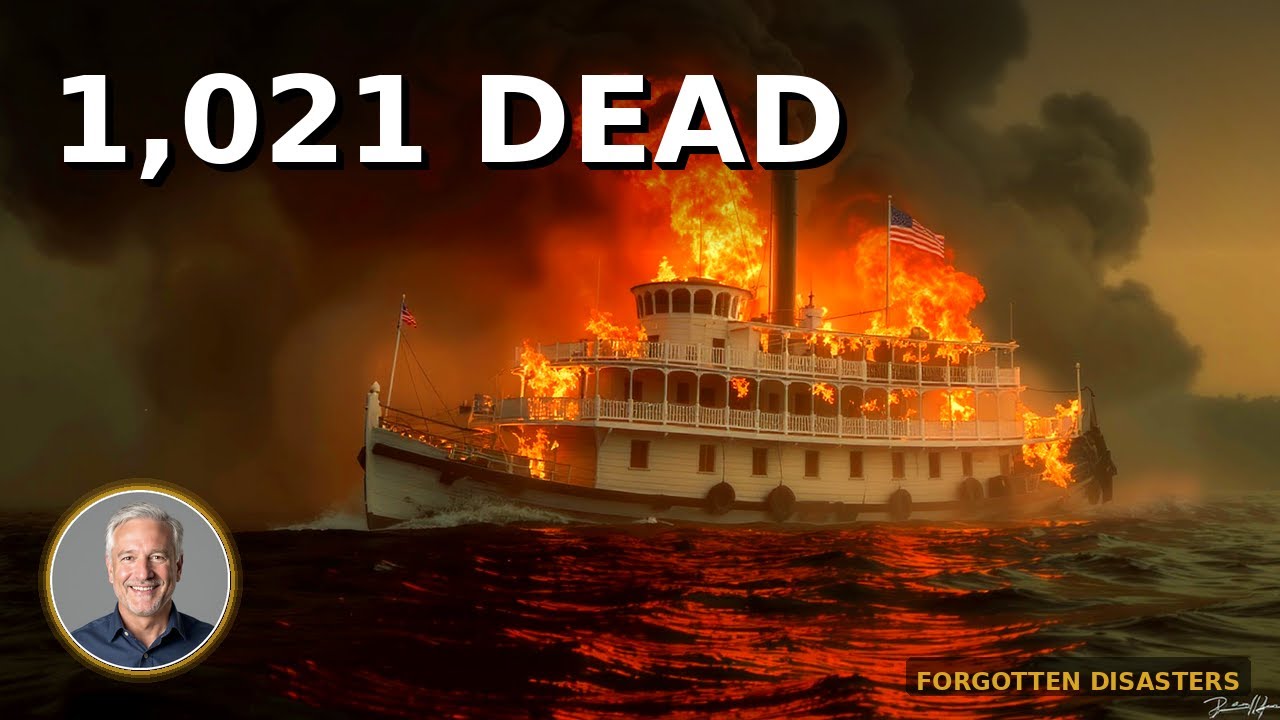
Captain William Van Schaick commanded the steamboat General Slocum on June 15, 1904, during what would become New York City’s deadliest disaster before September 11, 2001. His decisions during those fatal moments on the East River would define not only his legacy but also expose the criminal negligence that characterized maritime safety in the early 20th century.
A Career Cut Short by Catastrophe
Van Schaick had spent decades as a respected steamboat captain, navigating the waters around New York with what appeared to be competence and reliability. The Knickerbocker Steamboat Company trusted him with the General Slocum, a vessel that regularly carried passengers on excursion trips around Manhattan. On that June morning, he was transporting over 1,300 members of St. Mark’s Evangelical Lutheran Church—mostly German-American women and children—on their annual Sunday school picnic to Locust Grove on Long Island.
When fire broke out in a forward compartment, Van Schaick made a decision that would haunt him for the rest of his life. Instead of immediately steering toward the nearest shore in Manhattan, he continued toward his original destination, believing he could beach the vessel safely. The choice proved catastrophic. Fanned by the ship’s forward motion and strong headwinds, the flames spread with terrifying speed through the wooden vessel, trapping passengers as the boat became a floating inferno.
The Weight of Criminal Negligence
Van Schaick’s tragedy was compounded by the systemic failures that made the disaster inevitable. The General Slocum was a death trap disguised as a pleasure craft. Fire hoses rotted and burst under pressure. Life preservers, filled with cheap granulated cork, had deteriorated to powder—when desperate passengers strapped them on and leaped into the East River, the useless jackets crumbled and dragged victims underwater instead of keeping them afloat. Lifeboats were painted to the deck, impossible to launch in an emergency.
The captain became the primary scapegoat for these institutional failures. Convicted of criminal negligence and sentenced to ten years in Sing Sing prison, Van Schaick served three and a half years before President William Howard Taft commuted his sentence in 1908. While his poor decision-making certainly contributed to the death toll of over 1,000 people, Van Schaick was largely a victim of the era’s broader pattern of regulatory capture and corporate indifference to safety.
A Symbol of an Era’s Failures
Van Schaick’s story exemplifies how individuals often bear the weight of systemic negligence. Like the Triangle Shirtwaist Factory fire seven years later, the General Slocum disaster revealed how businesses prioritized profits over safety, while government inspectors either looked the other way or lacked the authority to enforce meaningful standards. The captain’s prosecution allowed politicians and steamboat companies to focus blame on one man’s split-second decision rather than addressing the deeper rot in maritime safety regulation.
After his release from prison, Van Schaick lived quietly until his death in 1927, forever marked by those terrible moments on the East River. His legacy serves as a reminder that disasters are rarely the result of single decisions by individual actors, but rather the inevitable outcome of systems designed to fail. The General Slocum fire remains a case study in how corporate negligence, regulatory failure, and individual accountability intersect in American industrial disasters.