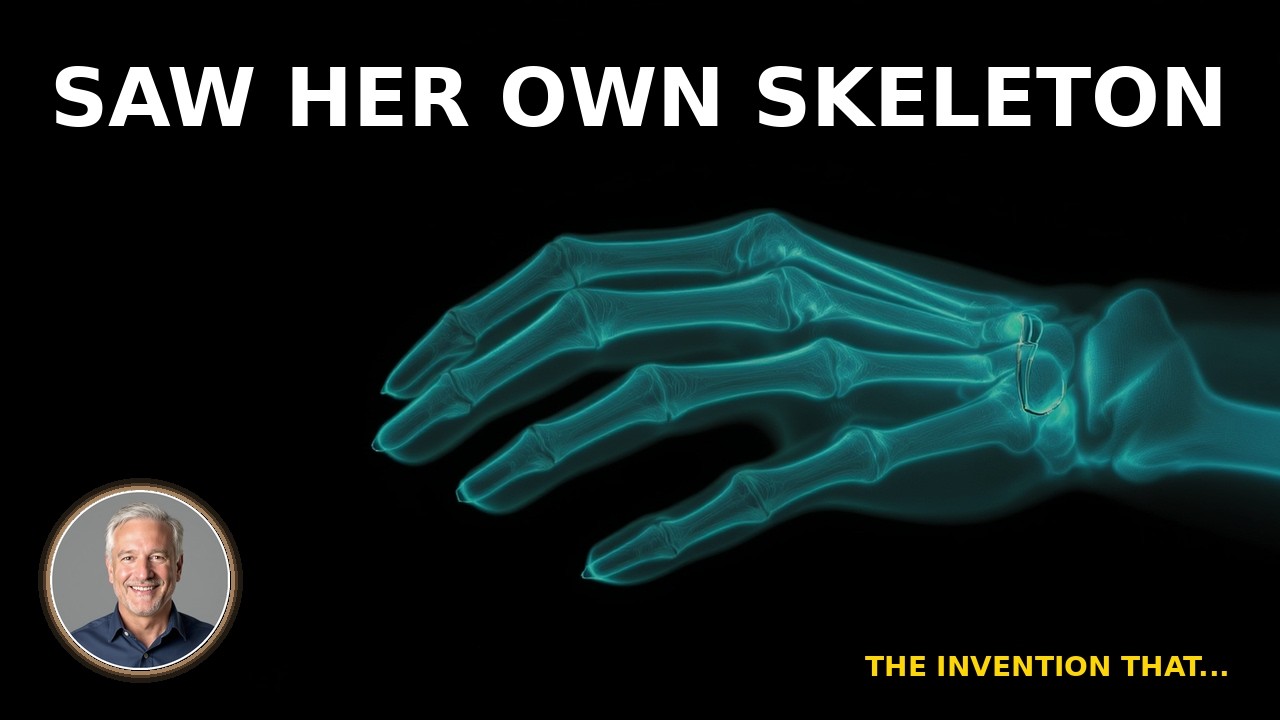
Clarence Madison Dally occupies a unique and tragic place in scientific history as both a pioneer of medical X-ray technology and its first documented American victim. His story represents the dangerous intersection of scientific enthusiasm and ignorance that characterized the early days of radiation research, when humanity’s greatest discoveries often came at the ultimate personal cost.
The Glassblower Who Saw Inside the Human Body
Born in 1865, Dally began his career as a skilled glassblower in New Jersey before joining Thomas Edison’s Menlo Park laboratory in 1889. When Wilhelm Röntgen’s discovery of X-rays electrified the scientific world in late 1895, Edison immediately recognized the technology’s commercial potential. He assigned Dally, known for his technical precision and tireless work ethic, to lead the development of practical X-ray equipment for American markets.
Working alongside Edison, Dally threw himself into perfecting the fluoroscope—a device that could project X-ray images onto a fluorescent screen in real time. Unlike the static photographic plates used by Röntgen, Edison’s fluoroscope promised to revolutionize medical diagnosis by allowing doctors to observe the human body’s internal workings as they happened. Dally spent countless hours testing various fluorescent materials, often using his own hands as convenient test subjects to evaluate image clarity and brightness.
By 1896, just months after Röntgen’s announcement, Dally had helped Edison create a commercially viable X-ray system. Their fluoroscope generated tremendous excitement at medical conferences and scientific exhibitions. Doctors marveled at their ability to see broken bones, locate bullets, and examine internal organs without surgery. Dally became Edison’s chief demonstrator, repeatedly exposing himself to intense X-ray radiation during public presentations across the country.
The Price of Progress
What Dally and his contemporaries didn’t understand was that they were conducting a deadly experiment on themselves. The same invisible rays that revealed the body’s secrets were systematically destroying healthy tissue with each exposure. In an era when radiation’s dangers remained unknown, safety protocols simply didn’t exist. Researchers routinely tested X-ray equipment on themselves, often for hours at a time, treating radiation exposure with the same casual attitude they might show toward bright sunlight.
By 1900, Dally began experiencing severe dermatitis on his hands—the first visible signs of chronic radiation poisoning. His skin became inflamed, developed painful lesions, and refused to heal. Despite mounting pain and obvious tissue damage, he continued his work, believing his condition was merely an occupational inconvenience rather than a death sentence. When his left hand became too damaged to function, doctors amputated four fingers in 1902. Two years later, they removed his entire hand.
The amputations failed to halt the radiation’s relentless destruction. Cancerous lesions spread up his arm and throughout his body. After losing his entire left arm in 1903, then his right arm in 1906, Dally finally succumbed to radiation-induced cancer on October 2, 1904—making him the first known American to die from radiation exposure. His death came just nine years after Röntgen’s discovery, a testament to both the speed of technological adoption and the tragic cost of scientific ignorance.
Legacy of Sacrifice
Clarence Dally’s death marked a turning point in radiation science. His highly publicized suffering forced the medical community to confront radiation’s dark side, spurring the first serious investigations into safety protocols and exposure limits. Edison, deeply shaken by his assistant’s fate, largely abandoned X-ray research, later stating he was afraid of the technology that had killed his faithful colleague.
Dally’s sacrifice helped establish the foundation for modern radiation safety, though tragically, many others would suffer similar fates before comprehensive protections emerged. His story remains a sobering reminder that scientific progress often demands a human toll, and that today’s miracle cures may harbor tomorrow’s unforeseen dangers. In the pantheon of scientific martyrs, Clarence Dally stands as proof that some of history’s most important lessons are written in blood.