The Naval Officer Who Failed Halifax
Commander Frederick Wyatt embodied the contradictions of military authority in crisis. As the senior naval officer responsible for Halifax harbor’s wartime operations, he wielded enormous power over one of the British Empire’s most vital ports. Yet when disaster struck on December 6, 1917, his decisions—and indecisions—helped transform a maritime collision into history’s most devastating accidental explosion.
Wyatt commanded the Royal Canadian Navy’s Halifax dockyard during World War I’s most critical phase. His jurisdiction covered the Bedford Basin, where Allied convoys assembled before crossing the submarine-infested Atlantic. Every day, dozens of ships carrying troops, supplies, and munitions moved through waters he controlled. The French cargo vessel Mont-Blanc, loaded with 2,653 tons of explosives, benzol, and picric acid, fell under his authority the moment she entered Halifax harbor that fateful morning.
The collision between Mont-Blanc and the Norwegian vessel Imo occurred at 8:45 AM in the Narrows, the harbor’s bottleneck. What happened next revealed the deadly gaps in Wyatt’s emergency protocols. Despite harboring the world’s largest collection of wartime explosives, Halifax lacked adequate fire-fighting equipment, evacuation procedures, or inter-agency communication systems. As Mont-Blanc burned and drifted toward the Richmond district, precious minutes ticked away while authorities failed to grasp the magnitude of the threat.
Command Decisions Under Fire
Wyatt’s response illuminates how institutional failures compound individual ones during catastrophes. He ordered the burning vessel to be towed away from the city, but his crews lacked proper equipment and training for such operations. Naval personnel who might have recognized the danger of an exploding munitions ship were not positioned to communicate effectively with civilian authorities. The harbor pilot who understood Mont-Blanc’s deadly cargo had abandoned ship and failed to alert anyone onshore.
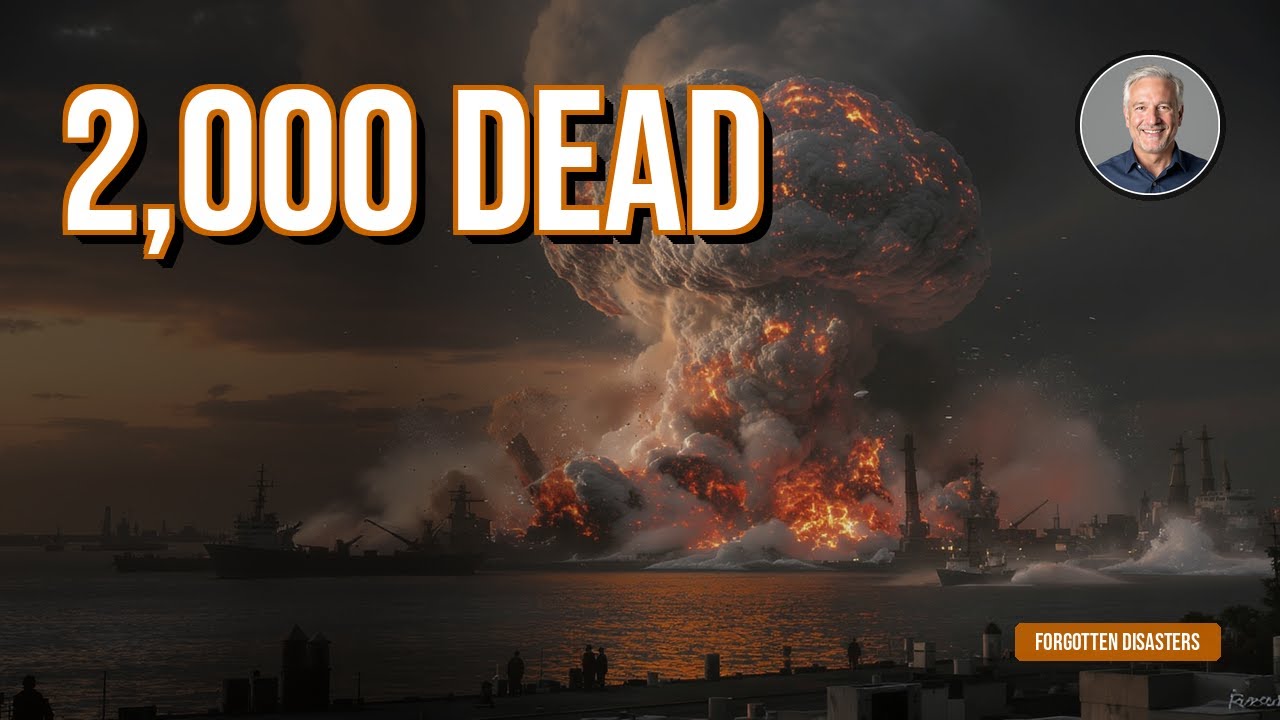
At 9:04:35 AM, Mont-Blanc exploded with the force of nearly three kilotons of TNT. The blast killed approximately 2,000 people instantly, injured 9,000 more, and leveled entire neighborhoods. The explosion was so powerful it created a tsunami in the harbor and shattered windows 60 miles away. In six seconds, Commander Wyatt’s jurisdiction had become ground zero for a disaster that would reshape how ports worldwide handled dangerous cargo.
Legacy of Systemic Failure
Wyatt’s story matters not because he was uniquely incompetent, but because he represents how wartime pressures can overwhelm even well-intentioned officials. The Halifax Explosion exposed fundamental weaknesses in naval administration, port security, and emergency response that extended far beyond one commander’s decisions. In the inquiry that followed, Wyatt faced intense scrutiny, but investigators ultimately recognized that the disaster stemmed from systemic failures rather than individual negligence.
The explosion transformed maritime safety protocols across the Allied world. New regulations required better communication between ships carrying dangerous cargo and port authorities. Harbor pilots received enhanced training in hazardous materials. Emergency response procedures were standardized and regularly drilled. These changes, born from Halifax’s tragedy, likely prevented similar disasters in other wartime ports.
Commander Wyatt’s career never recovered from December 6, 1917. He remained a reminder that in modern warfare, split-second decisions by mid-level officials can determine whether cities live or die. His story endures as a cautionary tale about the crushing weight of responsibility in positions where administrative competence literally means the difference between life and death for thousands of civilians.