The City That Died
This Town Was So Toxic They Erased It from the Map
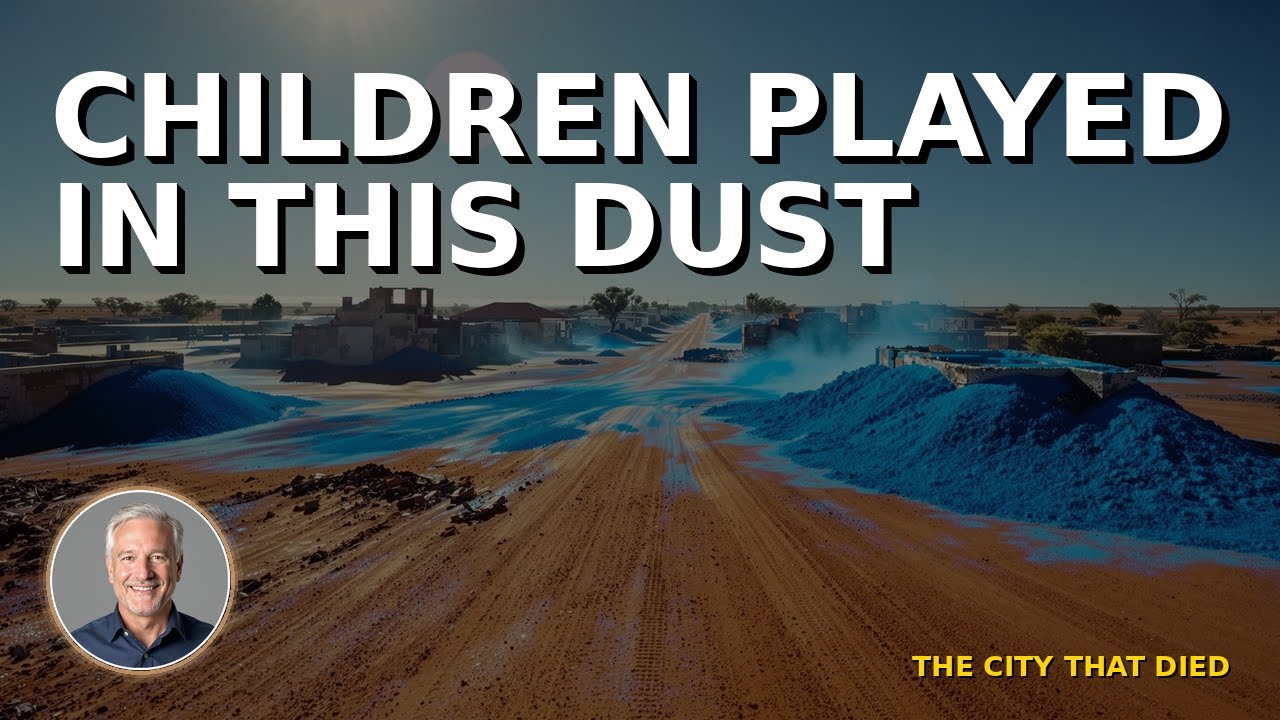
Children played in blue asbestos tailings like snow. Three million tonnes remain in the gorge, uncovered and unsecured.
Australia's deadliest blue asbestos mining operations
Appears in 1 documentary
CSR Limited stands as one of Australia’s most notorious corporate actors in the country’s devastating asbestos crisis, transforming from a sugar refining company into an industrial giant whose mining operations would ultimately poison entire communities. The company’s legacy is forever intertwined with Wittenoom, Western Australia—a town so contaminated by blue asbestos that it was eventually wiped from official maps.
Founded in 1855 as the Colonial Sugar Refining Company, CSR evolved throughout the 20th century into a diversified industrial conglomerate. In 1943, the company acquired the Wittenoom Gorge asbestos mine in Western Australia’s Pilbara region, launching what would become Australia’s largest blue asbestos mining operation. Between 1943 and 1966, CSR extracted approximately 161,000 tonnes of crocidolite—the most lethal form of asbestos—from the remote mining town.
The company’s operations at Wittenoom were characterized by a shocking disregard for worker and community safety. Mine workers labored in clouds of blue asbestos dust without protective equipment, while their families lived in company housing surrounded by towering blue tailings dumps. Children played in the contaminated waste as if it were snow, unaware they were being exposed to carcinogenic fibers that would claim lives decades later. CSR maintained these deadly conditions despite growing scientific evidence about asbestos dangers, prioritizing profits over human health.
What makes CSR’s case particularly damning is the mounting evidence that company executives knew about asbestos health risks years before ceasing operations. Internal documents later revealed that CSR was aware of the connection between asbestos exposure and lung disease as early as the 1940s, yet continued mining operations for two more decades. The company failed to implement adequate safety measures, provide proper protective equipment, or warn workers and residents about the deadly risks they faced daily.
When CSR finally abandoned Wittenoom in 1966, they left behind approximately three million tonnes of contaminated tailings scattered throughout the gorge—waste that remains largely uncovered and unsecured to this day. The company’s departure marked not an end to the crisis, but the beginning of a slow-motion tragedy that would unfold over generations. Former workers and residents began developing mesothelioma and other asbestos-related diseases at catastrophic rates, with some families losing multiple members to the same preventable illnesses.
CSR’s Wittenoom operations represent a defining chapter in Australia’s broader asbestos disaster, which affected an estimated one in three Australian homes built before 1980. The company faced thousands of compensation claims from victims and their families, fighting many cases through decades of costly litigation. While CSR eventually paid substantial settlements, critics argued the company used legal delays and technicalities to minimize payouts to dying claimants.
The Wittenoom disaster became a symbol of corporate malfeasance and regulatory failure that helped reshape Australia’s occupational health laws. CSR’s actions—and the government’s slow response—demonstrated how industrial companies could prioritize profits over public health with devastating consequences. Today, Wittenoom stands as a ghost town, officially removed from maps and road signs, its remaining buildings slowly being demolished to prevent further contamination.
The CSR story serves as a stark reminder of how corporate negligence can create intergenerational trauma, with the deadly legacy of blue asbestos continuing to claim lives more than half a century after mining ceased. The company’s transformation from colonial sugar refiner to toxic polluter illustrates the dark side of Australia’s industrial development and the human cost of unchecked corporate power.
The definitive account of CSR's deadly asbestos mining operations and systematic cover-up at Wittenoom.
Provides crucial context for understanding CSR's role within Australia's broader corporate asbestos scandal.
Documents the corporate culture and legal strategies that characterized Australian asbestos companies like CSR.
Children played in blue asbestos tailings like snow. Three million tonnes remain in the gorge, uncovered and unsecured.