Daniel Johnson Morrell stood as one of the most influential yet forgotten figures of America’s industrial revolution, a man whose business empire helped forge the nation’s steel backbone while his moral courage exposed one of the Gilded Age’s deadliest corporate negligence scandals. As head of Cambria Iron Company and U.S. Congressman from Pennsylvania, Morrell wielded enormous economic and political power in the decades following the Civil War, making his lonely crusade against the South Fork Fishing and Hunting Club all the more remarkable.
The Steel Baron’s Rise
Born in 1821 in rural Vermont, Morrell embodied the American dream of his era, rising from modest origins to command one of the nation’s largest industrial enterprises. By the 1870s, his Cambria Iron Company in Johnstown, Pennsylvania, employed over 7,000 workers and produced some of the highest-quality steel rails in America. The company’s success transformed Johnstown from a sleepy canal town into a bustling industrial center, with Morrell serving as both its economic engine and civic patriarch.
Unlike many of his Gilded Age contemporaries, Morrell maintained a paternalistic relationship with his workforce that went beyond mere profit extraction. He invested heavily in worker housing, education, and safety measures—progressive policies that made him genuinely popular among Johnstown’s working families. This connection to his community would prove crucial when disaster threatened from above.
The Dam Crusader
Morrell’s defining moment came not from his business achievements, but from his prescient warnings about the deteriorating South Fork Dam that loomed 14 miles upstream from Johnstown. When Pittsburgh’s industrial elite purchased the abandoned dam in 1879 to create an exclusive fishing retreat, Morrell immediately recognized the mortal threat their modifications posed to his city below.
The South Fork Fishing and Hunting Club’s members—including Andrew Carnegie, Henry Clay Frick, and Andrew Mellon—had systematically weakened the dam to enhance their recreational experience. They lowered it by two feet, removed critical discharge pipes, and installed debris-catching fish screens across the spillway. Each modification prioritized the club’s pristine fishing over public safety.
Morrell spent years sounding the alarm through every channel available to him. As a former congressman, he leveraged political connections. As Johnstown’s leading industrialist, he commissioned engineering studies. As a respected community leader, he spoke publicly about the danger. His warnings were detailed, technically sound, and prophetic: he predicted that heavy rains would cause catastrophic failure, sending a wall of water down the narrow valley toward Johnstown.
The club’s members dismissed his concerns with the casual arrogance typical of their class. They possessed vast wealth and political influence; Morrell was merely a provincial businessman from an industrial backwater. Their lawyers assured them that Pennsylvania law provided ample protection from liability claims.
Legacy of Moral Courage
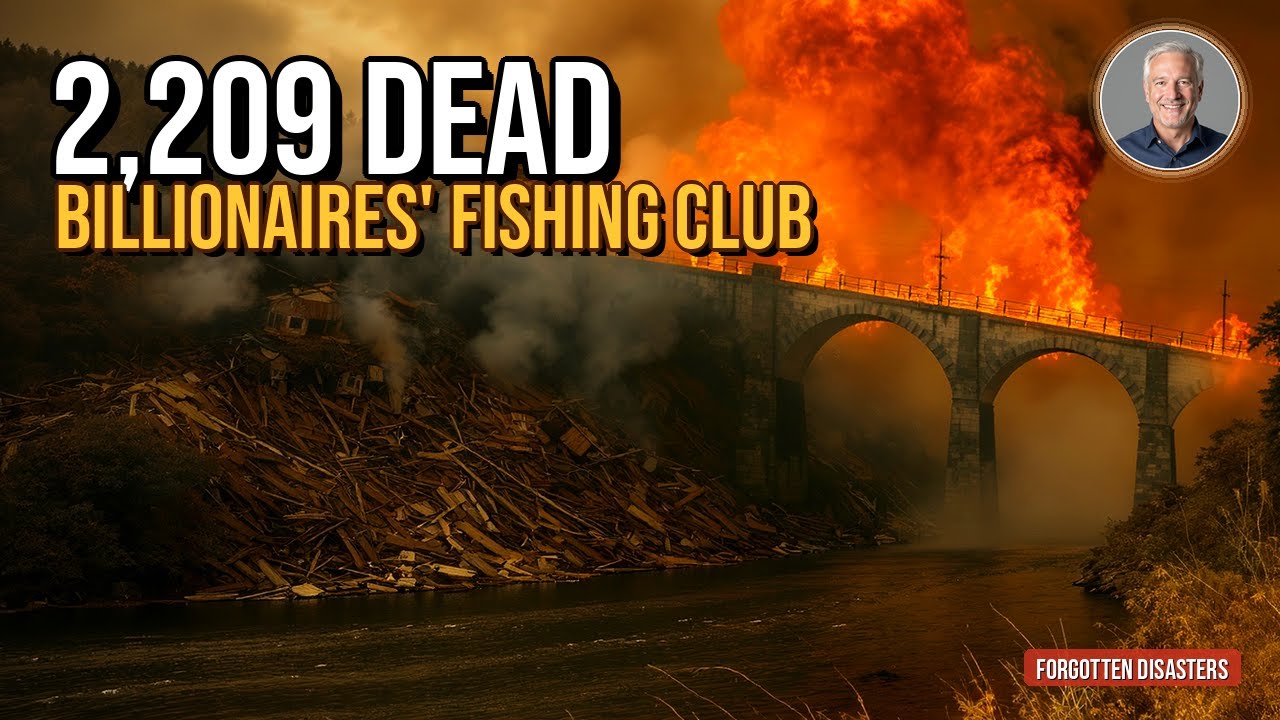
Morrell died in 1885, four years before the dam’s inevitable collapse vindicated every one of his warnings. On May 31, 1889, after days of heavy rainfall, the South Fork Dam burst exactly as he had predicted. The resulting flood killed 2,209 people—including many of his former employees and their families—in what remains one of America’s deadliest industrial disasters.
Morrell’s legacy extends far beyond his business achievements to embody a rare example of corporate leadership placing public welfare above elite solidarity. In an era when robber barons routinely externalized costs onto working communities, Morrell stood virtually alone among his peers in prioritizing human life over profit and convenience. His warnings, ignored in life but validated by catastrophe, represent one of the clearest documented cases of preventable industrial disaster in American history.
The Johnstown Flood became a watershed moment in American attitudes toward corporate responsibility and government regulation. While Morrell didn’t live to see this transformation, his moral courage in speaking truth to power helped establish the principle that great wealth cannot absolve great negligence—a lesson that resonates whenever corporate malfeasance threatens public safety.