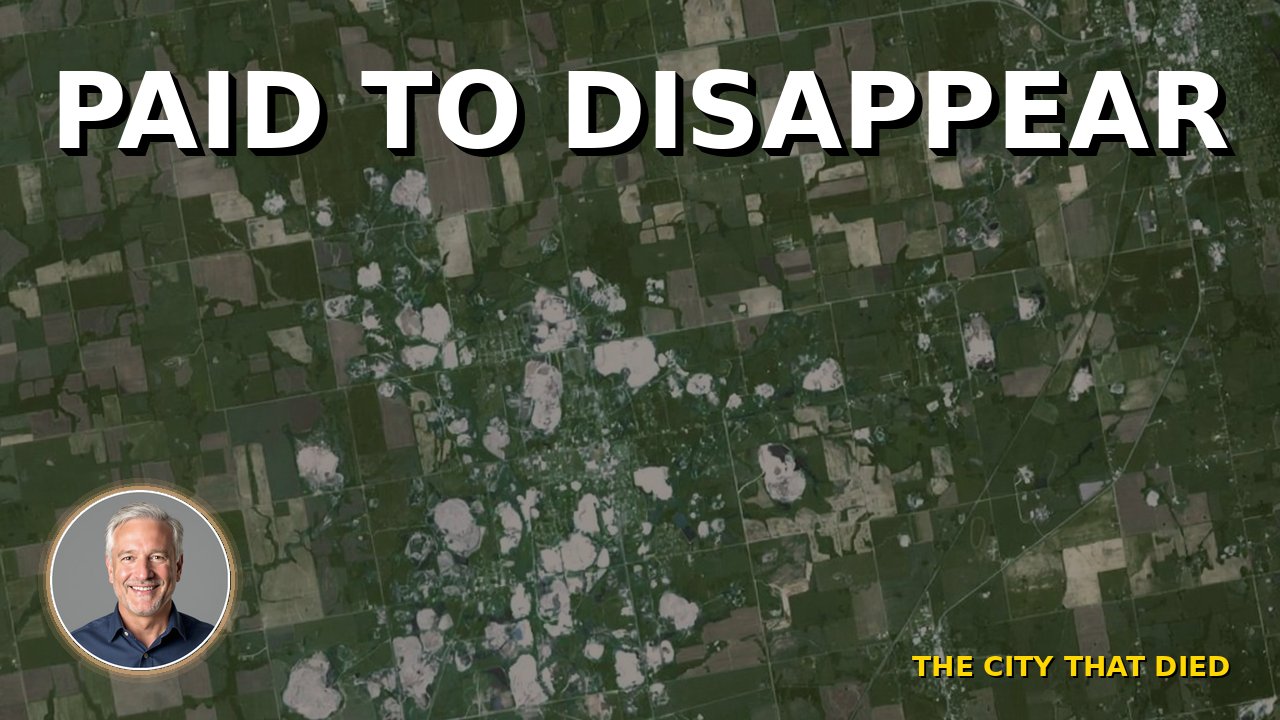
Eagle-Picher was the dominant mining company of the Tri-State Mining District and the single largest presence in Picher, Oklahoma, for the half century the town prospered. It was formed in 1916 when the Eagle White Lead Company of Cincinnati, a pigment maker founded in 1843, merged with the Picher Lead Company of Joplin, Missouri, whose drills had helped open the Oklahoma field after the 1913 strike on Quapaw land. The combined Eagle-Picher Lead Company owned mines, smelters and mills across Missouri, Kansas and Oklahoma, and in the town that bore its name it functioned as something close to a government.
The Company Town
In the 1920s the Tri-State District produced more lead and zinc than anywhere on Earth, and Eagle-Picher was its largest operator. The company built housing, supplied utilities and sponsored the schools and social life of the camps. Its Central Mill at Cardin, Oklahoma, next to Picher, was one of the largest ore-processing plants in the world, fed by ore from mines across the district. The mill’s output went into ammunition and galvanized steel through both world wars, when the federal government treated the field as a strategic asset. For the families of Picher, Cardin and Treece, the company was the employer, the landlord and the reason the towns existed.
The mill also produced chat, the crushed waste rock left after the metal was recovered. Eagle-Picher and the smaller operators piled it beside the shafts in gray mountains that reached two hundred feet, and sold or gave it away for roads, driveways and fill. The piles were never classified as hazardous while the company was mining, and nobody required the company to remove them.
Closure and Bankruptcy
The ore thinned after the Second World War, and the last commercial mines in the district closed in 1967. Eagle-Picher, renamed Eagle-Picher Industries in 1966, had already diversified into batteries, diatomite, automotive parts and, fatefully, asbestos insulation products. By the 1980s the asbestos claims numbered in the tens of thousands, and in January 1991 the company filed for Chapter 11 bankruptcy. It emerged in 1996 with its asbestos liabilities channeled into a trust, and the bankruptcy shielded it from most of the cost of cleaning up the Tar Creek Superfund site, which had been listed in 1983. The company filed again in 2005 and was broken up; its battery business survives today as EaglePicher Technologies, still headquartered in Joplin.
Why It Matters
Eagle-Picher extracted a fortune from Quapaw land, armed two wars with it, and was not standing when the bill for the chat piles, the flooded mines and the poisoned children came due. No executive was ever charged. The hundreds of millions of federal dollars spent at Tar Creek, and the buyouts of Picher and Treece, are the public paying for a private company’s leftovers. That transfer, from the firm to the taxpayer, is the pattern this series keeps finding, and Eagle-Picher is one of its cleanest examples.