The executives of the East Ohio Gas Company occupy a dark chapter in American industrial history, representing the human cost of corporate decisions that prioritize profit over safety. While their names have faded from public memory, their choices on October 20, 1944, created one of the most devastating urban disasters in Cleveland’s history.
The Fatal Decision
Two months before the explosion that would kill 130 people, East Ohio Gas Company executives received an engineering report that should have changed everything. The inspection documented metal embrittlement in the liquefied natural gas storage tank—the exact tank that would later rupture and ignite Cleveland’s East Side. The technical evidence was clear, the danger was real, and the recommendation was repair or replacement.
Instead, the executives chose increased monitoring over repairs. The decision saved the company $400,000—roughly $6 million in today’s dollars. It was a calculated risk that placed corporate profits above community safety, a choice that 130 Cleveland residents would pay for with their lives in just twenty minutes of terror on that October morning.
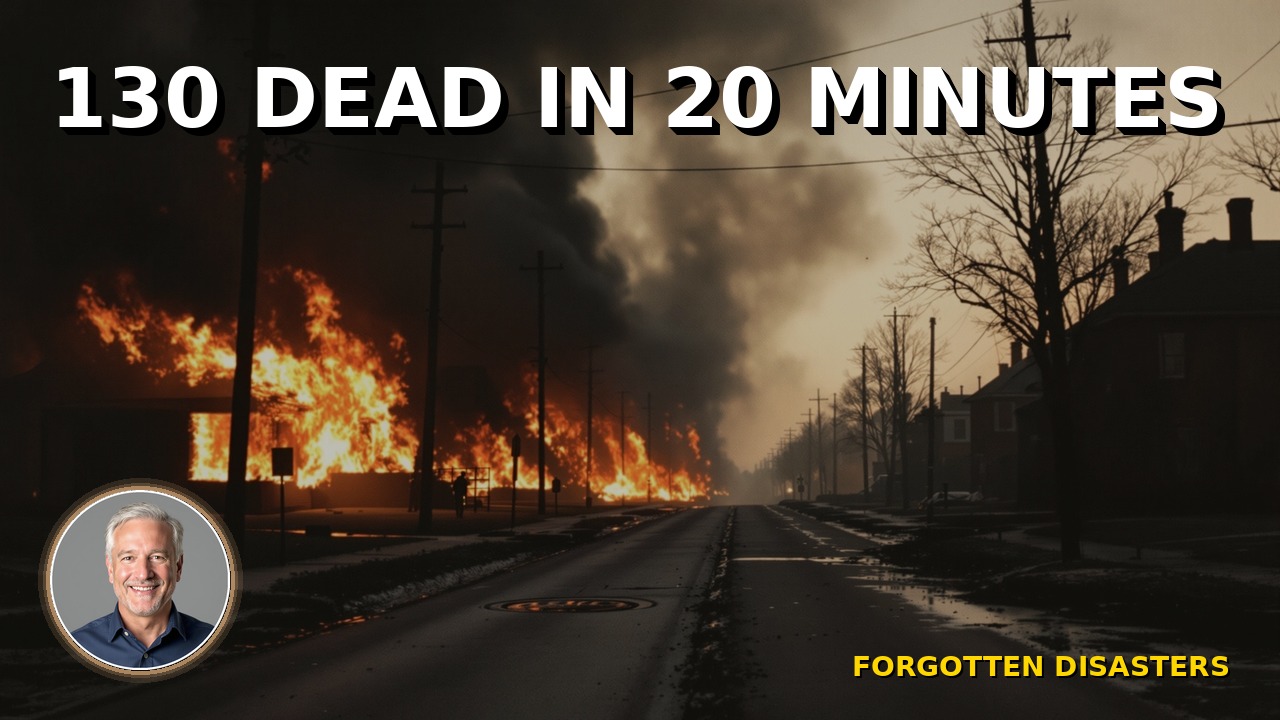
The explosion sent a massive fireball rolling through residential neighborhoods. Witnesses described the sky itself catching fire as liquefied gas spread through storm sewers and erupted from manholes. Entire city blocks were reduced to ash. Families were incinerated in their homes. The disaster zone stretched across 1.3 square miles of Cleveland’s East Side, destroying 79 homes and damaging hundreds more.
A Pattern of Impunity
What makes the East Ohio Gas executives historically significant isn’t just the magnitude of the disaster they enabled—it’s how they embodied a pattern of corporate behavior that defined American industrial development. Like the Triangle Shirtwaist Factory owners who ignored fire safety regulations in 1911, or the radium dial companies that concealed evidence of poisoning their workers, East Ohio Gas executives represent the human faces behind “normal accidents” in high-risk industries.
The executives knew the risks. They had the resources to address them. They chose not to. This wasn’t negligence born of ignorance—it was calculated negligence born of cost-benefit analysis that valued shareholder returns over human life.
Their decision reflects the broader industrial culture of mid-20th century America, where rapid technological advancement outpaced safety regulations and corporate accountability. Liquefied natural gas was still a relatively new technology in 1944, but the basic principles of metallurgy and structural integrity were well understood. The executives simply bet that the tank would hold long enough to avoid costly repairs.
The Legacy of No Consequences
Perhaps most significantly, the East Ohio Gas executives were never charged with any crime. Despite clear evidence of prior knowledge and conscious disregard for public safety, the legal system treated the Cleveland disaster as an industrial accident rather than criminal negligence. This lack of accountability became part of a pattern that would repeat throughout American industrial history.
The executives’ immunity from prosecution established a precedent that continues to influence corporate behavior today. When business leaders face no personal consequences for decisions that kill workers or community members, the financial incentives remain skewed toward accepting dangerous risks rather than investing in safety.
The East Ohio Gas disaster led to improved regulations for liquefied gas storage and handling, but it didn’t fundamentally change the system that produced the executives’ deadly calculation. Their story remains a case study in how corporate decision-making processes can transform technical failures into human tragedies—and how the absence of individual accountability perpetuates those failures across generations of American industrial development.