The Manager Who Faced the Jungle
Einar Oxholm arrived in the Brazilian Amazon in 1928 as one of Henry Ford’s handpicked managers, tasked with transforming 2.5 million acres of virgin rainforest into a rubber empire. As the plantation manager of Fordlandia, the automobile magnate’s ambitious attempt to create an American industrial town in the heart of Brazil, Oxholm found himself at the center of one of the most spectacular corporate failures of the 20th century.
Ford had purchased the massive tract of land along the Tapajós River for $125,000, determined to break the British rubber monopoly and secure a steady supply for his automobile tires. The project represented more than mere economics—it embodied Ford’s vision of American industrial superiority and social engineering. Oxholm, like other Ford executives, was expected to impose not just American efficiency, but American values on the Brazilian workforce.
The challenges facing Oxholm were immense from the start. The remote location, 600 miles up the Amazon from the port city of Belém, made supply lines treacherous and expensive. More critically, Ford’s management team, including Oxholm, possessed virtually no knowledge of tropical agriculture, rubber cultivation, or Brazilian culture. They planted rubber trees in neat rows like Midwestern corn, ignoring local expertise that warned such dense planting would invite disease. The results were predictable: leaf blight devastated the plantation, and by 1930, most of the 1.4 million planted seedlings had died.
Cultural Collision and Revolt
But Oxholm’s greatest challenge wasn’t botanical—it was human. Ford’s paternalistic social experiment demanded that Brazilian workers abandon their traditional way of life. The company imposed American meal schedules, serving unfamiliar dishes like hamburgers and canned peaches in a cafeteria system that violated local customs of family dining. Workers were required to live in company housing, follow prohibition-era alcohol bans, and participate in square dancing and poetry readings—activities that struck the Brazilians as bizarre impositions.
As plantation manager, Oxholm enforced these policies with increasing desperation as worker dissatisfaction mounted. The cultural friction reached a breaking point in December 1930 when Brazilian workers launched a full-scale revolt. They smashed equipment worth hundreds of thousands of dollars, overturned company vehicles, and chased Oxholm and other American managers into the jungle at machete-point. The uprising, which locals called the “quebra-panela” (pot-breaking), effectively ended Ford’s dreams of Amazonian rubber production.
The revolt highlighted the fundamental flaw in Ford’s vision: the assumption that American industrial methods and social values could be transplanted wholesale into radically different environments. Oxholm and his colleagues represented a particularly American form of corporate imperialism—well-intentioned perhaps, but ultimately blind to local conditions and cultural realities.
Legacy of Failed Paternalism
Oxholm’s experience at Fordlandia became a cautionary tale about the limits of corporate power and cultural hubris. The plantation limped along until 1945, when Ford’s heirs sold it back to the Brazilian government for $244,200—a fraction of the $20 million the company had invested. By then, synthetic rubber had made the entire venture obsolete.
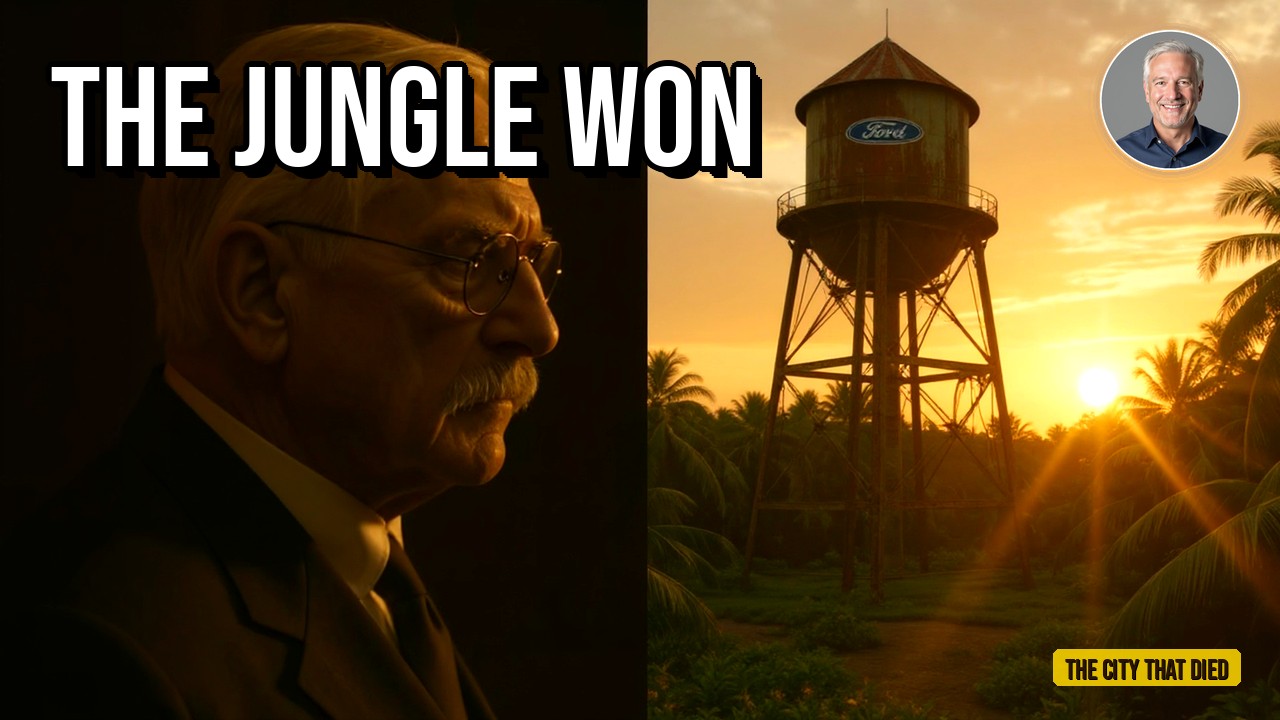
The story of managers like Oxholm illustrates a broader pattern of American corporate expansion in the early 20th century, when industrial titans believed their methods could reshape the world. Their failures in places like Fordlandia foreshadowed later difficulties American companies would face in global markets, where local knowledge and cultural sensitivity proved as important as capital and technology. Today, the ruins of Fordlandia stand as a monument to the jungle’s victory over industrial ambition, and to the lesson that no amount of American efficiency could overcome the fundamental disconnect between Ford’s vision and Amazonian reality.