Judge Elbert Henry Gary never swung a hammer or poured molten steel, yet he wielded more power over American industry than perhaps any other man of his era. As the first chairman of U.S. Steel Corporation and the founding father of the Indiana city that bears his name, Gary embodied both the promise and the contradictions of early 20th-century American capitalism.
The Lawyer Who Built an Empire
Born in 1846 on a farm near Wheaton, Illinois, Gary seemed destined for a life far removed from the roar of blast furnaces. After graduating from Union College of Law in 1868, he built a successful legal practice representing railroads and corporate clients. But Gary possessed something rarer than legal acumen: the ability to see industry not as a collection of competing firms, but as a system that could be rationalized, organized, and controlled.
When financier J.P. Morgan set out to consolidate the chaotic American steel industry in 1901, he turned to Gary to navigate the legal and organizational complexities. The result was U.S. Steel, the world’s first billion-dollar corporation, controlling 65% of American steel production. Gary’s appointment as chairman marked a fundamental shift in American business—from the era of owner-operators like Andrew Carnegie to that of professional managers who never owned the companies they controlled.
Building a Company Town for the New Century
Gary’s most audacious move came in 1906 when U.S. Steel purchased 9,000 acres of Indiana sand dunes along Lake Michigan. Unlike the grimy, chaotic mill towns that dotted the industrial landscape, Gary would be different—a planned community that would demonstrate enlightened corporate paternalism. In an extraordinary feat of industrial organization, the company built an entire city in just 905 days, complete with schools, parks, and what would become one of the world’s largest steel complexes.
The city of Gary represented more than urban planning; it embodied Gary’s vision of corporate responsibility. He believed that well-treated workers in well-designed communities would be more productive and less likely to embrace radical labor movements. The company provided housing, recreation facilities, and steady employment for waves of immigrants and African Americans seeking industrial work.
Yet Gary’s paternalism had limits that would prove fatal to his legacy. Despite his reputation as a progressive employer, he fiercely opposed unionization and used company police and blacklists to suppress labor organizing. During the massive steel strike of 1919, Gary’s intransigence helped break the union movement but also demonstrated the inherent contradictions in corporate paternalism—benevolence offered on management’s terms could be withdrawn just as easily.
Legacy of a Corporate Pioneer
Gary died in 1927, having transformed American industry but also having planted the seeds of its later struggles. His model of corporate consolidation and professional management became the template for 20th-century American business. U.S. Steel’s dominance helped establish the United States as the world’s industrial superpower, providing the steel that built skyscrapers, battleships, and the infrastructure of modern America.
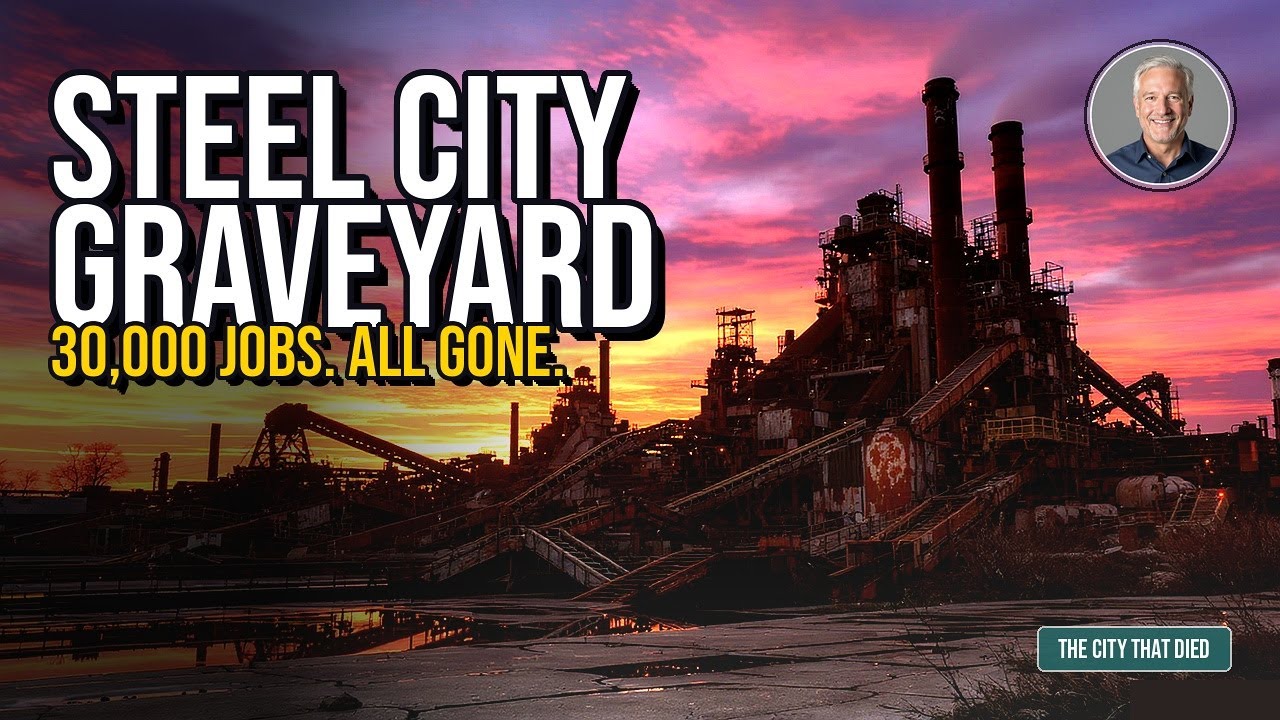
But Gary’s resistance to labor unions and his faith in corporate paternalism left American industry unprepared for the social and economic changes that would follow. The city of Gary, once a symbol of American industrial might, began its long decline by the 1960s as steel production moved overseas and the company abandoned its commitment to the community it had created. By 2020, Gary’s population had shrunk to fewer than 70,000, its abandoned buildings serving as monuments to the limits of corporate benevolence.
Elbert Gary’s story is ultimately the story of American industrial capitalism itself—brilliant in its organizational achievements, transformative in its economic impact, yet ultimately bounded by its own contradictions and blind spots.