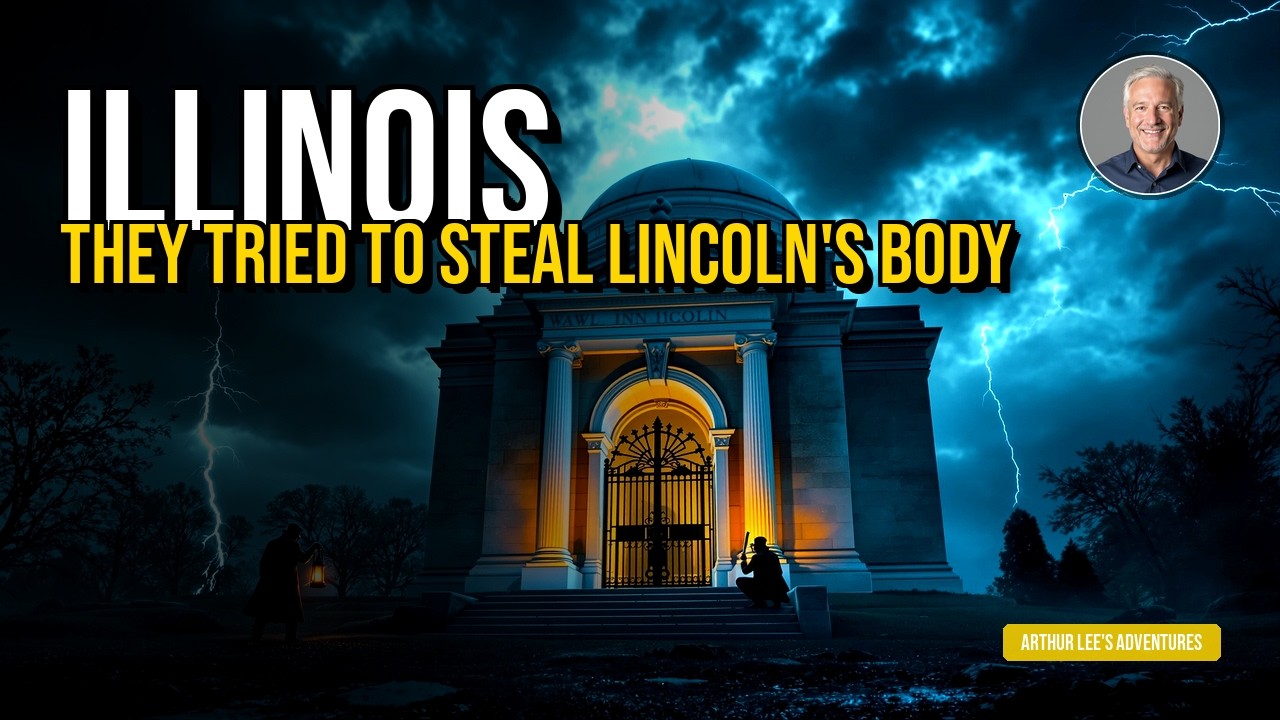
Elmer Washburn operated in the shadowy underworld of post-Civil War America, where counterfeiting networks and grave robbing intersected in ways that seem almost impossible to modern sensibilities. As the leader of a sophisticated counterfeiting ring based in Illinois, Washburn masterminded one of the most audacious crimes in American history: the attempted theft of Abraham Lincoln’s body from its tomb in Springfield’s Oak Ridge Cemetery on November 7, 1876.
The Counterfeiting Connection
Washburn’s criminal enterprise centered around the production of high-quality counterfeit currency, specifically fifty-dollar bills. His operation relied heavily on the skills of Benjamin Boyd, a master engraver whose technical expertise made their fake bills nearly indistinguishable from genuine currency. When federal authorities arrested Boyd in October 1875, Washburn’s lucrative counterfeiting business came to an abrupt halt. The loss of Boyd’s services threatened not only Washburn’s immediate income but the entire network of criminals who depended on the circulation of their expertly crafted bills.
The economic impact of losing Boyd cannot be understated. In 1876, fifty dollars represented several months’ wages for most Americans, making these high-denomination counterfeits extremely valuable to criminal enterprises. Washburn understood that without Boyd’s release, his organization faced financial ruin. This desperation drove him to conceive a plan so brazen that it shocked even the criminal underworld: kidnapping the remains of America’s most revered president to use as leverage for Boyd’s freedom.
The Lincoln Plot Unfolds
On the night of November 7, 1876—coincidentally, as Americans were voting in one of the most contentious presidential elections in history—Washburn put his plan into motion. He recruited Jack Hughes, a small-time criminal, and Terence Mullen, a ne’er-do-well with connections to Chicago’s criminal underworld, to carry out the actual grave robbing. The trio planned to steal Lincoln’s body, hide it in the Indiana sand dunes, and demand Boyd’s release plus $200,000 in ransom money.
What Washburn didn’t know was that Lewis Swegles, whom he believed to be another criminal accomplice, was actually an informant working for the Secret Service. The federal agency, still in its infancy and primarily focused on counterfeiting cases, had been tracking Washburn’s network for months. Secret Service operatives, led by Chief Patrick Tyrrell, allowed the plot to proceed far enough to gather irrefutable evidence while ensuring Lincoln’s remains were never actually removed from the tomb.
The conspirators successfully broke into Lincoln’s tomb and began the process of removing the coffin when Secret Service agents moved in to arrest them. Hughes and Mullen were captured immediately, but Washburn initially escaped in the confusion. He was apprehended several days later, bringing an end to what newspapers across the nation called “the crime of the century.”
Legacy and Historical Significance
Washburn’s failed plot exposed critical vulnerabilities in how America protected its most sacred sites and revealed the sophisticated nature of post-Civil War criminal networks. His case led directly to enhanced security measures at Lincoln’s tomb and influenced federal policies regarding the protection of national monuments and symbols.
More broadly, the Lincoln body-snatching plot illustrated the complex relationship between organized crime and federal law enforcement in the Gilded Age. Washburn’s willingness to desecrate Lincoln’s grave for financial gain demonstrated how criminal enterprises had evolved beyond simple theft or violence to embrace psychological warfare against the American public’s deepest emotional attachments.
The case also marked a significant early success for the Secret Service, helping to establish the agency’s reputation and expand its mission beyond counterfeiting to include protection of national symbols and, eventually, presidents themselves. Washburn’s crime remains a stark reminder of how individual desperation and criminal ambition can threaten the very foundations of national memory and identity.