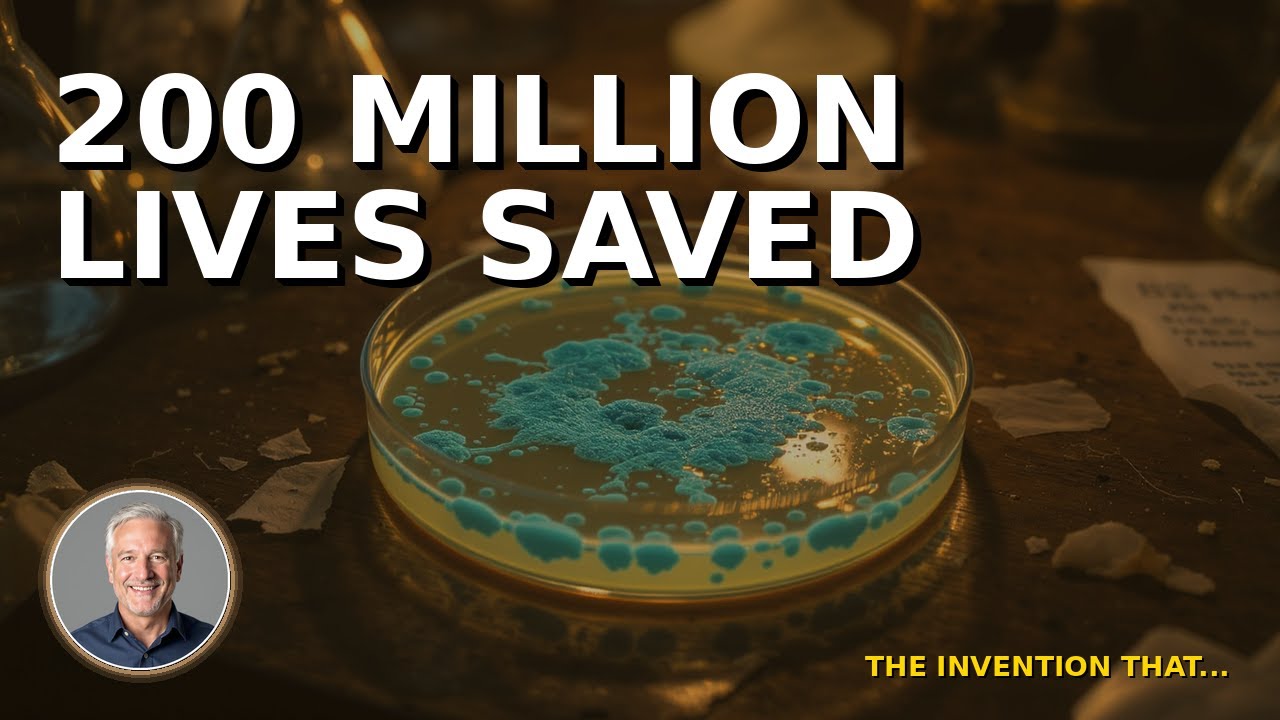
Ernst Boris Chain arrived in Oxford in 1935 as a Jewish refugee from Nazi Germany, carrying little more than his brilliant mind and a doctorate in biochemistry. He had no idea that within a decade, his work would help save more human lives than perhaps any other scientific breakthrough of the 20th century. While Alexander Fleming discovered penicillin by accident in 1928, it was Chain who figured out how to turn that laboratory curiosity into the miracle drug that would revolutionize medicine.
The Biochemist Who Saw Potential
Born in Berlin to Russian-Jewish immigrants, Chain initially pursued music before switching to chemistry. When Hitler rose to power in 1933, Chain recognized the writing on the wall and fled to England, eventually joining Howard Florey’s team at Oxford University’s pathology department. In 1938, Chain was researching antibacterial substances when he stumbled across Fleming’s largely forgotten 1929 paper on penicillin.
While Fleming had observed that his mold could kill bacteria, he never pursued its therapeutic potential seriously. Chain, however, saw something Fleming had missed. Working with Florey and a small team, Chain developed methods to purify and concentrate penicillin, transforming it from a laboratory oddity into a practical medicine. By May 1940, their first animal tests were so successful that one researcher reportedly shouted, “It looks like a miracle!”
The timing was crucial. As World War II raged, soldiers were dying from infected wounds that would have been survivable with antibiotics. Chain’s biochemical innovations made mass production possible, though the process remained extraordinarily complex and expensive. He developed techniques to extract penicillin from the mold, stabilize it, and concentrate it into doses powerful enough to fight deadly infections.
Racing Against Death and Politics
Chain’s contributions went far beyond mere chemistry. He understood that penicillin’s impact would depend on manufacturing scale, and he pushed relentlessly for increased production. When British pharmaceutical companies initially showed little interest, Chain and Florey took their research to America, where companies like Pfizer developed deep-tank fermentation methods that could produce penicillin in massive quantities.
By D-Day in 1944, enough penicillin existed to treat every wounded Allied soldier. Chain’s work was saving thousands of lives daily. Before penicillin, pneumonia killed 30% of its victims; afterward, the mortality rate dropped to just 5%. Childhood diseases like scarlet fever and rheumatic fever became manageable rather than deadly.
In 1945, Chain shared the Nobel Prize in Physiology or Medicine with Fleming and Florey. However, he remained frustrated that Fleming received most of the public credit despite contributing least to penicillin’s development as a practical medicine. Chain often pointed out that discovery and development were entirely different challenges—and development was what actually saved lives.
The Legacy of Lives Saved
Chain’s later career included pioneering work in biochemistry and biotechnology, but his penicillin research remains his defining achievement. Conservative estimates suggest antibiotics have saved over 200 million lives since the 1940s. Chain didn’t just help create the first modern antibiotic; he established the scientific frameworks that made the entire antibiotic revolution possible.
Perhaps more significantly, Chain proved that basic biochemical research could have immediate, massive humanitarian impact. His transformation of Fleming’s accidental discovery into a practical medicine became a model for how scientific research could be rapidly translated into life-saving treatments. In an era when medicine was still largely powerless against bacterial infections, Chain helped usher in the modern age of pharmaceutical intervention.
Today, as antibiotic resistance threatens to return us to a pre-penicillin world, Chain’s work serves as both inspiration and warning. His scientific legacy reminds us that medical breakthroughs require not just discovery, but the painstaking biochemical work to transform laboratory curiosities into medicines that can save the world.