Corporate Autopsy: Business Collapses Explained
The Company That Poisoned an Entire Town - And Got Away With It
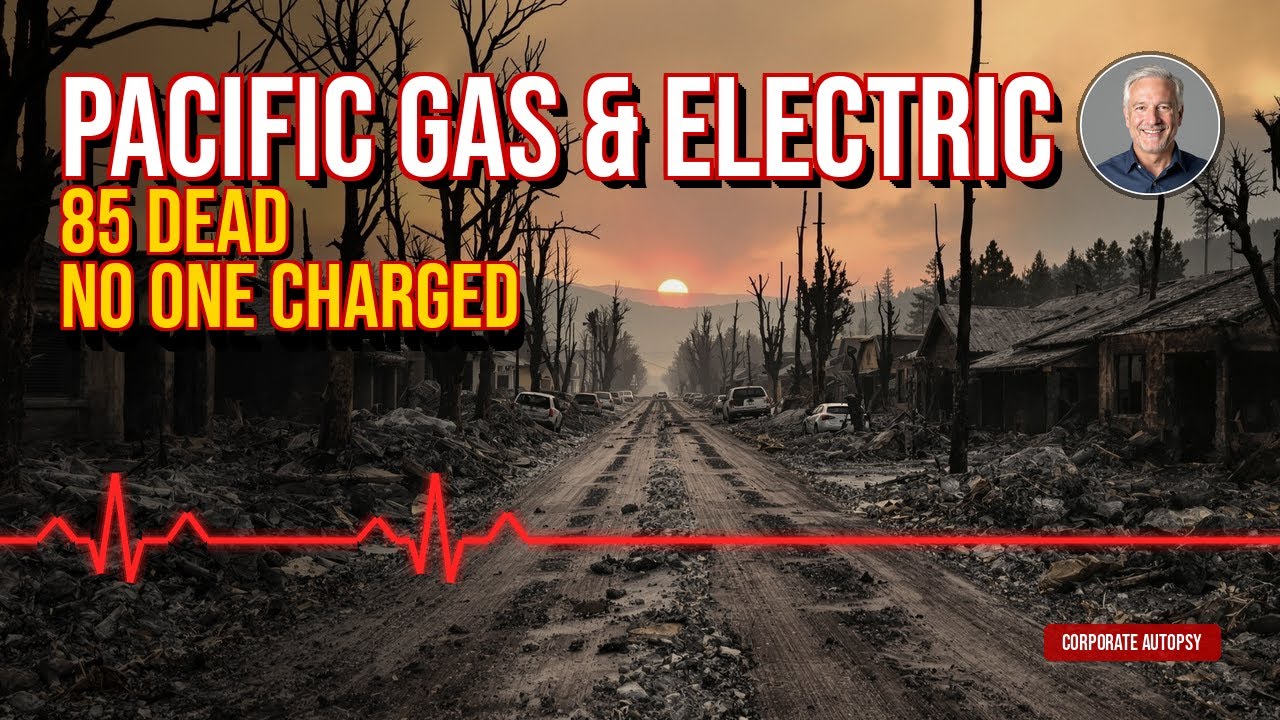
PG&E was convicted of 84 counts of involuntary manslaughter for the Camp Fire. The company paid fines. Zero executives were charged.
First Latina Fortune 500 utility CEO during Camp Fire
Appears in 1 documentary
Geisha Williams carved an unlikely path to the executive suite of one of America’s largest utilities, only to find herself at the helm during one of the most devastating corporate disasters in California history. As the first Latina CEO of a Fortune 500 utility company, Williams represented progress and possibility. But her tenure at Pacific Gas & Electric would be defined by deadly wildfires, criminal convictions, and a corporate culture that prioritized profits over public safety.
Born in Cuba and raised in Florida after her family fled the Castro regime, Williams built her career methodically through the energy sector. She spent two decades at Florida Power & Light, rising through operations and regulatory affairs before joining PG&E in 2007. Her appointment as CEO in January 2017 marked a historic milestone—she became the first woman of color to lead a major American utility company, overseeing 24,000 employees and serving 16 million Californians.
Williams inherited a company already under intense scrutiny. PG&E had been convicted of felony charges in 2016 for the deadly San Bruno pipeline explosion that killed eight people in 2010. Federal prosecutors had placed the utility under court supervision, requiring safety improvements and compliance monitoring. Yet Williams projected confidence, promising a “safety first” culture and pledging $3 billion in wildfire prevention measures.
On November 8, 2018, a PG&E transmission line sparked what would become the deadliest wildfire in California history. The Camp Fire raced through the town of Paradise, killing 85 people and destroying nearly 19,000 structures. Within hours, investigators focused on PG&E equipment as the ignition source. Internal company emails later revealed that executives, including Williams, knew about aging infrastructure problems but had deferred critical maintenance to protect shareholder profits.
The disaster exposed the fundamental tension at the heart of Williams’ leadership challenge. As a publicly traded company, PG&E faced constant pressure to maximize returns for investors. As a regulated utility, it bore responsibility for public safety across 70,000 square miles of California terrain, including vast stretches of fire-prone wilderness. Williams attempted to balance these competing demands, but the company’s risk management failures proved catastrophic.
Within weeks of the Camp Fire, PG&E’s stock price collapsed and the company faced billions in potential liability. Williams announced her resignation in January 2019, just days before the utility filed for bankruptcy protection. Her departure came with a $2.5 million severance package—a detail that sparked outrage among victims’ families and California politicians.
Williams’ story illuminates the limits of individual leadership within dysfunctional corporate systems. Despite her barrier-breaking appointment and stated commitment to safety, she could not overcome decades of deferred maintenance, regulatory capture, and shareholder primacy. PG&E was ultimately convicted on 84 counts of involuntary manslaughter for the Camp Fire deaths—but no individual executives, including Williams, faced criminal charges.
Her tenure raises uncomfortable questions about corporate accountability in essential industries. Can market-driven companies safely manage critical infrastructure? How do prosecutors assign individual responsibility within complex corporate hierarchies? Williams’ rise and fall embodies these tensions, representing both the promise of diverse corporate leadership and the structural constraints that even transformational leaders face when profits and public safety collide.
The definitive account of the Camp Fire disaster that ended Williams' tenure and exposed PG&E's deadly negligence.
Essential reading on corporate environmental disasters and the legal battles that follow, mirroring the challenges Williams faced.
PG&E was convicted of 84 counts of involuntary manslaughter for the Camp Fire. The company paid fines. Zero executives were charged.