Corporate Autopsy: Business Collapses Explained
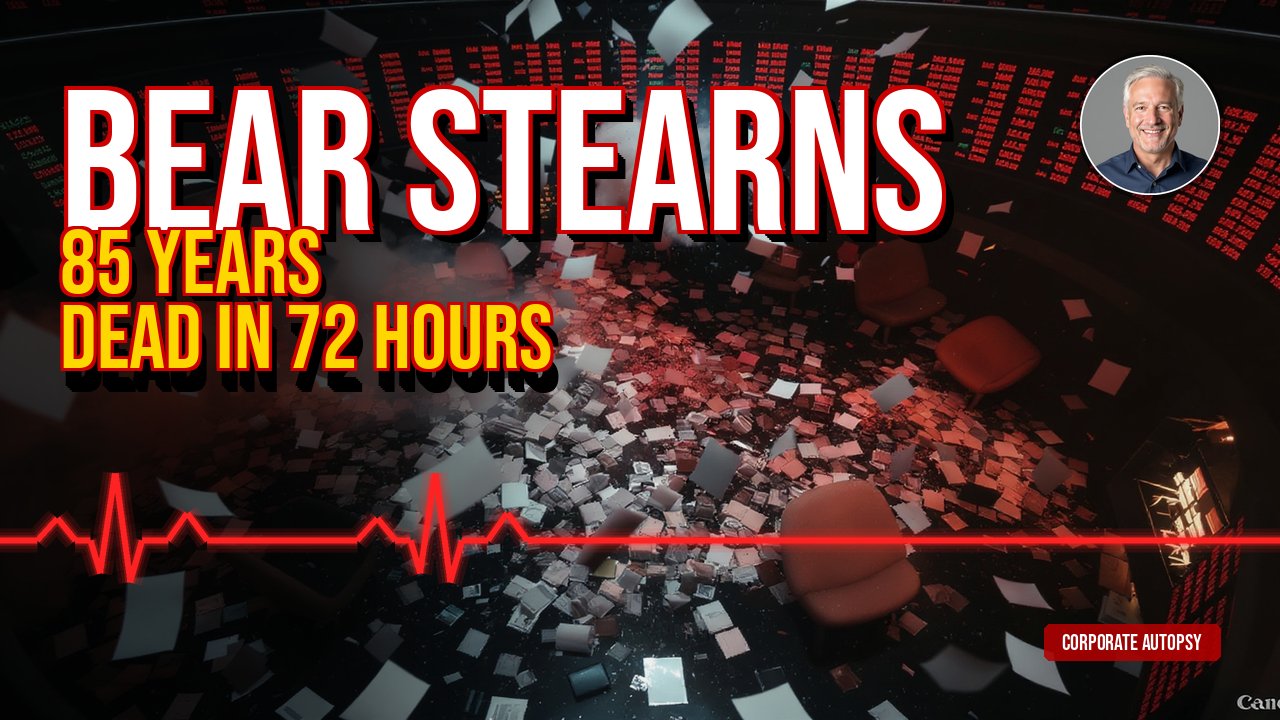
Bear Stearns: 85 Years Destroyed in 72 Hours
While Bear Stearns was collapsing, CEO Jimmy Cayne was at a bridge tournament in Detroit, unreachable by phone
Treasury Secretary during 2008 financial crisis
Appears in 1 documentary
Henry “Hank” Paulson stood at the epicenter of American capitalism’s greatest crisis since the Great Depression, wielding unprecedented power as Treasury Secretary during the 2008 financial meltdown. His decisions in those chaotic months—who lived, who died, and how the government would respond—fundamentally reshaped the relationship between Wall Street and Washington for generations.
Paulson’s path to crisis management began in the trading pits of Chicago and the boardrooms of Goldman Sachs, where he spent 32 years climbing to the CEO position in 1999. Under his leadership, Goldman transformed into the most profitable and influential investment bank on Wall Street, generating record earnings while navigating increasingly complex financial instruments. His expertise in derivatives and mortgage securities—the very weapons that would later detonate the global economy—made him both architect and firefighter of the crisis.
When President Bush recruited him as Treasury Secretary in 2006, Paulson initially hesitated, comfortable in his $37 million-per-year Goldman role. But as housing markets began showing cracks, his Wall Street experience became invaluable to an administration facing economic headwinds. His Goldman network provided unparalleled intelligence on market conditions, though it would later raise questions about conflicts of interest and regulatory capture.
The Bear Stearns collapse in March 2008 marked Paulson’s baptism by fire. While CEO Jimmy Cayne played bridge in Detroit, unreachable as his firm hemorrhaged billions, Paulson orchestrated a weekend rescue that sold the 85-year-old investment bank to JPMorgan Chase for $2 per share—down from $170 just a year earlier. The deal established a template: private losses would be socialized through government intervention, but shareholders would face devastating dilution.
Six months later, when Lehman Brothers teetered on the brink, Paulson made his most controversial decision: no bailout. The bankruptcy filing on September 15, 2008, triggered a global financial tsunami that nearly collapsed the entire banking system. Within days, Paulson reversed course, bailing out AIG for $85 billion and pushing through the $700 billion Troubled Asset Relief Program (TARP) with a three-page proposal that initially gave him virtually unlimited authority over the financial system.
Paulson’s crisis management revealed the improvised nature of American economic policymaking during existential threats. His background enabled swift decision-making but highlighted the revolving door between Wall Street and Washington—he personally profited from Goldman’s transformation into a bank holding company during the crisis, a change that gave the firm access to federal lending facilities.
The TARP program, though initially unpopular, prevented a complete economic collapse and eventually returned profits to taxpayers. However, Paulson’s selective interventions—saving some institutions while allowing others to fail—established dangerous precedents about which firms were truly “too big to fail.” His decisions during those frantic months created moral hazard that continues to distort financial markets today, as investors assume government backstops for systemically important institutions.
Paulson’s tenure demonstrated how quickly democratic capitalism can shift toward state intervention during crises. His legacy embodies the central tension of modern finance: the need for government rescue when private markets fail, balanced against the risks of creating permanent subsidies for financial speculation.
Features extensive coverage of Paulson's crisis decision-making, including his pivotal role in the Bear Stearns rescue.
Paulson's own account of managing the 2008 financial crisis from inside the Treasury Department.
Examines how Wall Street leaders like Paulson contributed to the crisis they were later tasked with solving.
While Bear Stearns was collapsing, CEO Jimmy Cayne was at a bridge tournament in Detroit, unreachable by phone