Harry Crawfish

Quapaw allottee whose land produced the 1913 strike that created Picher

Appears in 1 documentary

Harry Crawfish — The Quapaw landowner whose allotment yielded the first rich strike in the field that became Picher, Oklahoma.

Harry Crawfish was a member of the Quapaw Nation whose allotment in Ottawa County, Oklahoma, produced the first rich lead and zinc strike of the Picher field late in 1913. Almost nothing about his life is recorded beyond that fact, which is itself the point. The man whose land held one of the richest ore bodies in North America appears in the history of the district as a name on a lease.

Allotment Land

The Quapaw had been moved to the northeastern corner of Indian Territory in the 1830s, and in the 1890s the tribe divided its reservation into individual allotments of roughly two hundred acres apiece. The land looked like ordinary prairie: scrub oak, red dirt, thin soil over chert. Federal officials classified many of the allottees as “incompetent” to manage their own property, which placed their leases and royalties under government control. When prospectors began to suspect that the Joplin ore body ran south across the Kansas line into Oklahoma, the Quapaw allotments were the ground they wanted, and the allottees were not always the people who decided what happened to it.

The Strike

The discovery on the Crawfish allotment confirmed what the drillers had hoped. Within months the surrounding allotments were leased, drill rigs were multiplying across the prairie, and a tent camp was growing into a town. Picher was platted in 1918, named for the Joplin company whose drills had opened the field, and by the 1920s the Tri-State Mining District was the largest lead and zinc producer in the world. Royalties from the mines did flow to some Quapaw families, and a few became wealthy. Many others saw their money managed, delayed or lost through the guardianship system, and all of them inherited the chat piles, the flooded workings and the orange creek the mining left behind.

Why He Matters

Crawfish’s name survives because an ore body was named after his land, the way a dozen Quapaw names survive on the maps of the mining field. His story is the story of allotment in a single sentence: the wealth under a Native family’s land was found by others, extracted by others and mostly kept by others, while the damage stayed on the allotment. A century later the Quapaw Nation leads the cleanup of the ground where the strike was made. The circle that began on Harry Crawfish’s land is still, slowly, closing.

Further Reading

Arthur's Pick

The tribal history that explains who Harry Crawfish was in the Quapaw world of 1913 and what allotment had done to his people.

Johnson's history opens with the Quapaw allotments and the Crawfish strike and follows the ore field to its end.

Learn More About Harry Crawfish

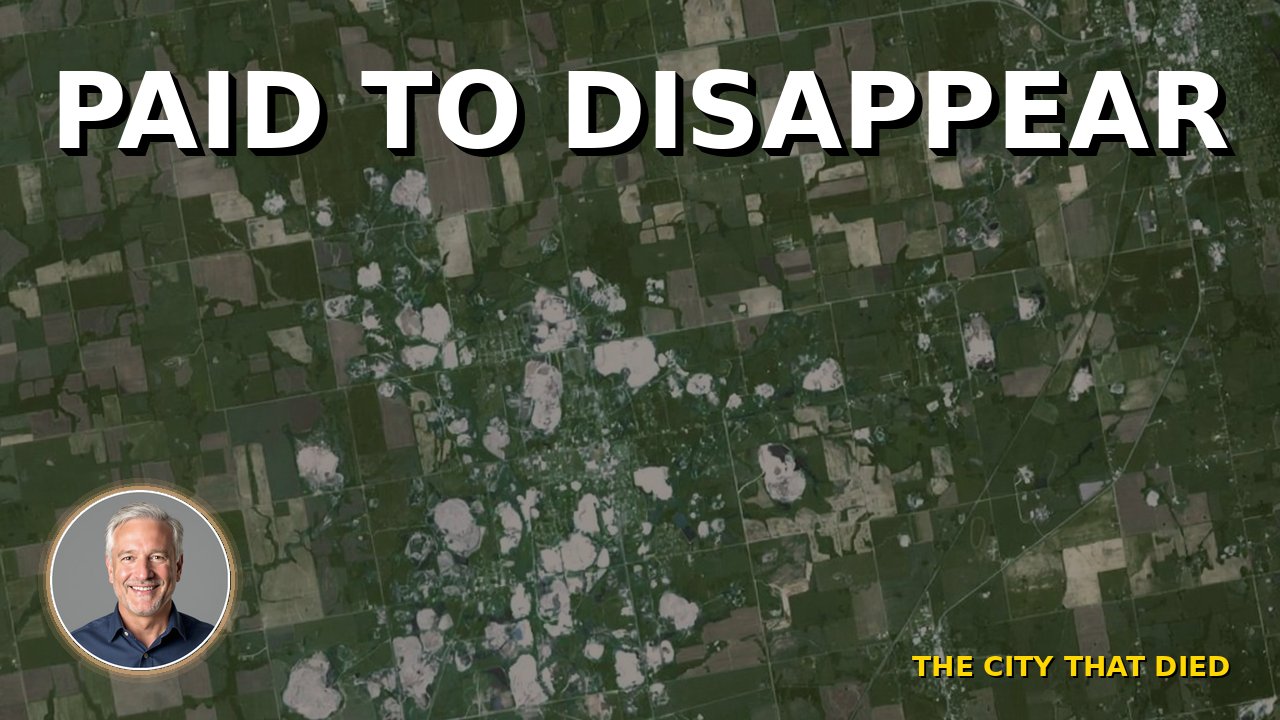
Thumbnail for The Town America Paid to Disappear: Picher, Oklahoma
The City That Died

The Town America Paid to Disappear: Picher, Oklahoma

The gray mountains that surround Picher are called chat piles, crushed rock left over from a century of lead and zinc milling. For decades chat was free, so people used it for everything: driveways, road gravel, fill under new houses, the sand in school sandboxes and the surface of the high school running track. Children sledded down the piles in winter and swam in the flooded mine pits in summer. In the mid-1990s, blood testing found that roughly a third of Picher's children had lead levels above the federal threshold of concern. Lead has no safe level in a child. Not a single mining executive was ever charged with a crime.

1913-2015 Picher, Oklahoma and Treece, Kansas