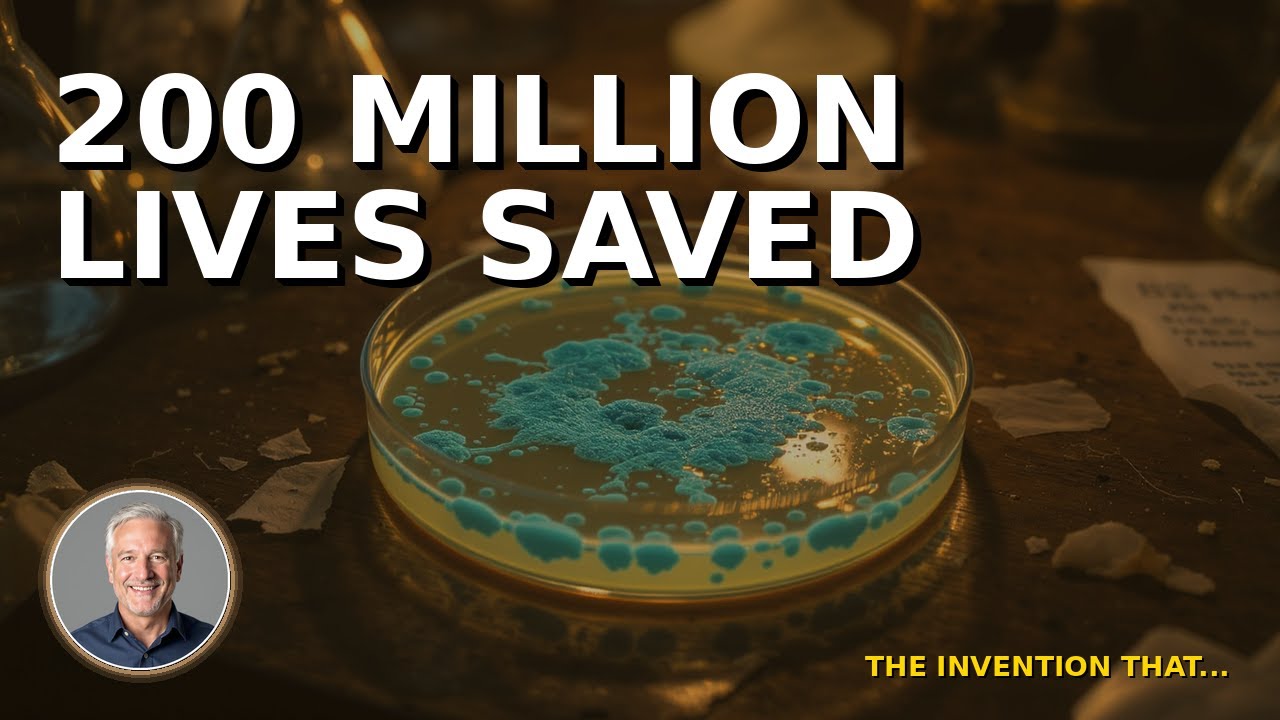
While Alexander Fleming discovered penicillin by accident in 1928, it was Howard Walter Florey who transformed this laboratory curiosity into the miracle drug that would revolutionize modern medicine and save countless millions of lives. Born in Adelaide, Australia, on September 24, 1898, Florey would become one of the most important medical researchers of the 20th century, though his contributions remained largely unknown to the general public for decades.
The Oxford Breakthrough
In 1935, Florey arrived at Oxford University as Professor of Pathology, where he assembled a remarkable team of researchers including the brilliant biochemist Ernst Boris Chain. By 1938, Chain had rediscovered Fleming’s largely forgotten penicillin research and convinced Florey to investigate its therapeutic potential. What Fleming had observed but never fully developed, Florey’s team would transform into practical reality.
The breakthrough came in May 1940, when Florey and Chain conducted their famous mouse experiment. They infected eight mice with deadly streptococcus bacteria, then treated four with penicillin while leaving four as controls. By the next morning, all four untreated mice were dead, while the four treated with penicillin were alive and healthy. This simple experiment proved that penicillin could cure bacterial infections in living organisms—a discovery that would reshape the trajectory of World War II and modern medicine.
Working under intense wartime pressure, Florey’s team faced the enormous challenge of scaling up penicillin production from laboratory amounts to quantities needed for clinical trials. They grew the precious mold in every available container, from bedpans to food tins, producing barely enough penicillin for initial human trials. The first patient, Police Constable Alexander, showed dramatic improvement until the supply ran out and he relapsed fatally—a heartbreaking reminder of how desperately more penicillin was needed.
From Laboratory to Mass Production
Recognizing that Britain’s war-torn economy couldn’t support large-scale penicillin production, Florey made the crucial decision to travel to America in 1941. He convinced the U.S. government and pharmaceutical companies to invest in mass production, a decision that proved pivotal when America entered the war later that year. By 1944, American factories were producing enough penicillin to treat all Allied wounded, giving Allied forces an enormous medical advantage.
Florey’s methodical approach and leadership skills proved as important as his scientific brilliance. Unlike Fleming, who worked largely alone, Florey understood that transforming penicillin required a coordinated team effort combining chemistry, biology, medicine, and industrial engineering. His ability to organize complex research projects and navigate wartime bureaucracies made the penicillin miracle possible.
The Antibiotic Revolution
Florey’s work launched the antibiotic age, fundamentally changing human civilization’s relationship with infectious disease. Before penicillin, pneumonia killed 30% of its victims, and simple infections routinely proved fatal. After penicillin became widely available, these ancient killers became largely manageable conditions. The drug enabled complex surgeries, organ transplants, and cancer treatments that would have been impossibly dangerous in the pre-antibiotic era.
In 1945, Florey shared the Nobel Prize in Physiology or Medicine with Fleming and Chain. He was knighted in 1944 and later became Baron Florey, one of the few scientists elevated to the House of Lords. Despite these honors, Florey remained largely unknown to the public, preferring to let his work speak for itself.
Florey died on February 21, 1968, having witnessed penicillin save an estimated 200 million lives. His legacy extends beyond any single discovery—he demonstrated how systematic scientific research, international cooperation, and industrial partnership could solve humanity’s greatest challenges. In transforming Fleming’s accidental observation into the world’s first mass-produced antibiotic, Florey didn’t just save lives; he showed how science could be harnessed to serve humanity on an unprecedented scale.