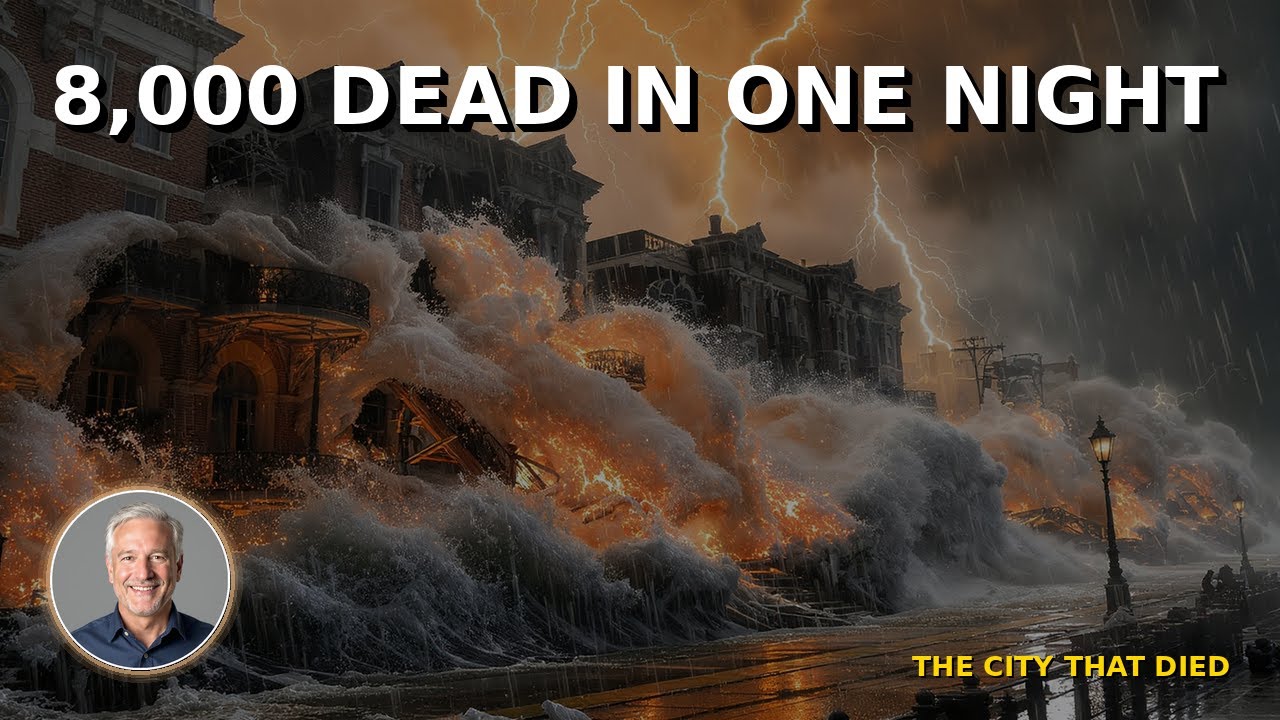
Isaac Monroe Cline stands as one of the most controversial figures in American meteorological history—a man whose scientific confidence collided catastrophically with the raw power of nature on September 8, 1900. As the chief meteorologist for the U.S. Weather Bureau in Galveston, Texas, Cline became forever linked to the deadliest natural disaster in American history, when his failure to adequately warn residents of an approaching hurricane contributed to the deaths of over 8,000 people.
The Confident Meteorologist
Born in Tennessee in 1861, Cline embodied the scientific optimism of the late 19th century. After joining the U.S. Weather Bureau in 1882, he quickly established himself as a rising star in the young field of meteorology. Posted to Galveston in 1889, Cline became the island’s primary weather authority during its golden age as “the New York of the South.” The city’s prosperity rested on its position as America’s second-busiest port, handling vast quantities of cotton and grain exports.
Cline’s confidence in his scientific abilities reflected the era’s faith in technological progress and human mastery over nature. In 1891, he published an article dismissing the possibility of a destructive hurricane hitting Galveston, arguing that the shallow waters of the Gulf of Mexico would dissipate any storm’s power before it reached the Texas coast. This assessment, later proven tragically wrong, demonstrated the limitations of late 19th-century meteorological knowledge and the dangerous overconfidence it could breed.
The Storm of the Century
On September 8, 1900, Cline’s scientific certainty met its match. Despite receiving warnings from Cuban meteorologists about a powerful hurricane in the Gulf, Cline and the Weather Bureau’s central office in Washington initially downplayed the threat. The bureau’s institutional rivalry with Cuban forecasters—and its refusal to acknowledge that foreign meteorologists might possess superior knowledge—proved deadly.
As the storm approached, Cline did recognize the growing danger and attempted to warn residents, but his efforts came too late and were too limited. The hurricane brought winds exceeding 130 mph and a storm surge that submerged the entire island under 8-15 feet of water. Galveston’s highest point stood only 8.7 feet above sea level. Cline himself barely survived, losing his pregnant wife when their home collapsed. He spent the night clinging to debris with his three daughters and brother, floating through a city transformed into a waterscape of death and destruction.
The aftermath was apocalyptic. Bodies were so numerous that normal burial proved impossible. Workers loaded corpses onto barges and dumped them in the Gulf, only to watch in horror as tides carried them back to shore. For weeks, funeral pyres burned on street corners throughout the devastated city.
Cline’s experience fundamentally changed both the man and American meteorology. The disaster exposed critical flaws in weather forecasting and communication systems, leading to significant reforms in the Weather Bureau. The tragedy demonstrated the deadly consequences of scientific overconfidence and institutional pride, lessons that resonated far beyond meteorology.
Cline spent the remainder of his career—he died in 1955—working to improve hurricane forecasting and warning systems. His detailed account of the storm, published in 1900, became a crucial historical document, though critics argued he minimized his own role in the inadequate warnings. The Galveston Hurricane transformed American attitudes toward natural disasters, spurring investments in meteorological science and emergency preparedness that continue today. Cline’s story remains a sobering reminder of nature’s power and the life-or-death importance of scientific humility.