Corporate Autopsy: Business Collapses Explained
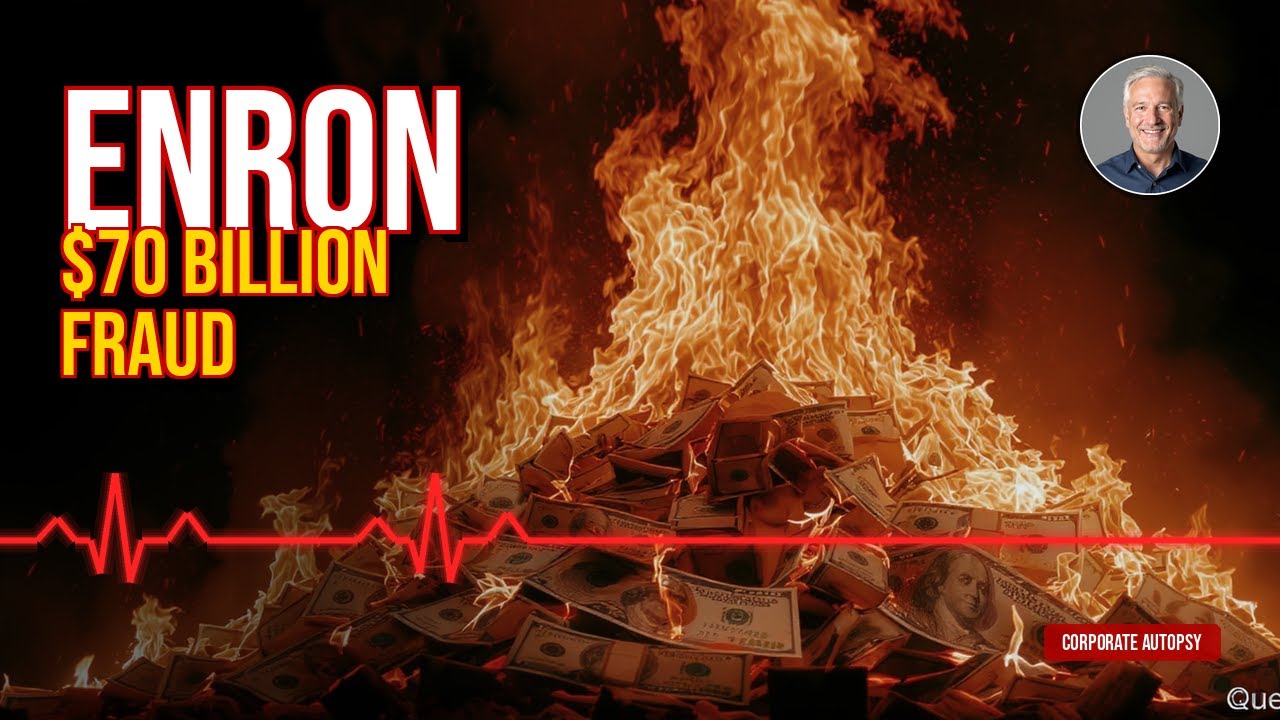
Enron: The Company That Fooled Everyone
16 of 17 Wall Street analysts rated Enron a buy while the company was collapsing
Former Enron CEO convicted of fraud
1953-
Appears in 1 documentary
Jeffrey Keith Skilling embodied the dangerous intersection of brilliant intellect and corporate hubris that defined American business culture at the turn of the 21st century. As the architect of Enron’s transformation from a stodgy pipeline company into Wall Street’s most celebrated energy trader, Skilling didn’t just participate in one of history’s largest corporate frauds—he fundamentally redefined how markets could be manipulated through financial engineering and aggressive accounting practices.
Born in Pittsburgh in 1953, Skilling’s path to infamy began with genuine achievement. After graduating from Southern Methodist University and serving as a corporate planner, he earned his MBA from Harvard Business School in 1979, where he distinguished himself as a sharp analytical mind with an almost ruthless competitive streak. His professors remembered a student who viewed business as intellectual warfare, famously suggesting that money laundering could be made ethical through proper market mechanisms.
At McKinsey & Company, Skilling developed the consulting expertise that would later revolutionize—and ultimately destroy—Enron. He specialized in energy sector strategy, becoming particularly fascinated with deregulation’s potential to transform traditional utility models. When Enron hired McKinsey in 1987 to evaluate new business opportunities, Skilling proposed creating a “gas bank” that would buy gas from producers and sell to consumers, profiting from price differences. This concept attracted Enron CEO Kenneth Lay, who recruited Skilling to implement his own revolutionary ideas.
Joining Enron in 1990, Skilling created the company’s natural gas trading operation, which became the template for transforming Enron from an energy company into a financial trading house. His most consequential innovation was convincing federal regulators to allow Enron to use mark-to-market accounting for its trading business—a practice that let the company book potential future profits immediately as current revenue.
This accounting method, combined with Skilling’s creation of special purpose entities to hide debt, enabled Enron to manufacture spectacular growth numbers that captivated Wall Street. Under his leadership as president and COO, then CEO in February 2001, Enron’s reported revenues grew from $9 billion in 1995 to $101 billion in 2000. The company’s stock price soared from $19 in early 1990 to over $90 in 2000, making Enron America’s seventh-largest corporation.
Skilling’s management philosophy reflected his Harvard Business School training taken to dangerous extremes. He implemented a “rank and yank” performance review system that fired the bottom 15% of employees annually, creating a hyper-competitive culture that rewarded results regardless of methods. This environment, combined with Skilling’s public persona as a brilliant visionary, made questioning Enron’s increasingly complex financial structures tantamount to career suicide.
The contradictions in Skilling’s vision became apparent when California’s energy deregulation created opportunities for market manipulation that Enron aggressively exploited. While Skilling publicly championed free markets, his company was engineering artificial shortages and price spikes that contributed to California’s energy crisis in 2000-2001. When journalists and analysts began questioning Enron’s financial opacity, Skilling’s responses grew increasingly hostile, famously calling one analyst an “asshole” during a public earnings call.
Skilling’s sudden resignation in August 2001, citing “personal reasons” despite Enron’s apparent success, marked the beginning of the end. Within four months, Enron filed for bankruptcy as investigators unraveled the web of accounting fraud and market manipulation that Skilling had orchestrated. In 2006, he was convicted on 19 counts of conspiracy, fraud, and insider trading, receiving a 24-year prison sentence later reduced to 14 years.
Skilling’s story represents more than individual criminality—it exemplifies how deregulation, financial innovation, and celebrity CEO culture could combine to create systemic risks that threatened entire markets. His techniques for obscuring debt and inflating revenue became templates that other companies would later employ, making the Enron collapse a harbinger of the broader corporate scandals that would shake American capitalism throughout the 2000s. Released from prison in 2019, Skilling remains a cautionary tale of how intellectual brilliance without ethical constraints can transform innovation into fraud on an unprecedented scale.
Provides the most detailed analysis of Skilling's role in creating Enron's fraudulent business model and toxic corporate culture.
Offers a gripping narrative of Skilling's rise and fall, with extensive detail on his psychological motivations and decision-making process.
Co-authored with whistleblower Sherron Watkins, providing unique insights into how Skilling's leadership style enabled the massive fraud.
16 of 17 Wall Street analysts rated Enron a buy while the company was collapsing