Corporate Autopsy: Business Collapses Explained
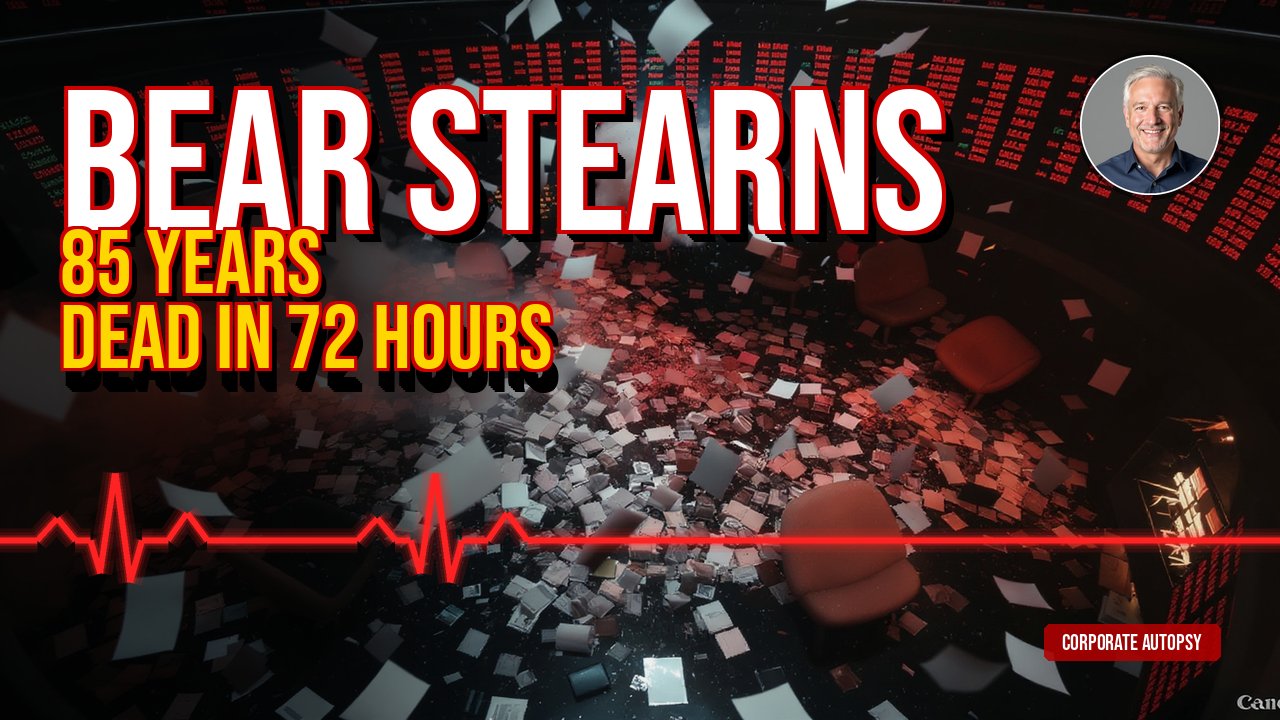
Bear Stearns: 85 Years Destroyed in 72 Hours
While Bear Stearns was collapsing, CEO Jimmy Cayne was at a bridge tournament in Detroit, unreachable by phone
CEO during Bear Stearns collapse, bridge tournament absence
Appears in 1 documentary
James “Jimmy” Cayne embodied Wall Street’s high-stakes culture like few others—a bridge champion turned investment banker whose passion for cards ultimately became symbolic of executive detachment during one of finance’s darkest hours. As the last CEO of Bear Stearns, Cayne’s absence during his firm’s final collapse in March 2008 crystallized public outrage about Wall Street’s priorities and helped define how Americans would remember the financial crisis.
Born in 1934, Cayne began his career far from the trading floors of Manhattan. After serving in the Army and working as a traveling salesman, he discovered his twin passions: bridge and Wall Street. In 1969, he joined Bear Stearns as a stockbroker, quickly distinguishing himself not just through deal-making but through his legendary bridge skills. Cayne was a world-class player who would later captain the American team in international competitions.
His rise at Bear Stearns was meteoric. The firm, known for its scrappy, entrepreneurial culture, proved the perfect match for Cayne’s aggressive style. He built the company’s institutional equity business and became a rainmaker, cultivating relationships with major clients while maintaining his reputation as one of Wall Street’s most skilled bridge players. This dual identity—serious banker by day, cards strategist by night—would define his entire career.
Cayne became CEO in 1993 and chairman in 2001, transforming Bear Stearns into a major force in mortgage-backed securities and hedge fund services. Under his leadership, the firm’s market capitalization peaked at over $20 billion in 2007. His personal stake was worth more than $1 billion, making him one of Wall Street’s wealthiest executives.
The contradiction at the heart of Cayne’s leadership became tragically evident during Bear Stearns’ final crisis in March 2008. As rumors swirled about the firm’s liquidity and its stock price plummeted, Cayne was in Detroit playing in a bridge tournament. For crucial hours during Thursday and Friday, March 13-14, as Bear Stearns faced a classic bank run, senior executives and government officials struggled to reach their CEO.
This wasn’t merely bad timing—it was emblematic of a broader disconnection. Throughout 2007, as the subprime mortgage crisis intensified and two Bear Stearns hedge funds collapsed, Cayne had maintained his tournament schedule. He spent an estimated 21 days playing bridge or golf during the crucial period when his firm faced mounting pressures.
The optics were devastating. While Bear Stearns employees faced unemployment and shareholders watched their investments evaporate, their CEO appeared more concerned with his card game than their crisis. By Sunday, March 16, Bear Stearns was sold to JPMorgan Chase for just $2 per share—later raised to $10—ending 85 years of independence.
Cayne’s story transcends individual failure to illuminate systemic problems in American finance. His absence during Bear Stearns’ collapse became a powerful symbol of executive detachment that helped fuel public anger about Wall Street bailouts and corporate accountability. The image of a billionaire CEO playing bridge while his company burned resonated far beyond financial circles.
More broadly, Cayne represented the end of an era on Wall Street. Bear Stearns had been one of the last major independent investment banks, and its collapse marked the beginning of the 2008 financial crisis that would reshape American finance. Within months, Lehman Brothers would fail, Merrill Lynch would be acquired, and the entire investment banking model would be called into question.
Today, Cayne’s legacy serves as a cautionary tale about the dangers of executive hubris and misplaced priorities. His story reminds us that in finance, as in bridge, being absent when it matters most can cost you everything—not just your own fortune, but the livelihoods of thousands who trusted you to stay at the table.
The definitive account of Cayne's leadership and his fatal absence during Bear Stearns' final days, based on extensive interviews.
Free with Audible trial, this provides the complete inside story of how Cayne's bridge tournament became symbolic of executive detachment.
Chronicles Cayne's role in the broader 2008 crisis, showing how Bear Stearns' collapse under his watch triggered the financial meltdown.
While Bear Stearns was collapsing, CEO Jimmy Cayne was at a bridge tournament in Detroit, unreachable by phone