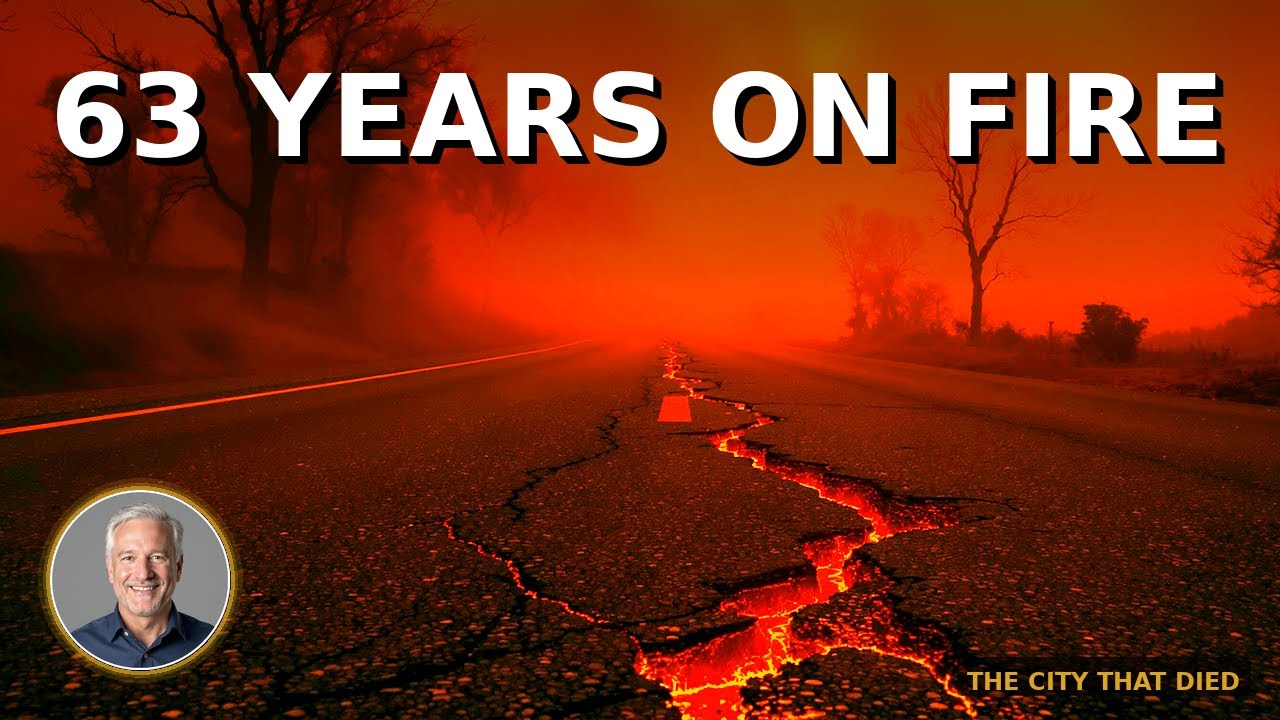
John Coddington emerged as one of Centralia’s most persistent voices during the coal town’s slow-motion apocalypse, fighting for recognition and justice as an underground fire consumed his community for decades. When most residents accepted government buyouts and relocated, Coddington remained, becoming a living witness to one of America’s most surreal environmental disasters and a tireless advocate for the families who lost everything to bureaucratic neglect.
The Last Stand of Centralia
Born and raised in Centralia, Pennsylvania, Coddington witnessed his hometown’s transformation from a working-class mining community into a national symbol of governmental failure. When the mine fire began burning in 1962—likely ignited by burning trash in an old strip mine pit—few residents imagined it would still be smoldering sixty years later. As the underground inferno spread through the town’s network of abandoned coal mines, releasing toxic gases and creating dangerous sinkholes, Coddington became one of the most vocal critics of the federal and state response.
The 1981 incident that nearly claimed twelve-year-old Todd Domboski’s life marked a turning point in Centralia’s story, but Coddington had been sounding alarms long before the dramatic rescue made national headlines. He understood that the sinkhole wasn’t an isolated accident but a symptom of a much larger crisis—one that officials had been downplaying for nearly two decades. While government agencies debated the costs and feasibility of extinguishing the fire, Coddington documented the daily reality of living above an inferno: dead vegetation, basement temperatures reaching dangerous levels, and the constant threat of carbon monoxide poisoning.
Advocate for the Forgotten
As Centralia’s population dwindled from over 1,000 residents to fewer than a dozen, Coddington’s role evolved from concerned citizen to unofficial historian and spokesperson for a dying town. He worked tirelessly to ensure that the human cost of the disaster wasn’t forgotten amid the sensational media coverage of a “ghost town” with eternally burning streets. His advocacy efforts focused on securing fair compensation for displaced families and holding accountable the officials whose decisions—or indecisions—had allowed a controllable fire to become an unstoppable catastrophe.
Coddington’s persistence proved crucial in keeping Centralia’s story in the public eye during the 1980s and 1990s, when government attention moved on to other crises. He collaborated with journalists, researchers, and documentary filmmakers, providing firsthand accounts that humanized what could have remained merely a bizarre footnote in environmental history. His detailed knowledge of the fire’s progression, combined with his deep connections to displaced families, made him an invaluable resource for understanding how bureaucratic failures compounded a relatively minor environmental problem into a community-destroying disaster.
Legacy of Environmental Justice
John Coddington’s decades-long advocacy represents more than local activism—it embodies the broader struggle of working-class communities abandoned by the institutions meant to protect them. His story illustrates how environmental disasters disproportionately impact those with the least political power, and how individual persistence can preserve important truths that institutions would prefer to forget. Through his efforts, Centralia became not just a tourist curiosity but a case study in environmental justice, government accountability, and community resilience.
Today, as climate change creates new environmental refugees and industrial accidents threaten communities worldwide, Coddington’s advocacy offers both warning and inspiration. His insistence that the human dimension of environmental disasters must never be overlooked ensures that Centralia’s story serves as more than cautionary tale—it stands as a testament to the importance of bearing witness, even when the world seems ready to move on.