50 States Forgotten History
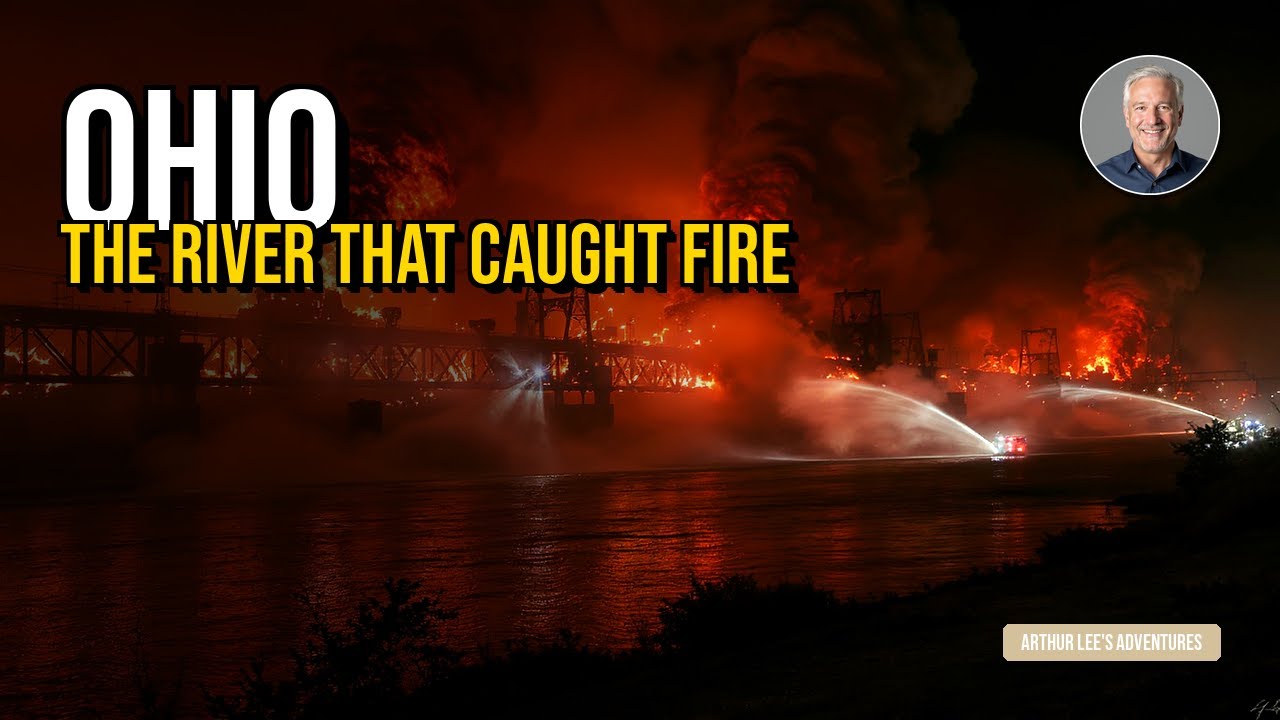
Ohio's River Caught Fire and Changed America
The Rankin family beacon in Ripley guided 2,000 enslaved people to freedom across the Ohio River
Standard Oil founder and America's first billionaire
1839-1937
Appears in 1 documentary
John Davison Rockefeller emerged from modest beginnings in rural New York to become America’s first billionaire and arguably its most powerful industrialist. Born in 1839 to a traveling salesman father and devoutly Baptist mother, Rockefeller learned early the twin lessons that would define his empire: the value of methodical planning and the power of moral conviction. His family’s move to Cleveland, Ohio in 1853 placed him at the epicenter of America’s coming industrial transformation.
In 1863, Rockefeller made the decision that would reshape American commerce forever. At age 24, he invested in his first oil refinery in Cleveland, recognizing that the future lay not in the chaotic oil fields of Pennsylvania, but in the systematic refining and distribution of petroleum products. Within seven years, his company was the largest refinery in the world.
The formation of Standard Oil Company of Ohio in 1870 marked the beginning of corporate consolidation on an unprecedented scale. Rockefeller’s strategy was devastatingly simple: buy out competitors or drive them to ruin through predatory pricing. By 1880, Standard Oil controlled 90% of America’s oil refining capacity and 95% of its oil marketing. The company’s tentacles reached into every aspect of the petroleum business—production, refining, transportation, and retail distribution.
Rockefeller’s genius lay in his understanding of what economists now call vertical integration. Standard Oil owned its own pipelines, railroad tank cars, and retail outlets. When railroads refused to grant favorable shipping rates, Rockefeller built pipelines. When competitors emerged, he either absorbed them through buyouts or crushed them through price wars his massive resources could sustain indefinitely. By 1882, the Standard Oil Trust controlled 70% of the world’s oil production.
Rockefeller’s methods fundamentally altered the relationship between business and government in America. His monopolistic practices sparked a populist backlash that culminated in the Sherman Antitrust Act of 1890 and eventually led to Standard Oil’s court-ordered breakup in 1911. Yet even this apparent defeat proved profitable—the 34 separate companies created from Standard Oil’s dissolution made Rockefeller even wealthier as their individual stock values soared.
His business philosophy blended ruthless capitalism with Protestant morality in ways that epitomized America’s Gilded Age contradictions. Rockefeller genuinely believed his monopoly served the public good by bringing order to chaotic markets and efficiency to wasteful competition. He neither drank nor smoked, attended church regularly, and maintained that his wealth was a divine trust to be used for humanity’s benefit.
This conviction drove his systematic approach to philanthropy. Beginning in the 1890s, Rockefeller gave away more than $500 million during his lifetime—equivalent to roughly $16 billion today. The Rockefeller Foundation, established in 1913, funded medical research that helped eradicate hookworm and yellow fever. His donations created the University of Chicago, funded medical schools across the South, and established what became Rockefeller University. His philanthropic model of strategic, large-scale giving influenced generations of American wealth.
Rockefeller’s legacy extends far beyond oil or charity. He pioneered the corporate structures that dominated 20th-century American business and demonstrated how private wealth could reshape entire sectors of society through strategic philanthropy. When he died in 1937 at age 97, his fortune was estimated at $1.4 billion—equivalent to roughly $400 billion today, making him likely the wealthiest American in history. His impact on American capitalism, corporate governance, and philanthropic tradition continues to influence how wealth and power operate in the modern era.
Ron Chernow's masterful biography captures both Rockefeller's business genius and the contradictions that defined America's first billionaire.
Daniel Yergin's Pulitzer-winning history shows how Rockefeller's Standard Oil empire launched the modern petroleum age.
Rockefeller's own memoir offers fascinating insights into his business philosophy and the moral framework behind his empire.
The Rankin family beacon in Ripley guided 2,000 enslaved people to freedom across the Ohio River