50 States Forgotten History
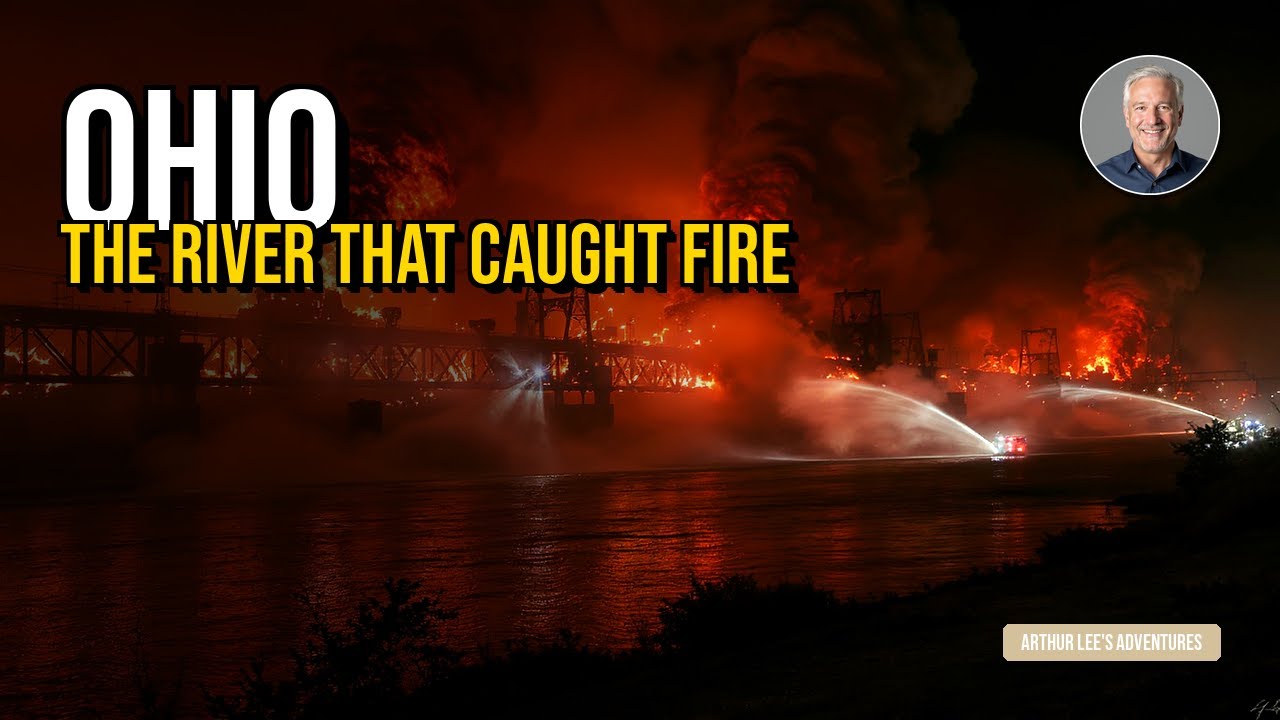
Ohio's River Caught Fire and Changed America
The Rankin family beacon in Ripley guided 2,000 enslaved people to freedom across the Ohio River
Environmental activist addressing Cuyahoga River pollution
Appears in 1 documentary
John Rankin stood as one of America’s most fearless conductors on the Underground Railroad, transforming his hilltop home in Ripley, Ohio into a beacon of hope that guided approximately 2,000 enslaved people to freedom between 1825 and 1865. His strategic position along the Ohio River and unwavering commitment to abolition made him a legendary figure whose influence extended far beyond the borders of his small riverside town.
Born in Tennessee in 1793 to a slaveholding family, Rankin’s journey toward becoming an abolitionist began with his religious awakening as a Presbyterian minister. After witnessing the brutalities of slavery firsthand, he moved to Ohio in 1822, settling in Ripley specifically because of its position along the Ohio River—the boundary between slavery and freedom. Rankin purchased a house atop a bluff overlooking the river and installed a lantern that served as a signal to freedom seekers on the Kentucky shore.
The Rankin house operated with military-like precision. When enslaved people reached the Ohio shore, often after harrowing river crossings in small boats or on ice floes during winter, they would climb the hundred stone steps carved into the hillside to reach the safety of Rankin’s home. From there, the family would provide food, shelter, and guidance for the next leg of the journey northward. Rankin’s thirteen children all participated in these rescue operations, creating a family network dedicated to the cause of freedom.
Rankin’s impact extended beyond direct rescue operations through his powerful written advocacy. In 1824, he penned a series of letters to his slaveholding brother in Virginia, systematically dismantling every moral, economic, and religious argument used to justify slavery. These letters, later published as “Letters on American Slavery” in 1833, became one of the most influential abolitionist texts of the era.
The letters reached Harriet Beecher Stowe, who lived just fifty miles away in Cincinnati. Stowe later credited Rankin’s writings as a major inspiration for “Uncle Tom’s Cabin,” the novel that Abraham Lincoln reportedly said helped start the Civil War. One particular rescue story—that of Eliza Harris, who crossed the frozen Ohio River with her infant—became the basis for one of Stowe’s most memorable scenes.
Rankin’s work came at enormous personal cost. He faced constant threats from slave hunters and pro-slavery sympathizers, survived multiple attempts on his life, and endured financial hardship from legal battles and property damage. Kentucky authorities placed a $2,500 bounty on his head, and his house was repeatedly attacked. Yet he never wavered, operating his station for four decades despite the dangers.
John Rankin’s significance lies not merely in the numbers he helped save, but in his demonstration that ordinary individuals could challenge an entire economic and social system through sustained moral action. His strategic location, combined with his organizational skills and unwavering commitment, created one of the most successful Underground Railroad operations in American history.
When Rankin died in 1886, he had lived to see slavery abolished and the nation transformed. His hilltop home, preserved today as a National Historic Landmark, stands as a testament to the power of moral courage in the face of institutional injustice. The beacon that once guided freedom seekers across the Ohio River continues to shine as a symbol of America’s long struggle toward fulfilling its founding promise that all people are created equal.
Essential context for understanding Rankin's Ohio River operations and the state's crucial role in the Underground Railroad.
Comprehensive coverage of Ohio's Underground Railroad network, featuring Rankin's pivotal role in Ripley's operations.
The Rankin family beacon in Ripley guided 2,000 enslaved people to freedom across the Ohio River