50 States Forgotten History
Virginia's Hidden History: 10 Facts They Never Taught You
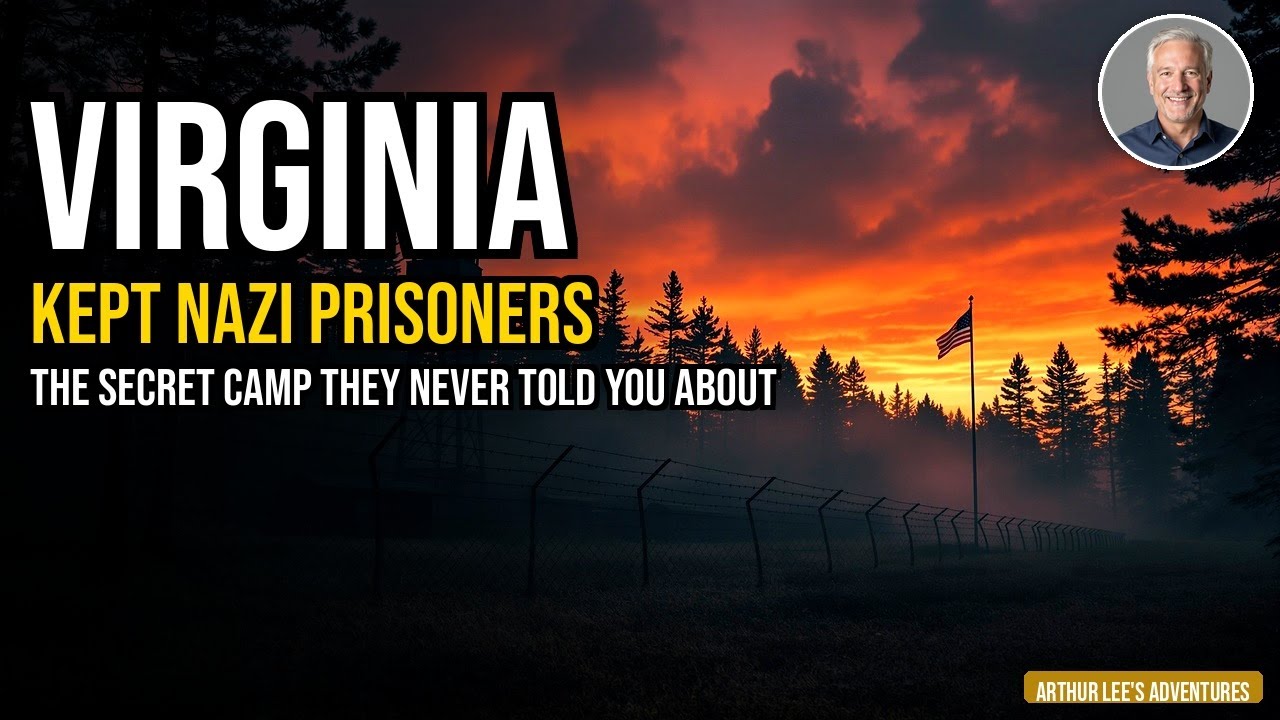
Camp Peary held 3,000 Nazi POWs in 1943, then became the CIA training facility known as The Farm
Leading America's first recorded Thanksgiving ceremony, 1619
Appears in 1 documentary
On a cold December morning in 1619, a small group of English settlers stepped off a ship called the Margaret onto the western shore of the James River in Virginia. Their captain, John Woodlief, gathered them together before they had even unpacked their belongings. Following explicit instructions written into their settlement charter, he led them in a prayer of thanksgiving — the first formally recorded such ceremony on American soil. That moment, largely forgotten for centuries, has quietly reshaped how historians understand the origins of one of America’s most beloved traditions.
Woodlief was not a newcomer to Virginia when he returned aboard the Margaret. He had first crossed the Atlantic years earlier as part of the early Jamestown expeditions, surviving the brutal “Starving Time” of 1609–1610, a period so devastating that the colonial population collapsed from roughly 500 settlers to fewer than 60. That experience — surviving famine, disease, and near-total collapse — gave Woodlief a credibility and resilience that made him the natural choice to lead a new venture when Berkeley Hundred, a plantation settlement along the James River, was being organized by a group of English investors.
The Berkeley Company’s instructions to Woodlief were unusually specific. Written into the settlement charter of 1619, they required that the day of the settlers’ arrival be observed yearly as a day of thanksgiving to God. When the Margaret landed on December 4, 1619, Woodlief carried out that instruction precisely. It was not a harvest feast. It was not a shared meal with indigenous neighbors. It was a formal act of religious observance, deliberately built into the founding documents of the colony.
For most of American history, the story of Thanksgiving began in Plymouth, Massachusetts, in 1621, with Pilgrims and Wampanoag people sharing a meal after a successful harvest. That narrative has deep roots in American culture and schoolroom tradition. But Woodlief’s ceremony at Berkeley Hundred predates Plymouth by two full years — a fact that Virginians have pointed out for generations, and that historians have increasingly acknowledged.
The distinction matters for more than regional pride. Woodlief’s thanksgiving was not spontaneous; it was contractual, embedded in a legal document before the settlers even left England. This tells us something important about how the early English colonists conceived of their relationship with the land they were entering. Gratitude was not merely felt — it was institutionalized. The act of giving thanks was treated as a civic and spiritual obligation, not just a personal impulse.
Berkeley Hundred itself did not survive long. On March 22, 1622, a coordinated attack by the Powhatan Confederacy struck multiple English settlements simultaneously. The assault, led by Opechancanough, killed approximately 347 colonists — nearly a third of the entire English population in Virginia. Berkeley Hundred was among the settlements destroyed, and the annual thanksgiving observance quietly ceased.
Woodlief’s own fate after 1622 is not well documented, which is itself a reminder of how incompletely the historical record captures the lives of men who were important in their moment but did not accumulate the kind of political or literary legacy that survives in archives. He was a capable mariner and a trusted leader, but history did not hand him a biographer.
For roughly three centuries, Woodlief and Berkeley Hundred existed in a kind of historical shadow. It was not until 1958 that the Berkeley Plantation site, now in Charles City County, Virginia, began formally commemorating the 1619 ceremony. Since then, the claim has gained growing recognition, with the Commonwealth of Virginia officially acknowledging Berkeley Hundred as the site of America’s first Thanksgiving.
What John Woodlief represents, ultimately, is the complexity that lies beneath America’s founding stories. The traditions that define national identity rarely emerge from a single event or a single place. They are assembled, contested, and revised across generations. Woodlief did not set out to create a national holiday. He was following orders from a charter written in England, on a riverbank in a colony that would be gone within three years. And yet, in that act of obedience and faith, he participated in something that has lasted four centuries and counting.
Woodlief's world was shaped by the failures and dangers of early English colonization — this deep investigation into the Lost Colony captures the same desperate stakes that defined Virginia's founding era.
Understanding why Virginia's early colonial legacy mattered to the founders puts Woodlief's 1619 thanksgiving in its proper place in the long arc of American history.
Camp Peary held 3,000 Nazi POWs in 1943, then became the CIA training facility known as The Farm