Karen Freeman-Wilson

First African American woman mayor of Gary, Indiana

Appears in 1 documentary

Karen Freeman-Wilson — First African American woman mayor of Gary who led the city's efforts to manage population decline and infrastructure challenges during eight years in office from 2012 to 2020.

Karen Freeman-Wilson made history in 2012 when she became the first African American woman elected mayor of Gary, Indiana—a city that had once been the crown jewel of American industrial might but had become a symbol of Rust Belt decline. Her election represented both the culmination of decades of political progress and the enormous challenge of governing a city that had lost two-thirds of its population since its 1960 peak.

Rise to Political Leadership

Born and raised in Gary, Freeman-Wilson witnessed firsthand the city’s transformation from thriving steel town to post-industrial battleground. She earned her law degree from Harvard Law School and returned to Indiana to build a career in public service that spanned three decades. Before becoming mayor, she served as Indiana’s Attorney General from 2001 to 2005, making her the first African American to hold statewide office in Indiana. Her legal background and experience with state-level governance would prove crucial as she later grappled with Gary’s financial crisis and massive infrastructure challenges.

Freeman-Wilson’s path to the mayor’s office reflected the broader demographic shifts that had reshaped Gary since the 1960s. As white residents fled to the suburbs and U.S. Steel dramatically reduced its workforce, the city became majority African American. By the time Freeman-Wilson took office in 2012, Gary’s population had plummeted from 178,000 in 1960 to fewer than 80,000 residents. The city she inherited was plagued by abandoned buildings, underfunded schools, and a shrinking tax base that made basic services increasingly difficult to maintain.

Managing Decline and Seeking Renewal

Freeman-Wilson’s eight-year tenure as mayor became a case study in “right-sizing”—the painful process of adapting city government to serve a much smaller population while maintaining essential services. She oversaw the demolition of hundreds of abandoned structures, including the symbolic razing of portions of the massive, decaying City Methodist Church that had once seated 3,500 congregants. Her administration focused on consolidating city operations, leveraging federal grants for infrastructure improvements, and attempting to attract new investment to Gary’s lakefront properties.

The mayor’s pragmatic approach emphasized working within Gary’s limitations rather than promising unrealistic revival schemes. She advocated for regional cooperation with neighboring communities and pursued partnerships with nonprofits and state agencies to fill gaps in city services. Freeman-Wilson also worked to preserve Gary’s cultural legacy, supporting efforts to maintain the city’s connection to the Jackson family and other notable figures who had emerged from its neighborhoods.

Legacy of Pragmatic Leadership

When Freeman-Wilson left office in 2020, Gary’s population had stabilized somewhat, though at around 69,000 residents—a figure that would have been unimaginable during the city’s industrial heyday. Her administration demonstrated that effective governance in post-industrial cities required fundamentally different approaches than those used during periods of growth and prosperity.

Freeman-Wilson’s tenure illustrated the complex realities facing African American leaders who inherited control of Rust Belt cities just as their economic foundations crumbled. Like mayors in Detroit, Cleveland, and other former industrial centers, she faced the challenge of maintaining civic life in communities that had been largely abandoned by federal policy and private investment. Her leadership style—emphasizing practical solutions over grand promises—offered a model for governance in an era of managed decline, proving that competent administration could improve residents’ lives even when broader economic revival remained elusive.

Further Reading

Arthur's Pick

Essential context for understanding the systemic challenges Freeman-Wilson inherited as mayor of a post-industrial city.

Chronicles the Rust Belt decline that defined Freeman-Wilson's political career and mayoral challenges in Gary.

Learn More About Karen Freeman-Wilson

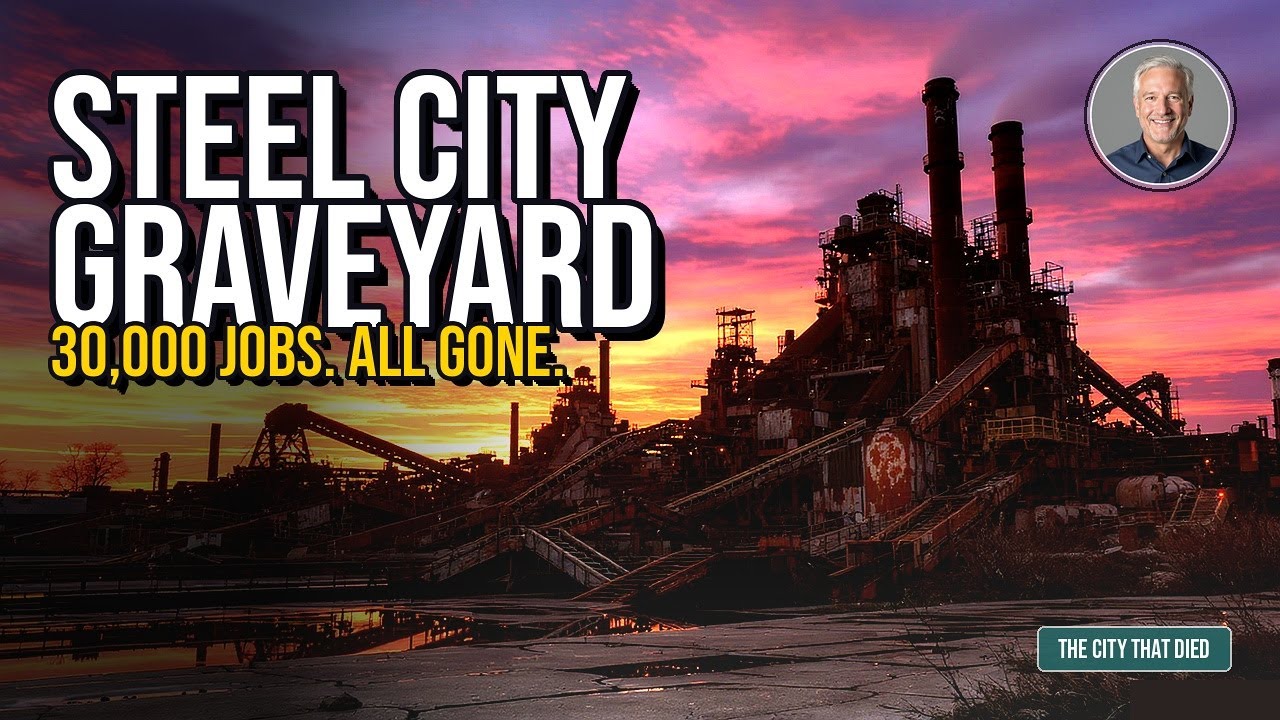
Thumbnail for They Built a City in 905 Days. It Took 50 Years to Die.
The City That Died

They Built a City in 905 Days. It Took 50 Years to Die.

In 1906, U.S. Steel bought 9,000 acres of Lake Michigan sand dunes and built an entire city in 905 days. By 1960, 178,000 people lived there. By 2020, only 69,000 remained. City Methodist Church, which cost a million dollars to build and seated 3,500, was abandoned in 1997. Trees now grow through its roof.

1906-present Gary, Indiana