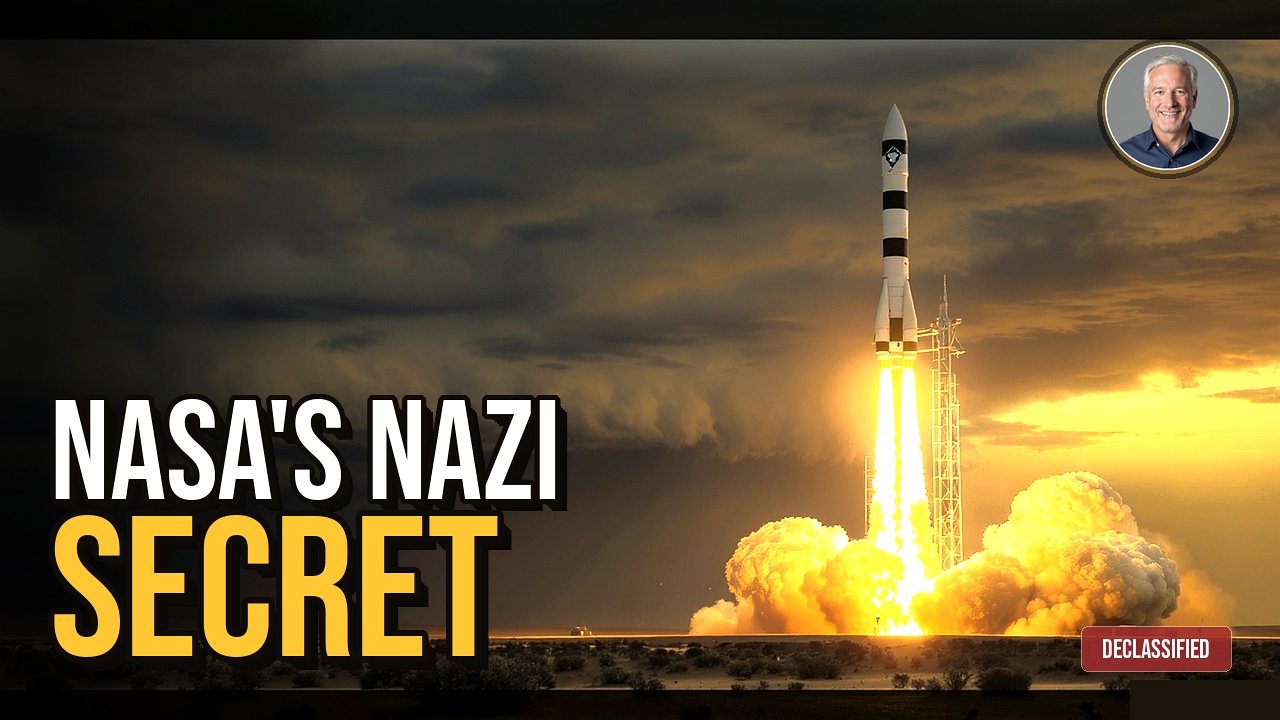
Kurt Heinrich Debus occupied a unique position in the American space program—he was the only former Nazi SS officer to serve as a NASA center director. While his colleagues Wernher von Braun and Arthur Rudolph designed the rockets, Debus mastered the art of launching them. His story reveals how Operation Paperclip didn’t just import German rocket technology, but an entire culture of aerospace engineering that would define America’s race to the moon.
From Wehrmacht Officer to NASA Director
Born in Frankfurt am Main in 1908, Debus earned his doctorate in mechanical engineering before joining the German rocket program at Peenemünde in 1940. Unlike von Braun, who focused on design, Debus specialized in launch operations—the complex choreography of actually getting rockets off the ground. He joined both the Nazi Party and the SS, rising to the rank of SS-Sturmbannführer while overseeing test launches of the V-2 rockets that terrorized London.
After surrendering to Allied forces in 1945, Debus became one of the most prized assets in Operation Paperclip. While investigators documented his Nazi affiliations, American officials concluded his technical expertise outweighed his political past. By 1950, he was in Alabama working alongside von Braun’s team, applying German launch techniques to American missiles. His methodical approach to countdown procedures and launch protocols became the foundation for all subsequent U.S. space missions.
Architect of America’s Launch Operations
When NASA established the Kennedy Space Center in 1962, Debus became its first director—a position he would hold for thirteen crucial years. He transformed the swamplands of Cape Canaveral into the world’s most sophisticated launch facility, overseeing construction of the massive Vehicle Assembly Building and Launch Complex 39. Every aspect of Apollo launch operations bore his fingerprint, from the precise timing sequences to the redundant safety systems.
Debus brought a distinctly German engineering philosophy to NASA: obsessive attention to detail, exhaustive testing, and zero tolerance for shortcuts. His teams conducted countless simulations before each launch, creating the methodical culture that would prove essential when split-second decisions meant the difference between triumph and catastrophe. The famous countdown—“T-minus ten, nine, eight…"—followed procedures Debus had refined since his Peenemünde days.
Under his leadership, the Kennedy Space Center achieved an extraordinary safety record. From Mercury through Apollo, not a single astronaut was lost during a Debus-supervised launch, though the Apollo 1 fire during ground testing haunted him personally. His insistence on multiple backup systems and abort procedures saved lives throughout the space program.
The Contradiction of American Exceptionalism
Debus embodied the moral contradictions at the heart of the American space program. The same man who had served the Nazi regime with dedication became the face of American technological achievement. When Neil Armstrong stepped onto the lunar surface in 1969, he relied on launch systems perfected by a former SS officer who had helped rain terror on Allied cities just 24 years earlier.
This paradox was not lost on Debus himself. In later interviews, he expressed pride in his NASA achievements while carefully avoiding discussions of his wartime service. Like many Paperclip scientists, he seemed to view his American career as a form of redemption—using his skills for exploration rather than destruction.
Debus retired in 1974, having overseen 150 launches including every crewed Apollo mission. He died in 1983, largely forgotten by a public that celebrated von Braun while ignoring the man who actually got his rockets off the ground. His legacy remains embedded in every space launch—the countdown procedures, safety protocols, and operational philosophy that still govern human spaceflight trace back to the methodical German engineer who helped America reach the moon.