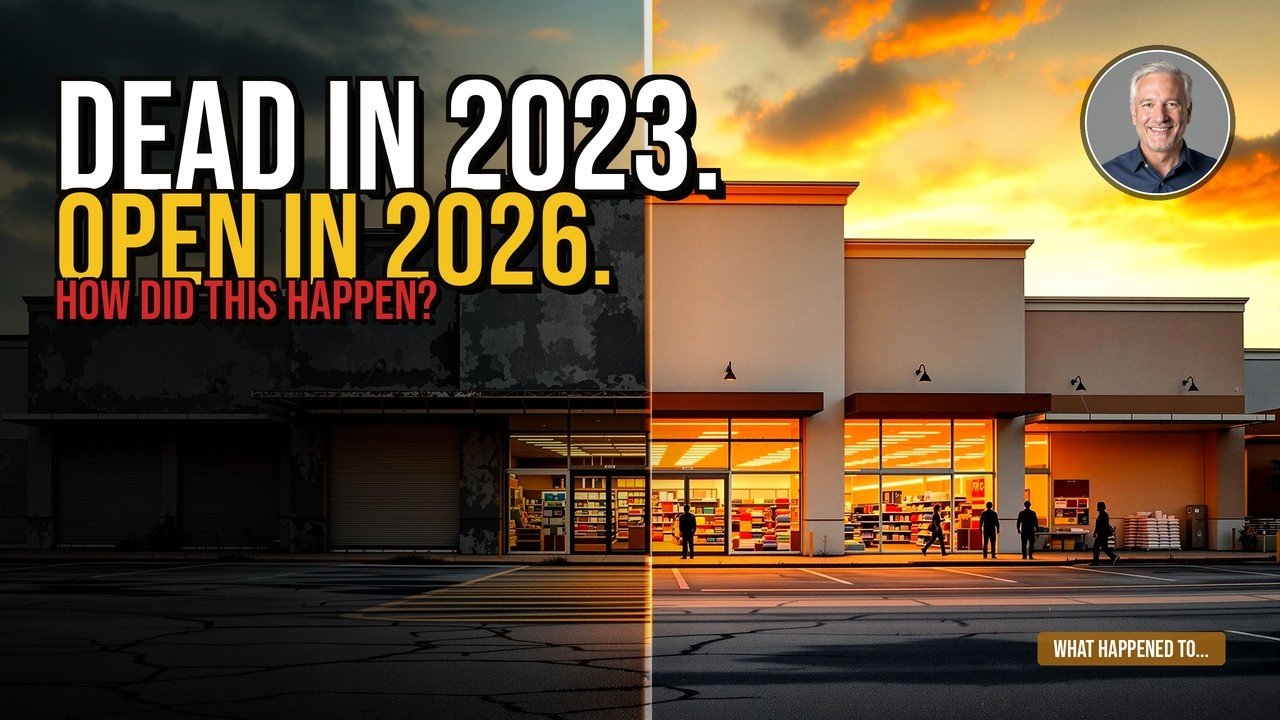
Marcus Lemonis built his reputation not in boardrooms or business schools, but in the wreckage of failing companies. As the chairman and CEO of Camping World and Good Sam Enterprises, and later as the star of CNBC’s The Profit, he became one of the most recognized business turnaround figures in America — a practitioner, not a theorist, whose methods were as blunt as they were effective.
From Beirut to the Boardroom
Lemonis was born in Beirut, Lebanon, in 1973, and adopted as an infant by a Greek-American family in Miami. His adoptive grandfather, Leo Puskar, co-founded AutoNation, and it was through those early family conversations about cars and commerce that Lemonis absorbed his first lessons about operations, margin, and the psychology of the sale. He studied political science at Marquette University, then jumped directly into the automotive retail business, eventually catching the attention of Wayne Huizenga, the legendary entrepreneur behind Blockbuster and AutoNation, who became both a mentor and investor in his career.
By his early thirties, Lemonis had taken the helm of Camping World, an outdoor recreation retailer that had struggled to define itself in a fragmented market. Under his leadership, the company expanded aggressively through acquisitions, growing from a modest chain into a national network of hundreds of locations. In 2016, he took Camping World public on the New York Stock Exchange under the ticker CWH, a milestone that validated his decade-long transformation of the brand. The IPO valued the company at roughly $1.5 billion at launch.
The Profit and the Philosophy
It was television, not Wall Street, that turned Lemonis into a household name. Beginning in 2013, The Profit gave him a weekly platform to walk into distressed small businesses, diagnose their problems, and invest his own money — sometimes hundreds of thousands of dollars — in exchange for equity and operational control. The show was unusual in the business reality genre because the stakes were genuinely real. Lemonis framed every intervention around three pillars: people, process, and product. The sequence mattered to him. Fix the team first. Then the systems. Then what you are selling. It was a philosophy forged from watching dozens of companies die in the wrong order.
His willingness to connect emotionally with business owners — to ask about addiction, divorce, grief, and family estrangement as business variables — set The Profit apart from colder, more transactional formats. Critics occasionally questioned whether the show’s edits fully captured the complexity of the investments. But the businesses Lemonis touched, and the owners who described what the intervention meant to them, gave the franchise a credibility that outlasted the skepticism.
Retail Turnarounds and the Limits of Loyalty
Lemonis is a useful figure for understanding a particular era in American retail — roughly 2010 to 2025 — when brands that had dominated for decades discovered that scale and name recognition were not the same as health. He watched peers in the big-box space confuse customer traffic with customer loyalty, a distinction that proved catastrophic for companies like Bed Bath and Beyond, which spent years training shoppers to expect discounts rather than to value the brand itself. Lemonis understood intuitively what took others years of decline to learn: that the relationship between a business and its customer is an emotional contract, and once you have trained people to feel entitled rather than grateful, you have already started losing.
His broader legacy is that of a popularizer of operational discipline for an audience that had never seen a profit-and-loss statement. For millions of small business owners who watched The Profit, Lemonis modeled something rarer than wealth: the willingness to tell an entrepreneur, clearly and without cruelty, that the problem is them. That message — uncomfortable, necessary, and delivered with genuine investment in the outcome — is what made him matter beyond the cameras.