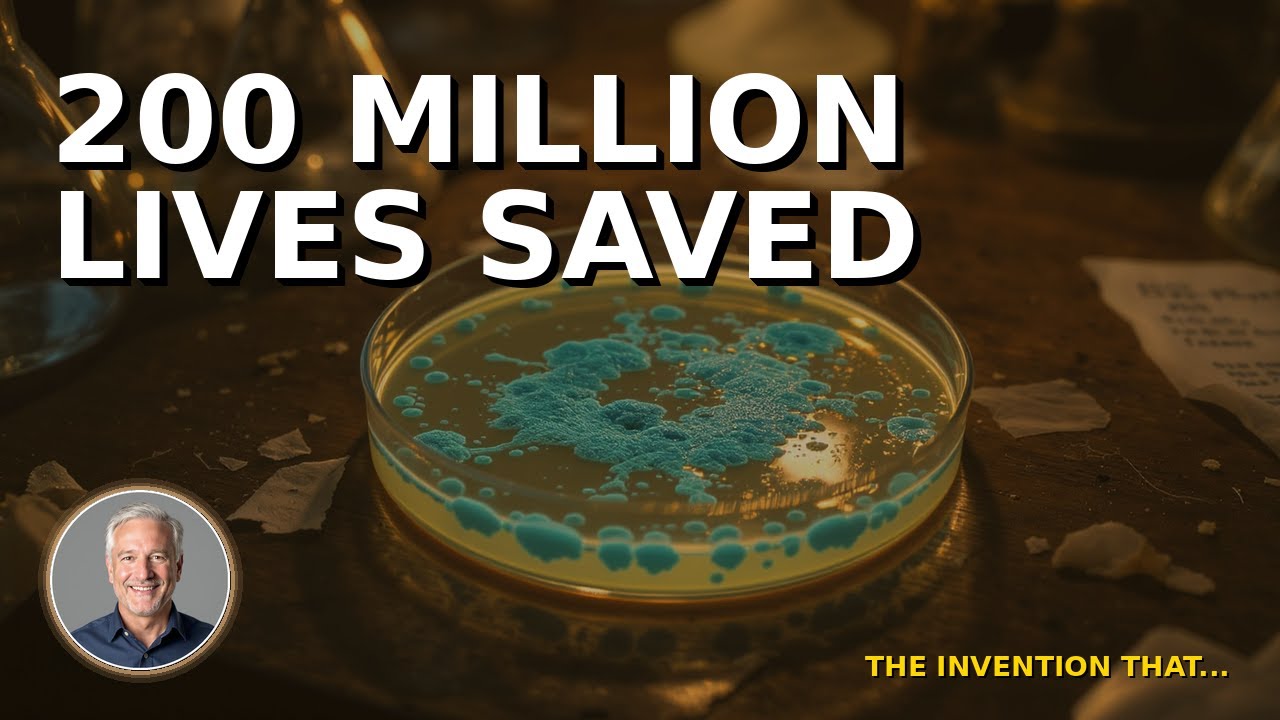
In the annals of medical history, Alexander Fleming receives credit for discovering penicillin, but it was Mary Hunt, a laboratory technician in Peoria, Illinois, who found the mold that would actually save millions of lives during World War II and beyond. Her story illuminates how scientific breakthroughs often depend on unsung heroes working behind the scenes.
The Search for a Super-Mold
By 1941, Fleming’s penicillin had proven its lifesaving potential, but his original Penicillium notatum mold produced frustratingly small amounts of the antibiotic. The U.S. government, recognizing penicillin’s critical importance for treating wounded soldiers, established a crash program at the Northern Regional Research Laboratory in Peoria to solve the mass production problem.
Hunt joined this urgent mission as part of a team tasked with finding a better mold strain. Scientists knew that somewhere in nature existed a Penicillium mold capable of producing industrial quantities of penicillin—they just had to find it. Hunt and her colleagues began systematically testing mold samples from around the world, examining soil samples, rotting vegetables, and other organic matter in their laboratory.
The breakthrough came in 1943 when Hunt discovered a remarkable strain growing on a cantaloupe at a local Peoria market. This moldy melon, which might have been discarded as garbage, contained Penicillium chrysogenum, a strain that produced 200 times more penicillin than Fleming’s original mold. Through further refinement and laboratory techniques including X-ray bombardment to induce beneficial mutations, Hunt’s team eventually developed strains producing 1,000 times Fleming’s original yield.
From Laboratory Bench to Global Impact
Hunt’s discovery transformed penicillin from a laboratory curiosity into a mass-produced medicine. Her work enabled pharmaceutical companies to manufacture penicillin in quantities sufficient to treat not just military casualties, but civilian populations worldwide. The timing proved crucial—her enhanced strains became available just as Allied forces launched the D-Day invasion, helping save countless soldiers who would have died from infected wounds in previous conflicts.
The significance extends far beyond World War II. Hunt’s contribution launched the antibiotic age, fundamentally changing human civilization’s relationship with bacterial disease. Before penicillin, simple infections routinely killed healthy people. Pneumonia, sepsis from minor cuts, and post-surgical infections claimed millions annually. Hunt’s work helped make these deaths largely preventable in the developed world.
Her story also exemplifies the collaborative nature of scientific progress during wartime. While Fleming worked alone in his London laboratory, the Peoria team represented a new model of organized research—government-funded, industrially-scaled, and focused on practical applications. Hunt operated within this system as both a skilled technician and an observant scientist, demonstrating how major discoveries often emerge from systematic investigation rather than lone genius.
Despite her pivotal role, Hunt remained largely unknown outside scientific circles. She continued working at the Peoria laboratory throughout her career, contributing to research on other antibiotics and fermentation processes. Her relative anonymity reflects broader patterns in 20th-century science, where women and support staff frequently received little recognition for essential contributions.
Hunt’s cantaloupe mold strain became the foundation for virtually all commercial penicillin production. Every dose of penicillin manufactured today traces back to descendants of the mold she discovered in that Illinois grocery store. Conservative estimates suggest penicillin has saved over 200 million lives—a staggering impact made possible by one woman’s careful observation and scientific dedication.
Her story reminds us that history’s most important discoveries often depend on individuals working far from the spotlight, whose names rarely appear in textbooks but whose contributions echo through generations.