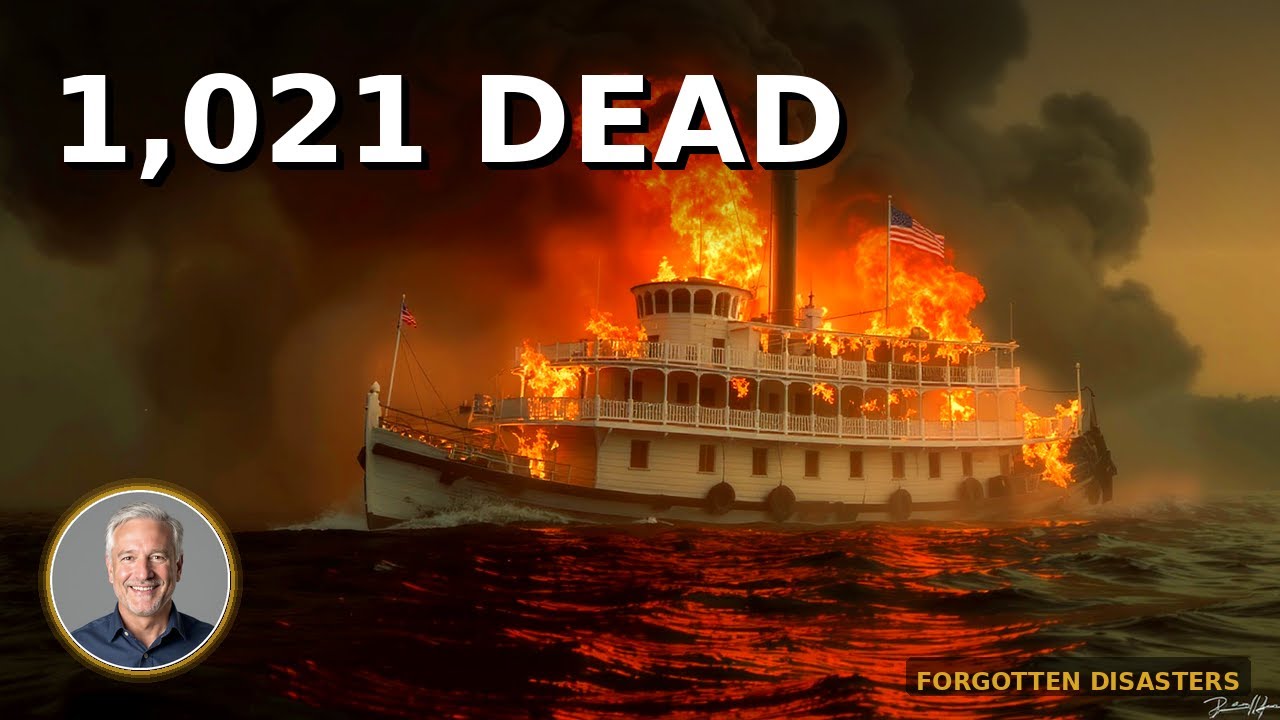
Mary McCann stood on the deck of the General Slocum on June 15, 1904, watching flames consume what should have been a joyous church outing. As one of the disaster’s survivors, her experience illuminated the deadly consequences of corporate negligence and regulatory failure that characterized America’s Gilded Age—patterns that would claim thousands more lives in workplace fires, building collapses, and maritime disasters across the nation.
The Day Everything Changed
The General Slocum departed Manhattan’s East Third Street pier that morning carrying over 1,300 passengers, mostly German-American families from St. Mark’s Evangelical Lutheran Church heading to their annual Sunday school picnic on Long Island. McCann, like most aboard, expected nothing more eventful than a pleasant day by the water. Instead, she found herself witness to New York City’s deadliest disaster before September 11, 2001.
When fire broke out in the forward compartment around 10 AM, McCann experienced firsthand the criminal negligence that would kill over 1,000 people. The ship’s fire hoses disintegrated when crew members tried to use them. The lifeboats were wired and painted to the deck, impossible to launch. Most tragically, the cork life jackets that passengers desperately strapped on had rotted to powder, causing wearers to sink immediately upon hitting the water.
McCann’s survival depended on factors beyond her control—her location when the fire started, her ability to reach a safe section of the ship, and perhaps most crucially, avoiding the defective safety equipment that killed so many others. Her testimony, along with that of other survivors, would expose the systematic failures that turned a small fire into a mass casualty event.
Witness to an Era of Negligence
McCann’s experience aboard the General Slocum exemplified the human cost of America’s rapid industrialization without adequate safety oversight. The disaster occurred during an era when business interests routinely trumped public safety, and regulatory agencies either didn’t exist or lacked enforcement power. Ship inspections were cursory, safety equipment went untested for years, and crew training was minimal.
The General Slocum had passed a federal safety inspection just weeks before the fire, despite carrying life jackets filled with disintegrated cork and fire equipment that hadn’t been properly maintained in years. McCann and other survivors testified to these failures, helping prosecutors build cases against the ship’s officers and the steamboat inspection service officials who had certified the vessel as safe.
Her survival story also highlighted the disaster’s particular impact on New York’s German-American community. Entire families perished, and the tight-knit neighborhood around Kleindeutschland (Little Germany) never recovered. McCann witnessed not just individual tragedy but the destruction of a cultural community that had thrived for decades.
McCann’s testimony and that of other General Slocum survivors contributed to significant maritime safety reforms, including stricter life jacket standards, mandatory crew safety training, and more rigorous vessel inspections. Her experience became part of a broader pattern of disaster-driven reform that characterized the Progressive Era, as public outrage over preventable tragedies gradually forced improved safety standards.
The General Slocum disaster, illuminated through survivors like McCann, demonstrated how corporate negligence and regulatory capture could turn routine activities into death traps. Her story remains relevant today as a reminder that safety regulations are written in blood—often the blood of ordinary people who trusted that basic precautions had been taken to protect them.