What Happened To...
What Happened to BlackBerry?
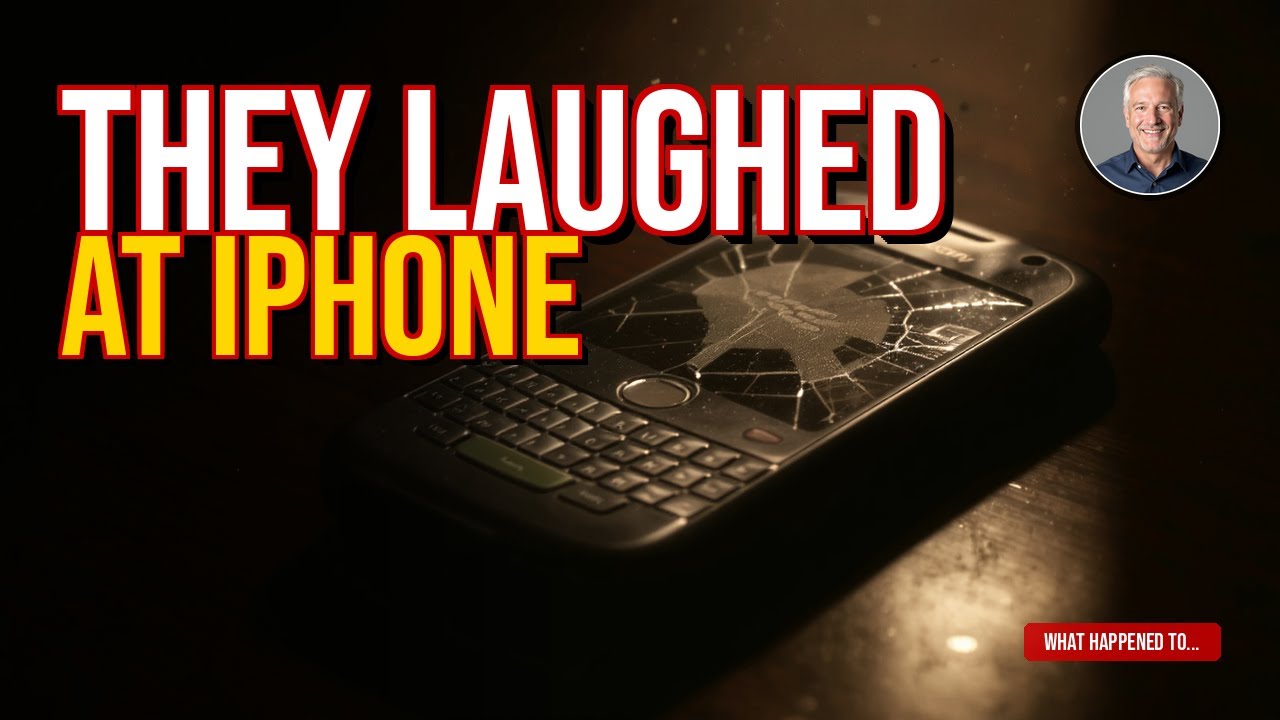
At its peak, BlackBerry had 80 million subscribers and 50% of the US smartphone market. Obama and Congress were addicted to it. Five years after the iPhone launched, it was over.
BlackBerry co-founder and former co-CEO
1961-
Appears in 1 documentary
Mike Lazaridis transformed how the world communicated, then watched his empire crumble in one of the most dramatic corporate collapses in tech history. The Canadian engineer who gave politicians, executives, and millions of users their first taste of mobile email addiction would ultimately lose a market he helped create to competitors who better understood the smartphone’s future.
Born in Istanbul to Greek parents who immigrated to Canada when he was two, Lazaridis displayed an early fascination with electronics that would define his life. Growing up in Windsor, Ontario, he spent countless hours building ham radios and tinkering with wireless devices. This childhood obsession with wireless communication would prove prophetic.
In 1984, at age 23, Lazaridis co-founded Research In Motion (RIM) with his University of Waterloo classmate Douglas Fregin. Initially, the company survived on consulting contracts, but Lazaridis harbored grander ambitions. He envisioned a world where people could send and receive emails anywhere, anytime—a radical concept in an era when most people had never heard of email, let alone used it.
The breakthrough came in the late 1990s with the BlackBerry, a device that delivered “push” email directly to users’ pockets. Lazaridis understood something that eluded larger tech companies: professionals desperately needed constant connectivity. The BlackBerry’s physical keyboard, secure email system, and distinctive notification system created an entirely new category of device addiction. By 2007, BlackBerry commanded nearly 50% of the US smartphone market, with 80 million users worldwide who couldn’t imagine life without their “CrackBerry.”
Lazaridis’s engineering mindset, which had driven BlackBerry’s rise, became a liability as the smartphone market evolved. When Apple launched the iPhone in 2007, he famously dismissed it as a toy that would drain batteries and compromise security. This wasn’t mere arrogance—it reflected a fundamental misunderstanding of how consumers would embrace smartphones as entertainment devices rather than just communication tools.
The company’s response to the iPhone and subsequent Android devices was sluggish and technically flawed. BlackBerry’s PlayBook tablet launched in 2011 without native email capability—an almost incomprehensible oversight for a company built on messaging. Meanwhile, BlackBerry 10, meant to be the company’s iPhone killer, arrived in 2013, six years too late to matter.
By 2012, BlackBerry’s market share had collapsed to just 5%. Lazaridis stepped down as co-CEO in early 2012, ending his leadership of the company he’d built over nearly three decades. The man who had once been celebrated alongside Steve Jobs and Bill Gates as a tech visionary became a cautionary tale about the perils of success breeding complacency.
Lazaridis’s story embodies both the promise and peril of technological disruption. He created the template for mobile connectivity that every smartphone still follows today, proving that constant communication wasn’t just possible but essential to modern life. His emphasis on security and enterprise features established principles that remain relevant in an era of cybersecurity threats.
Yet his downfall illustrates how quickly technological leadership can vanish. BlackBerry’s collapse wasn’t just a business failure—it represented the end of an era when a single feature, however revolutionary, could sustain market dominance. Today, Lazaridis focuses on quantum computing research through his Perimeter Institute, applying the same visionary thinking that once revolutionized mobile communication to the next frontier of computing. His legacy serves as both inspiration for entrepreneurs and a warning about the relentless pace of technological change.
The definitive biography of Lazaridis and BlackBerry's rise and fall, based on extensive interviews with key players.
McNish's comprehensive account of Lazaridis's journey from wireless visionary to cautionary tale.
Essential context for understanding how the iPhone displaced Lazaridis's BlackBerry empire.
At its peak, BlackBerry had 80 million subscribers and 50% of the US smartphone market. Obama and Congress were addicted to it. Five years after the iPhone launched, it was over.