Percy Spencer’s story reads like an American fable—the self-taught orphan who accidentally revolutionized how the world cooks. But beneath this narrative lies something more profound: how sheer intellectual curiosity, combined with rigorous observation, can transform random chance into world-changing innovation.
From Orphan to Engineer
Born in Howland, Maine, in 1894, Percy LeBaron Spencer faced catastrophe early. His father died when he was just eighteen months old, and his mother abandoned him shortly after. Raised by his aunt and uncle in grinding poverty, Spencer left school after fifth grade to work in a spool mill, then as a spindle boy in a paper mill. By age sixteen, he was installing electrical systems in mills across Maine—a dangerous job that killed many workers through electrocution.
What set Spencer apart wasn’t formal education but ferocious autodidacticism. While other workers went home, Spencer haunted libraries, teaching himself mathematics, physics, chemistry, and metallurgy from textbooks. When he joined the Navy in 1912, he learned wireless telegraphy so thoroughly that he became one of the few people who could repair the new radio equipment. This expertise landed him at Raytheon in 1925, where his uncredentialed brilliance would flourish.
The Magnetron Master
At Raytheon, Spencer became the company’s magnetron specialist. The magnetron—a vacuum tube that generates microwaves—was crucial for radar development during World War II. While MIT scientists could design magnetrons, they produced only seventeen per day in laboratory conditions. Spencer studied their work, then devised manufacturing techniques that enabled mass production of 2,600 magnetrons daily. His innovations helped win the war by giving Allied forces superior radar capabilities.
Spencer’s genius lay in bridging theoretical physics and practical engineering. He held 150 patents, but more importantly, he understood how electromagnetic radiation behaved in ways that pure theorists missed. This combination of deep scientific knowledge and manufacturing intuition positioned him perfectly for his most famous discovery.
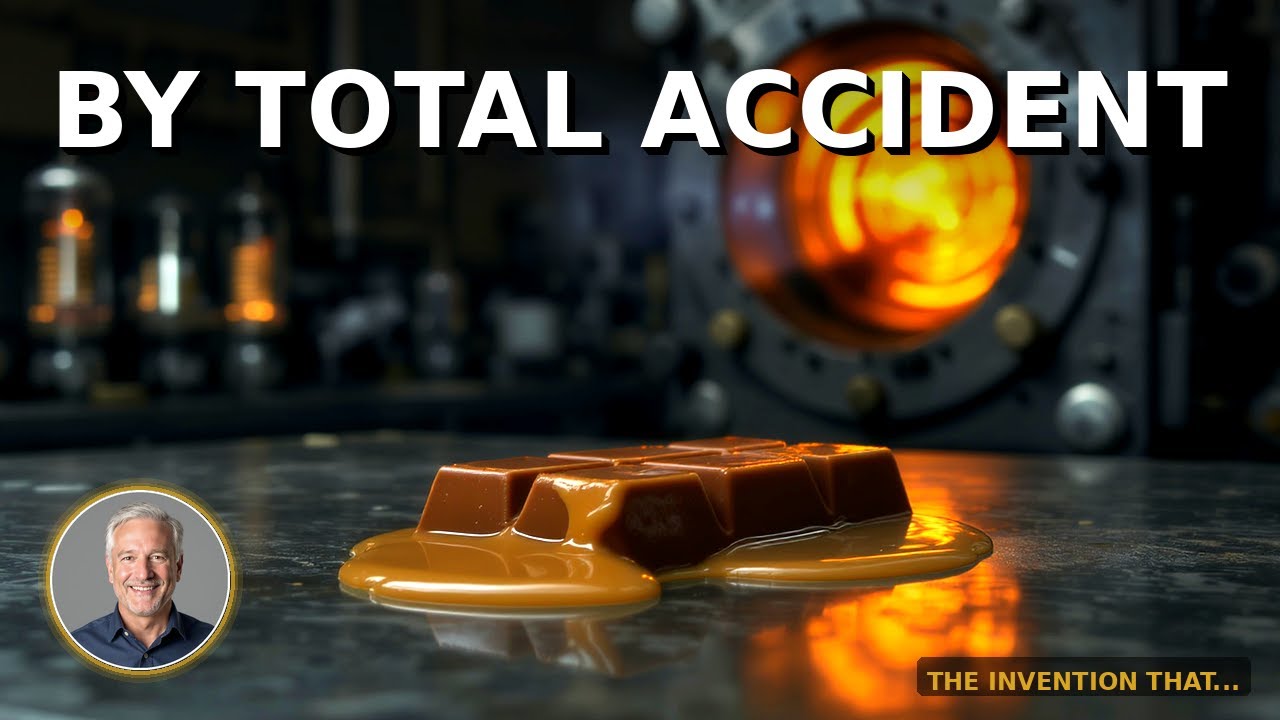
The legendary moment came in 1945 while testing a military-grade magnetron. Spencer noticed that a chocolate bar in his pocket had melted. Where others might have dismissed this as equipment malfunction, Spencer saw possibility. He tested popcorn kernels—they popped. He tried an egg—it exploded. Rather than treating these as amusing accidents, Spencer methodically investigated the phenomenon, eventually developing the first microwave oven prototype.
Legacy of Accidental Innovation
Spencer’s microwave discovery exemplifies a broader pattern in technological history: prepared minds transforming serendipitous observations into revolutionary products. The microwave oven, introduced commercially in 1947 as the massive “Radarange,” initially cost $5,000 (roughly $60,000 today). But Spencer’s engineering made gradual miniaturization and cost reduction possible, eventually placing microwaves in nearly every American kitchen by the 1980s.
More significantly, Spencer represents the vanishing figure of the self-taught American inventor. In an era when innovation increasingly requires advanced degrees and institutional resources, Spencer’s trajectory—from fifth-grade dropout to holder of 150 patents—seems almost mythical. Yet his success wasn’t accidental; it resulted from systematic self-education and disciplined observation of the physical world.
Spencer died in 1970, just as his invention was beginning its conquest of American kitchens. His legacy extends beyond the microwave itself to demonstrate how intellectual curiosity, combined with practical skills and careful attention to unexpected phenomena, can literally reshape civilization. In transforming how humanity prepares food, this self-taught orphan from Maine proved that the most profound innovations often come not from laboratories, but from prepared minds recognizing opportunity in the unexpected.