Peter Stuyvesant arrived in New Amsterdam in 1647 with a wooden leg, an iron will, and orders to restore Dutch authority over a chaotic colonial outpost. For seventeen years, this authoritarian governor would shape Manhattan into a proper city—only to lose it all to the English without firing a shot. His legacy reveals the fundamental tensions between order and liberty that would define American urban development for centuries.
The Iron Governor
Stuyvesant had already proven his mettle—and lost his right leg—fighting for Dutch interests in the Caribbean before the West India Company dispatched him to salvage their North American venture. New Amsterdam in 1647 was barely more than a trading post: 1,500 residents speaking eighteen languages, crumbling fortifications, and rampant smuggling that undermined company profits.
The new director-general moved swiftly to impose order. He established regular courts, standardized weights and measures, and built the first hospital. Most importantly, he transformed New Amsterdam’s physical landscape. Under his rule, workers paved Pearl Street, dug proper wells, and constructed a protective wall along present-day Wall Street. By 1664, the settlement had grown to nearly 10,000 residents with proper municipal institutions.
But Stuyvesant’s greatest innovation was accidental: his authoritarian rule inadvertently fostered the very pluralism that would become New York’s defining characteristic. Though he personally despised religious diversity—attempting to ban Lutherans, Quakers, and Jews—economic necessity and company directives forced him to tolerate what he couldn’t eliminate. His failed attempts at religious uniformity established precedents for accommodation that the English would inherit and expand.
Democracy’s Reluctant Catalyst
Stuyvesant’s relationship with representative government perfectly captured the contradictions of Dutch colonial rule. When residents demanded greater self-governance, he grudgingly allowed the creation of a municipal government in 1653—but only after ensuring he could override any decision. This half-hearted compromise reflected the broader Dutch dilemma: how to maintain profitable colonies without granting the political freedoms that attracted settlers.
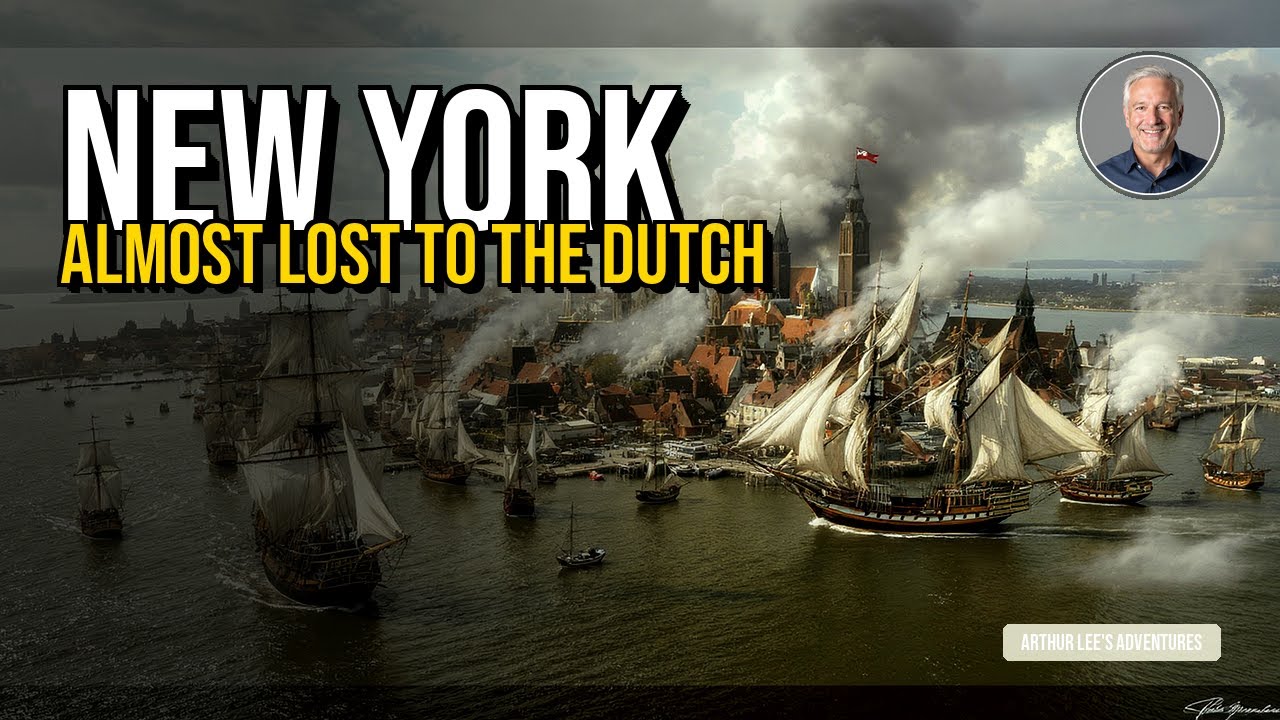
The governor’s most consequential failure came in 1664, when English warships appeared in New York Harbor. Stuyvesant wanted to fight, but his own citizens refused to defend a government that had never truly represented them. After seventeen years of autocratic rule, he discovered that loyalty cannot be commanded. The bloodless surrender of New Amsterdam revealed a crucial lesson: sustainable political authority in America required popular consent, not just military force.
The Accidental Architect
Stuyvesant died in 1672 on his Manhattan farm, having lived to see English rule transform his rigid Dutch outpost into something more dynamic and democratic. His legacy lies not in what he intended, but in what he inadvertently created: the first truly cosmopolitan American city.
The street grid he imposed, the commercial institutions he established, and even the religious diversity he reluctantly tolerated became foundational elements of New York’s character. More significantly, his authoritarian failures demonstrated that successful American cities would require genuine self-governance. The municipal institutions that emerged under English rule—and eventually became models for urban democracy across America—developed in direct response to the limitations of Stuyvesant’s top-down approach.
Peter Stuyvesant never intended to advance religious tolerance or democratic governance. But by failing to suppress them effectively, he helped establish the pluralistic urban environment that would become America’s greatest contribution to world civilization.