Quapaw Nation

The tribe whose allotted land held the Picher ore field and who now lead its cleanup

Appears in 1 documentary

Quapaw Nation — The Downstream People whose allotted lands held the Picher ore field, who received minimal royalties, and who now lead the Tar Creek Superfund cleanup.

The Quapaw Nation did not walk away from Picher. When the federal government declared the town a Superfund site and began writing checks to relocate its remaining residents in the mid-2000s, the tribe — whose allotted lands had underlain the ore field for more than a century — stepped forward to lead the environmental remediation that the mining companies had never been compelled to perform. That decision, to take responsibility for a catastrophe their ancestors did not create and from which they barely profited, is where their story in this episode begins.

The Downstream People and the Ore Beneath Their Feet

A single piece of background is essential: in the early twentieth century, the federal government allotted parcels of Quapaw tribal land in the northeastern corner of Indian Territory — present-day Ottawa County, Oklahoma — to individual tribal members. Beneath those parcels lay one of the richest lead and zinc deposits in North America. The Picher ore field, centered on the town of Picher, Oklahoma, would go on to supply roughly half of the zinc and lead used by Allied forces in World War I and a substantial share used in World War II. The Quapaw people, who call themselves the Downstream People, received lease royalties that amounted to a fraction of the wealth extracted. The mining companies took the ore. They also left behind an estimated 75 million tons of chat — crushed, heavy-metal-laden waste rock — piled across the landscape in gray mountains up to 200 feet tall.

By the mid-1990s, blood testing revealed that approximately one-third of Picher’s children had lead levels exceeding the federal threshold of concern. Lead causes irreversible neurological damage; there is no safe level in a child. The Environmental Protection Agency designated Tar Creek — the waterway running through the mining district, stained orange by acid mine drainage — as one of the first Superfund sites in the country, back in 1983. Decades of studies and negotiations followed. Not a single mining executive was ever charged with a crime.

What the Buyout Left Behind

The federal buyout of Picher, completed in the late 2000s, relocated families and effectively erased a town of several thousand people. It did not erase 75 million tons of contaminated chat, thousands of unstable mine shafts honeeycombing the ground beneath the townsite, or the ongoing leaching of heavy metals into Tar Creek and the downstream watershed. The Quapaw Nation owns approximately 900 acres within the Superfund boundary. Rather than waiting for federal agencies to act at the pace Superfund characteristically moves, the tribe built its own environmental department, negotiated directly with the EPA, and began conducting independent water and soil testing. They have invested tribal resources in reclamation work on chat piles and former mill sites, treating the cleanup not as a legal obligation but as a sovereign responsibility to their land and to downstream communities.

Why Arthur Lee Tells It This Way

The standard account of Picher focuses on the tragedy of the children and the spectacle of a town that ceased to exist. Arthur Lee’s framing shifts the gravitational center. The Quapaw Nation is not a footnote to a story about white working-class decline; they are the through-line. They held the land before the boom, absorbed the costs during it, and remained after the government paid everyone else to leave. The episode makes visible what the conventional narrative of Picher omits: that the ore field sat on allotted Indigenous land, that the royalty structure ensured the wealth flowed elsewhere, and that the tribe is now doing, largely at its own expense and initiative, the remediation work that a century of extraction companies were never required to perform. That is not background. That is the story.

Further Reading

Arthur's Pick

Directly traces the Quapaw Nation's relationship to the Picher ore field and their central role in confronting its toxic legacy.

Provides essential legal and environmental context for understanding how allotment policy exposed Quapaw lands to extractive industry with minimal tribal benefit.

A ground-level account of the mining town built on Quapaw allotments, useful for understanding the human scale of the contamination the tribe is now remediating.

Learn More About Quapaw Nation

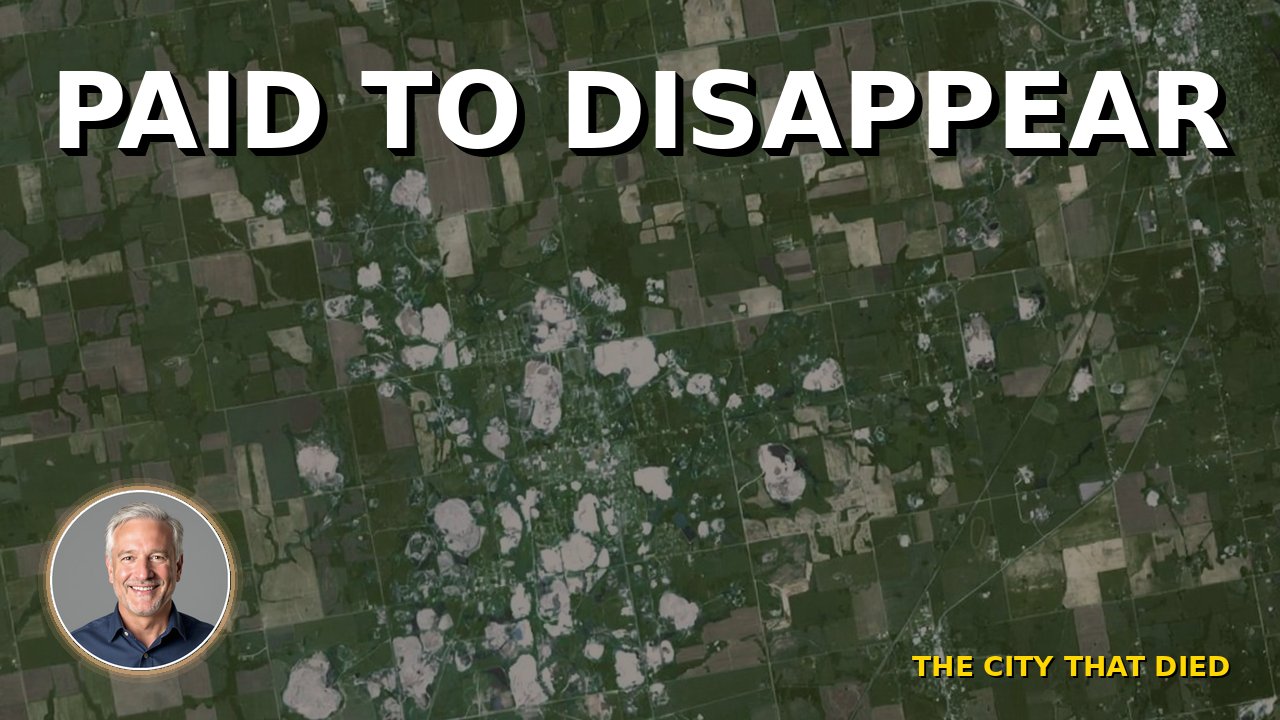
Thumbnail for The Town America Paid to Disappear: Picher, Oklahoma
The City That Died

The Town America Paid to Disappear: Picher, Oklahoma

The gray mountains that surround Picher are called chat piles, crushed rock left over from a century of lead and zinc milling. For decades chat was free, so people used it for everything: driveways, road gravel, fill under new houses, the sand in school sandboxes and the surface of the high school running track. Children sledded down the piles in winter and swam in the flooded mine pits in summer. In the mid-1990s, blood testing found that roughly a third of Picher's children had lead levels above the federal threshold of concern. Lead has no safe level in a child. Not a single mining executive was ever charged with a crime.

1913-2015 Picher, Oklahoma and Treece, Kansas