Declassified
MKUltra: How the CIA Experimented on Thousands of Americans
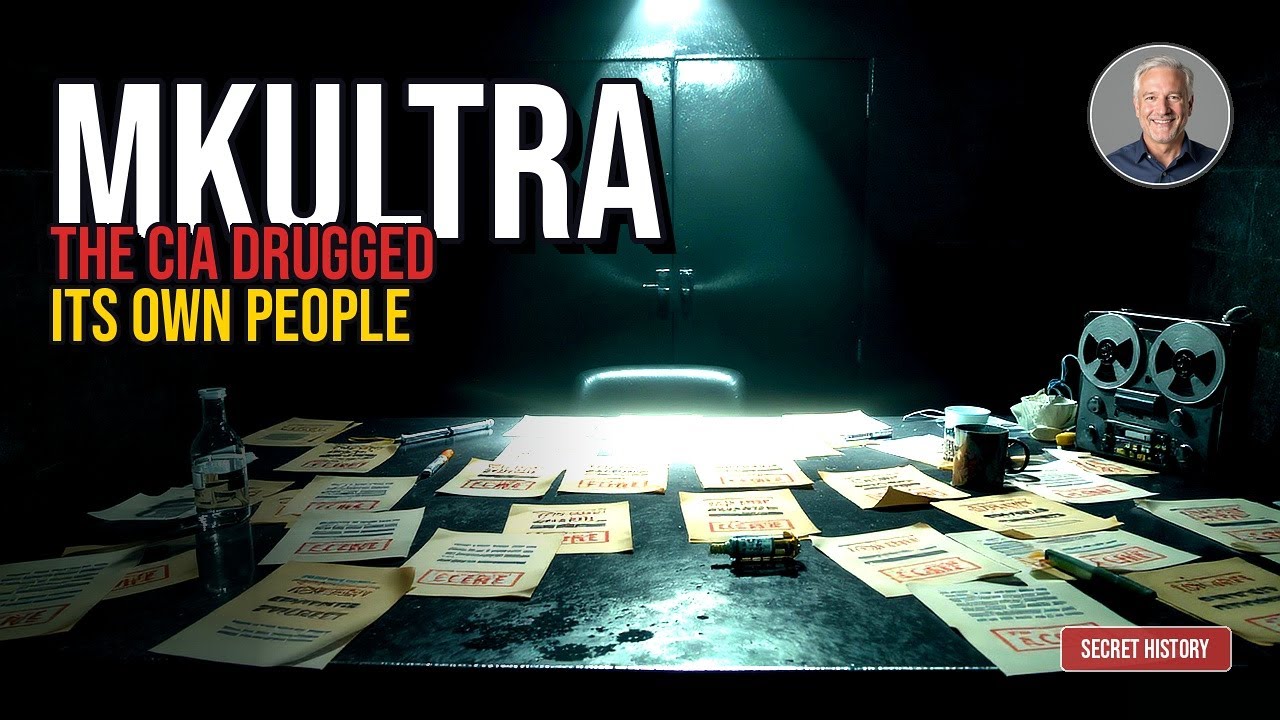
A filing error saved 20,000 pages that were supposed to be destroyed
CIA Director who oversaw MKUltra program
1913-2002
Appears in 1 documentary
Richard Helms embodied the contradictions of American intelligence during the Cold War—a consummate professional who oversaw some of the CIA’s most controversial operations while maintaining an image of bureaucratic respectability. His thirty-year career at the agency, culminating in his tenure as Director from 1966 to 1973, coincided with the height of covert programs designed to combat Soviet influence through any means necessary.
Born into a middle-class Philadelphia family in 1913, Helms joined the Office of Strategic Services (OSS) in 1943 after working as a journalist. When the CIA was established in 1947, he became one of its founding officers, quickly rising through the ranks of the Directorate of Plans—the agency’s covert action arm. Unlike many of his contemporaries who came from Ivy League backgrounds, Helms was a methodical operator who understood that intelligence work required both secrecy and deniability.
During the 1950s, as the Cold War intensified, Helms oversaw the expansion of psychological warfare programs. He approved funding for MKUltra in 1953, a sprawling mind control research program that would eventually encompass 149 subprojects across universities, hospitals, and research institutions. Under his supervision, the program grew from modest experiments into a $25 million operation that tested LSD and other drugs on thousands of unwitting subjects, including patients in psychiatric hospitals and prisoners.
What made Helms particularly significant was not just his role in authorizing these operations, but his systematic approach to maintaining plausible deniability. He created administrative structures that insulated higher officials from direct knowledge of illegal activities while ensuring operational continuity. This bureaucratic architecture would become the template for covert operations throughout the Cold War era.
When Helms became CIA Director in 1966, he inherited responsibility for programs that were already generating internal concerns about their legality and effectiveness. By 1973, facing congressional investigations into CIA domestic activities, Helms made the fateful decision to order the destruction of MKUltra records. On January 30, 1973, just before leaving office, he instructed that all remaining files be destroyed.
However, Helms’s cover-up was incomplete. Due to a filing error, approximately 20,000 pages of MKUltra documents survived in the agency’s financial records. These documents, discovered in 1977, provided Congress and the public with the first detailed evidence of the program’s scope and the CIA’s willingness to experiment on American citizens without their knowledge or consent.
The revelation of these surviving documents fundamentally changed how Americans viewed their intelligence agencies. The Church Committee investigations of 1975-1976 used this evidence to expose not just MKUltra, but a broader pattern of illegal domestic surveillance and covert operations that violated the CIA’s charter.
Helms’s career illustrates the tension between national security imperatives and democratic accountability that defined the early CIA. His approach to intelligence work—compartmentalized, deniable, and insulated from political oversight—reflected the agency’s belief that fighting the Cold War required abandoning traditional legal and ethical constraints.
In 1977, Helms pled guilty to charges of lying to Congress about CIA operations in Chile, receiving a suspended sentence and fine. Rather than expressing remorse, he framed his conviction as the price of protecting intelligence sources and methods. This response captured his fundamental belief that intelligence officers operated by different rules than ordinary citizens.
The documents that survived Helms’s destruction order continue to shape debates about government secrecy and accountability. His legacy remains controversial—viewed by some as a dedicated public servant who made difficult decisions during a dangerous era, and by others as an architect of institutional lawlessness whose actions undermined the democratic principles the CIA was meant to protect.
Helms's own memoir provides his perspective on controversial operations, though critics note significant omissions about MKUltra.
Reveals how Helms enabled Sidney Gottlieb's MKUltra program and later orchestrated the cover-up that nearly succeeded.
Places Helms's tenure as CIA Director within the broader context of agency failures and abuse of power during the Cold War.
A filing error saved 20,000 pages that were supposed to be destroyed