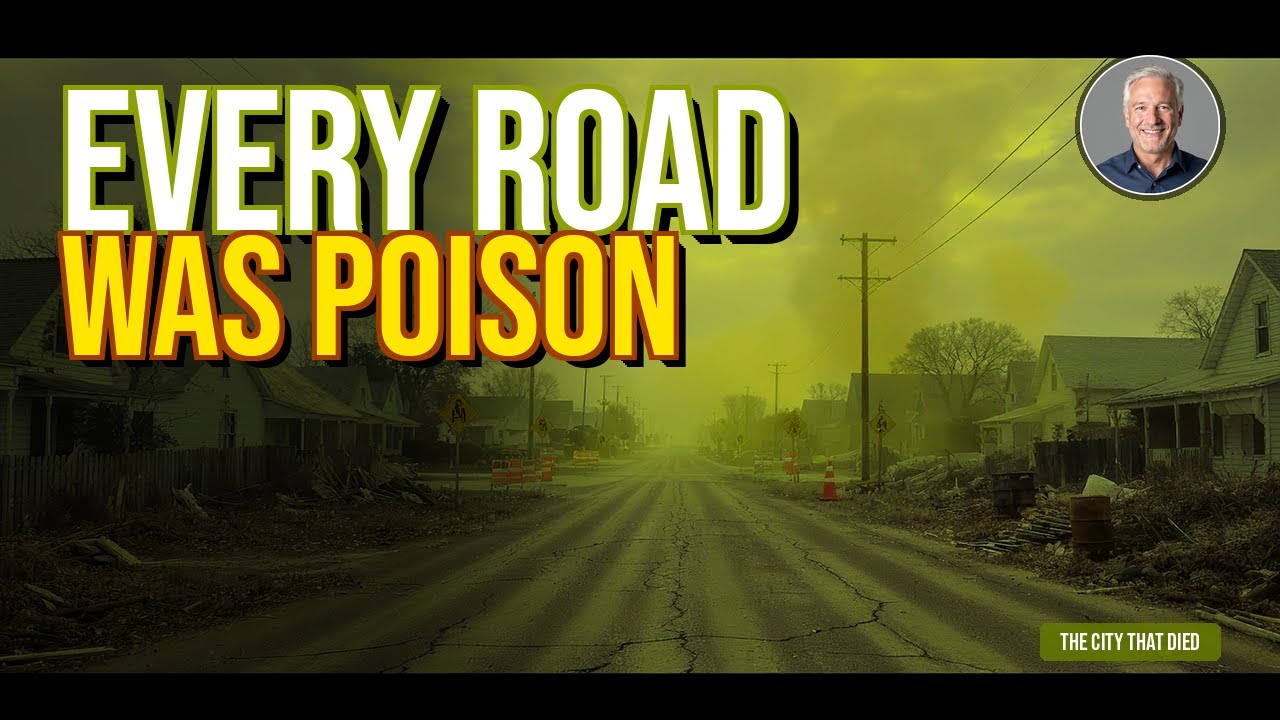
In the annals of environmental disasters, Russell Bliss occupies a unique position as both perpetrator and unwitting agent of one of America’s most toxic catastrophes. A waste hauler operating out of Missouri in the 1970s, Bliss became the human face of corporate irresponsibility when his chemical spraying operations contaminated an entire town and forced the largest civilian evacuation in U.S. history due to chemical contamination.
The Business of Poison
Bliss ran a modest waste oil business, collecting used motor oil from gas stations and auto shops across the St. Louis area. In 1971, he struck what seemed like a profitable deal with Northeastern Pharmaceutical and Chemical Company (NEPACCO): they would pay him three cents per gallon to haul away their chemical waste. What Bliss didn’t fully understand—and what NEPACCO failed to adequately communicate—was that these wastes contained dioxin, one of the most toxic substances known to science.
Following standard industry practice of the era, Bliss mixed the chemical waste with used motor oil and sprayed the mixture on dirt roads, parking lots, and horse arenas across Missouri to control dust. Between 1972 and 1976, he applied this toxic cocktail to dozens of locations, including the Shenandoah Stables in Moscow Mills and the roads of Times Beach, a small working-class community along the Meramec River.
The results were immediate and devastating. At Shenandoah Stables, horses began dying within days, their bodies covered in lesions. Children who played in the area developed chloracne, a telltale sign of dioxin exposure. But the full scope of the disaster wouldn’t become clear for years, as dioxin’s effects are often delayed and its presence was difficult to detect with 1970s technology.
The Unraveling
By the early 1980s, environmental testing revealed dioxin levels in Times Beach that were 300 times higher than what the EPA considered safe for human exposure. The contamination was so severe that in 1983, the federal government made an unprecedented decision: they would buy out the entire town of 2,240 residents for $36 million and relocate them permanently.
Bliss found himself at the center of a massive federal investigation and cleanup effort that would eventually cost taxpayers over $200 million. He cooperated with authorities, helping them identify the dozens of sites where he had sprayed the contaminated oil mixture. His records became crucial evidence in mapping the extent of Missouri’s dioxin contamination, which ultimately affected 28 sites across the state.
A Cautionary Legacy
Russell Bliss represents more than just one man’s role in an environmental disaster—he embodies the dangerous intersection of regulatory gaps, corporate negligence, and working-class vulnerability that defined America’s early confrontation with industrial toxins. His story illustrates how environmental catastrophes often involve ordinary people making routine business decisions with incomplete information, while corporations with superior knowledge fail to communicate critical risks.
The Times Beach evacuation became a watershed moment in American environmental policy, leading to stricter regulations on hazardous waste disposal and more aggressive enforcement of existing environmental laws. The disaster also highlighted the class dimensions of environmental injustice: Times Beach was a community of modest-income families who trusted that their government and local businesses were keeping them safe.
Today, Times Beach exists only as a state park, its residential streets buried under two feet of clean soil. Bliss’s legacy serves as a stark reminder that in the complex chain of industrial waste disposal, every link matters—and that the consequences of failure can last for generations.