50 States Forgotten History
Massachusetts' Hidden History: 10 Facts They Never Taught You
In 1919 a 25-foot wave of molasses moving 35 mph killed 21 people and injured 150 more in Boston's North End
Founding Father and architect of American colonial resistance
Appears in 1 documentary
Samuel Adams occupies a peculiar position in American memory. Celebrated on beer labels and mentioned in passing in high school textbooks, he is simultaneously everywhere and nowhere — a founding father whose actual contributions remain poorly understood by the public he helped bring into existence.
Born on September 27, 1722, in Boston, Massachusetts, Samuel Adams came of age in a city that was already developing a contentious relationship with British authority. The son of a prosperous maltster and deacon, Adams attended Harvard College, graduating in 1740, and spent years struggling in business before finding his true calling in politics. His failures as a tax collector — he was notoriously lax, accumulating significant deficits — would have ended most careers. Instead, they pushed him toward a vocation that would reshape a continent.
What set Adams apart from contemporaries like John Hancock or even his cousin John Adams was his instinct for popular organizing. He understood, decades before the concept had a name, that revolutions are not made by declarations alone. They are made by committees, newspapers, tavern conversations, and pamphlets. As early as 1764, Adams was writing essays challenging the Stamp Act and articulating a philosophy of colonial rights that went further than most of his peers dared to go. He helped found the Boston Caucus, a political organization that coordinated resistance across the city’s neighborhoods and tradesmen’s associations, and he used the Boston Gazette as a vehicle for revolutionary ideas delivered in plain, forceful language.
His most consequential organizational achievement was the establishment of the Committees of Correspondence beginning in 1772, networks that connected activists across all thirteen colonies into something resembling a unified political movement. Before Adams built these channels, colonial resistance was local and episodic. After, it had the architecture of a revolution.
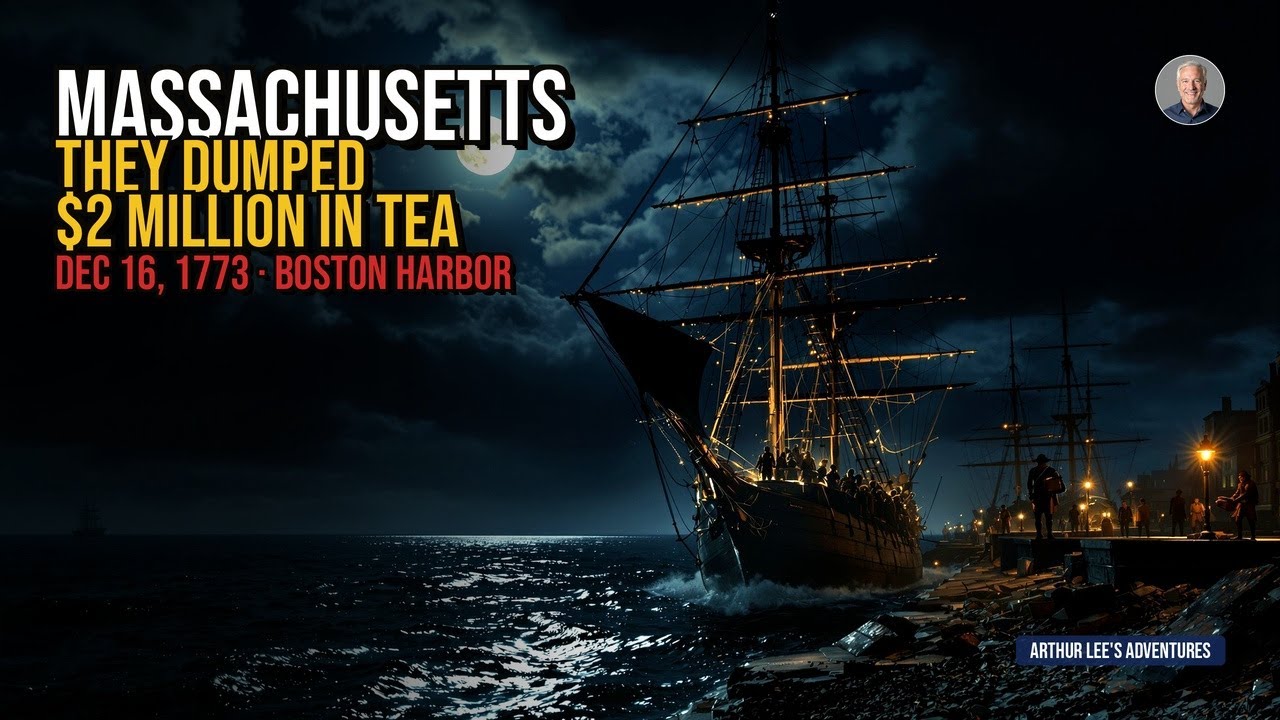
Adams was among the earliest and most uncompromising advocates for complete independence from Britain, a position that put him ahead — and sometimes at odds with — more cautious colleagues. He was a key figure in organizing the Boston Tea Party on December 16, 1773, when approximately 342 chests of East India Company tea were dumped into Boston Harbor, an act of defiance that forced the British government’s hand and accelerated the march toward open conflict. He signed the Declaration of Independence in 1776 and served in the Continental Congress throughout the war years.
Yet history has treated the post-revolutionary Adams somewhat unkindly. As the new nation consolidated under the Federalist framework, Adams — a committed republican suspicious of centralized power — found himself increasingly out of step with the direction the founders were taking. He opposed ratification of the Constitution initially, insisting on stronger protections for individual rights, a position that ultimately contributed to the adoption of the Bill of Rights. He served as Governor of Massachusetts from 1794 to 1797, but by then the revolutionary fire that had defined him seemed to belong to a different era.
Samuel Adams matters not because he fought in battles or wrote soaring philosophical prose, but because he built the machinery through which revolution became possible. His contribution was structural and organizational at a time when those skills were as essential as battlefield courage. The Committees of Correspondence were, in a meaningful sense, the first truly continental American political network — a template for how dispersed communities could coordinate around shared grievances and common goals.
He died on October 2, 1803, in Boston, outliving many of his contemporaries and long enough to see the republic he helped create take its uncertain early shape. He left no great fortune, no monument that bears his name on the National Mall. What he left was a method: the understanding that democratic movements require infrastructure, that ordinary citizens need organized channels to translate anger into power. That lesson has echoed through American political life ever since, from abolitionist networks to labor organizing to the civil rights movement. The revolution Adams helped ignite was never just about tea or taxes. It was about who gets to build the institutions that govern a people — and Adams spent his life insisting the answer was the people themselves.
Ira Stoll's biography offers a detailed, revisionist look at Adams as a deeply principled political strategist. Essential for understanding the man behind the revolution.
Paul Revere's Boston and Adams's organizing world collide in this account of how colonial resistance became revolutionary action.
Places Adams among the overlooked radical architects of American independence, offering crucial context for his organizational genius.
In 1919 a 25-foot wave of molasses moving 35 mph killed 21 people and injured 150 more in Boston's North End