The Survivor’s Journey
Sergeant William Fies of the 64th Ohio Infantry embodied the resilience of a generation that endured America’s bloodiest conflict, only to face tragedy in what should have been their moment of triumph. A farmer from Ohio who enlisted to preserve the Union, Fies survived some of the Civil War’s most horrific experiences—capture, imprisonment at the notorious Andersonville prison camp, and finally the deadliest maritime disaster in American history aboard the steamboat SS Sultana.
Fies was among the approximately 13,000 Union soldiers held at Andersonville, where overcrowding, disease, and deliberate neglect killed nearly 13,000 prisoners. The camp, designed for 10,000 men, swelled to over 32,000 at its peak. Prisoners like Fies faced starvation rations, contaminated water, and rampant disease. Those who survived Andersonville were walking skeletons, their bodies broken but their determination to reach home unshaken.
The Final Catastrophe
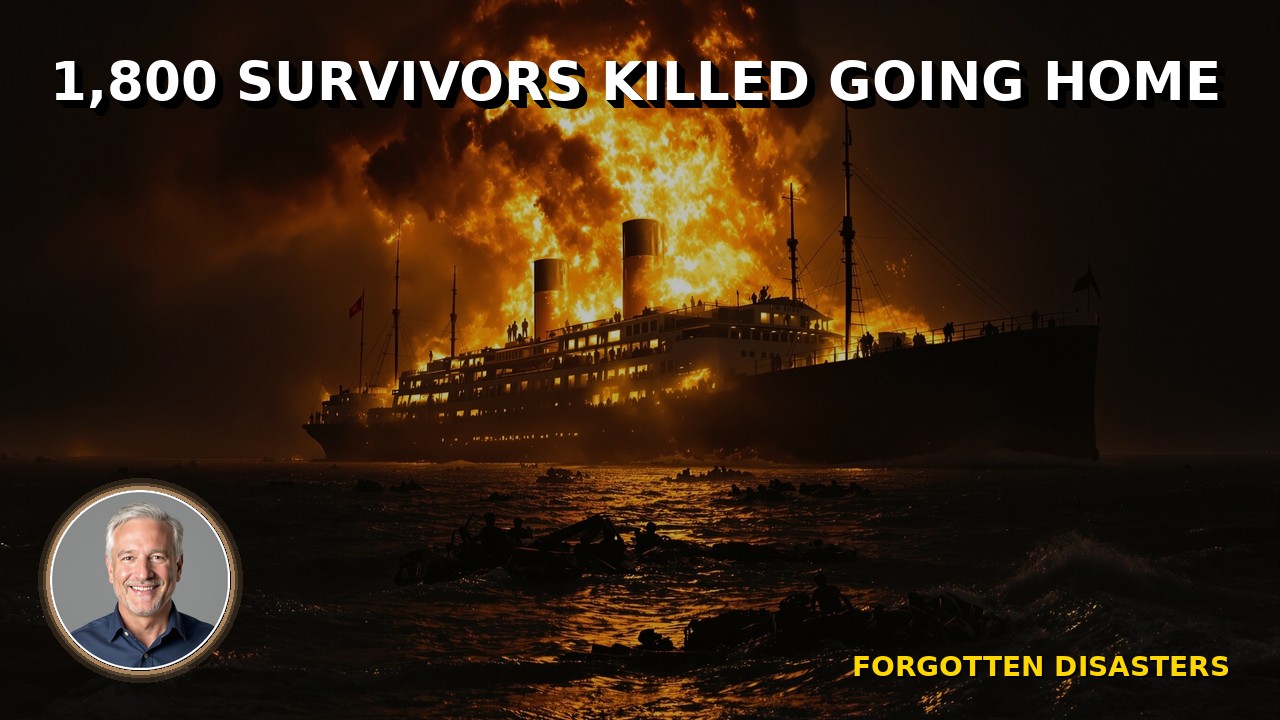
In April 1865, as the war finally ended, Fies joined nearly 2,000 other recently liberated prisoners of war aboard the SS Sultana for transport north. The steamboat, legally certified to carry just 376 passengers, was criminally overloaded with men desperate to return home. On April 27, 1865—just four days after John Wilkes Booth was killed and while the nation remained transfixed by Lincoln’s assassination—the Sultana’s overworked boilers exploded in the pre-dawn darkness.
Fies found himself thrown into the frigid Mississippi River along with hundreds of other men, many too weak from their imprisonment to swim. The explosion killed hundreds instantly; hypothermia, drowning, and burns claimed hundreds more. In a cruel irony, men who had survived the deliberate cruelties of Andersonville now faced death from a combination of corporate greed, government negligence, and mechanical failure.
What makes Fies’s story particularly significant is not just his survival, but what his experience reveals about how America treated its returning veterans. The Sultana disaster claimed more American lives than the Titanic, yet it was immediately overshadowed by ongoing coverage of Lincoln’s assassination and funeral. No national day of mourning was declared, no comprehensive federal investigation was completed, and the story vanished from public memory with shocking speed.
Legacy of Forgotten Sacrifice
Sergeant Fies represents thousands of Civil War veterans whose suffering continued long after Appomattox. His journey from Ohio farm to Andersonville to the Mississippi River bottom illustrates how ordinary Americans bore extraordinary costs for preserving the Union—costs that the nation was often too exhausted, distracted, or indifferent to fully acknowledge.
The rapid forgetting of the Sultana disaster, despite its massive death toll, reveals how Civil War America processed trauma and loss. A nation that had endured 600,000 war deaths seemed to have reached its capacity for grief. Stories like Fies’s were buried beneath the urgent work of reconstruction and the myth-making that would transform the Civil War’s messy realities into cleaner narratives of heroism and reconciliation.
Fies’s survival of both Andersonville and the Sultana made him part of an extremely small group of men who witnessed the full spectrum of Civil War suffering. His story matters because it connects individual endurance to broader patterns of how societies remember and forget their most painful chapters. In an era when the Civil War’s meaning remains contested, Sergeant William Fies reminds us that behind every statistic were individuals who paid prices most of us can barely imagine.