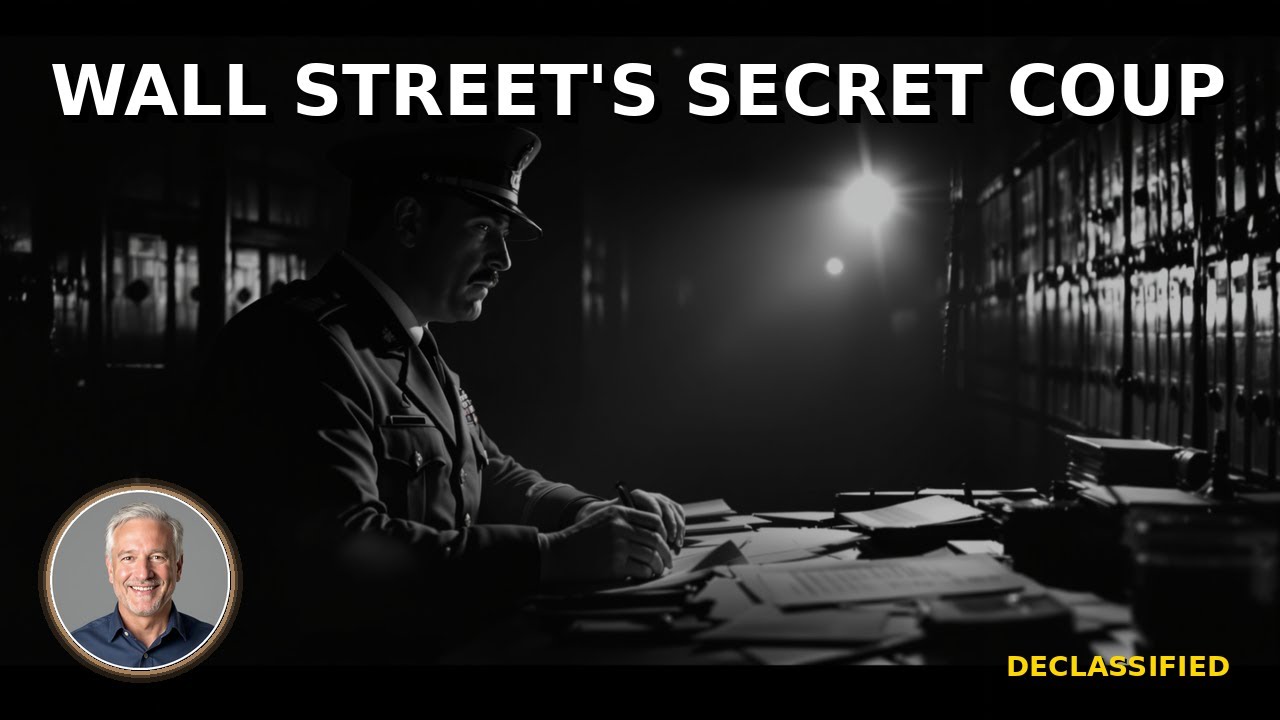
Major General Smedley Darlington Butler stands as one of the most decorated Marines in American history and one of its most unlikely whistleblowers. A career military officer who spent 34 years serving his country around the globe, Butler underwent a dramatic transformation from imperial warrior to anti-war activist—a journey that culminated in his explosive testimony about a fascist plot to overthrow President Franklin D. Roosevelt.
The Making of a Military Legend
Born in 1881 to a prominent Quaker family in Pennsylvania, Butler seemed destined for a different path than his pacifist upbringing might suggest. His father, Thomas Butler, served in Congress, giving young Smedley early exposure to the intersection of politics and power. At just 16, Butler lied about his age to join the Marines during the Spanish-American War, beginning a military career that would span four decades and earn him two Medals of Honor—one of only 19 people ever to receive this distinction twice.
Butler’s early career embodied American imperial ambition at its peak. He fought in the Philippines (1899-1901), China during the Boxer Rebellion (1900), Nicaragua (1912), and Haiti (1915-1918). His most famous military achievement came during World War I, when he commanded the 13th Marine Regiment in France and later served as commanding general of Marine Barracks Quantico. By 1929, he had reached the rank of Major General, becoming one of the most recognizable military figures in America.
The Awakening and the Business Plot
Butler’s transformation from military hero to radical critic began after his retirement in 1931. Witnessing the human cost of American interventions abroad and the corporate interests that drove them, he began speaking out against what he termed “military imperialism.” His 1935 speech and subsequent book “War Is a Racket” declared that war was primarily a profit-making enterprise that enriched corporations while sending working-class Americans to die.
But it was Butler’s role in exposing the “Business Plot” of 1933-34 that secured his place in history’s most dramatic footnotes. According to Butler’s congressional testimony, a group of wealthy businessmen and financiers—alarmed by Roosevelt’s New Deal policies—approached him to lead a fascist coup against the U.S. government. The conspirators allegedly planned to install Butler as the head of a new organization of 500,000 veterans that would pressure Roosevelt to step aside or remove him by force.
Butler played along with the plotters while secretly gathering evidence. He testified before the House Un-American Activities Committee that Gerald MacGuire, representing powerful financial interests, had offered him $3 million and the backing of major corporations to organize this veteran army. The congressional investigation confirmed the plot’s existence and the accuracy of Butler’s testimony, though no prosecutions followed—the committee concluded that while the conspiracy was real, it had not progressed far enough to warrant criminal charges.
Legacy of Conscience
Butler’s decision to expose the Business Plot rather than participate in it represented a crucial moment in American democracy. At a time when fascism was rising globally, his testimony revealed that even the United States was not immune to anti-democratic conspiracies among its elite. His actions demonstrated that personal integrity could triumph over class loyalty and financial incentives.
Beyond the coup attempt, Butler’s broader critique of American militarism proved prescient. His argument that foreign interventions primarily served corporate interests rather than national security would echo through later debates about American involvement in Vietnam, Iraq, and beyond. His phrase “war is a racket” became a rallying cry for anti-war movements and remains relevant in discussions about the military-industrial complex.
Butler died in 1940, having spent his final years as an unlikely voice for peace and democratic accountability. His story illustrates how personal experience can lead to profound political transformation, and how individual courage can preserve democratic institutions against powerful threats.