
50 States Forgotten History
New Jersey Discovered Football. Well, sort of.
The first intercollegiate football game was played in New Brunswick, NJ in 1869 — 25 years before the sport had formal rules
Inventing the phonograph, electric light system, and motion pictures
Appears in 2 documentaries
In the winter of 1879, a small laboratory in Menlo Park, New Jersey, blazed with electric light. Thomas Edison had done what dozens of scientists before him had failed to do: he had created an incandescent bulb that could burn for hours, then days, then weeks. But the bulb was almost beside the point. What Edison had actually built was the first practical electrical system — the generators, the wiring, the meters, the infrastructure — that would eventually reshape every city on earth.
Edison was born on February 11, 1847, in Milan, Ohio, the youngest of seven children. He was largely self-taught, having spent only a few months in formal schooling before his mother pulled him out and educated him at home. By his early twenties, he was already a working inventor, trading in telegraph improvements and filing patents with a frequency that alarmed his competitors.
In 1876, at the age of twenty-nine, he established what he called an “invention factory” in Menlo Park, New Jersey — the first industrial research laboratory in American history. The concept was radical: rather than waiting for inspiration to strike a lone genius, Edison hired teams of machinists, chemists, and engineers and set them to work on specific problems with specific deadlines. He famously promised “a minor invention every ten days and a big thing every six months or so.” He nearly kept that promise. The phonograph came in 1877. The practical incandescent light system came in 1879. Motion picture technology followed in the 1890s.
What made Edison genuinely different from the inventors who preceded him was his grasp of systems thinking. He understood that the light bulb alone was worthless without a way to deliver electricity to homes and businesses. His 1882 Pearl Street Station in lower Manhattan was the world’s first commercial electrical power plant, serving 59 customers on the day it opened. Within fourteen months, it was serving 508. The age of electrical infrastructure had begun.
Edison’s reputation has always carried complications. His famous “War of Currents” battle against George Westinghouse and Nikola Tesla in the late 1880s and 1890s — in which Edison aggressively campaigned against alternating current in favor of his own direct current system — was ultimately a losing campaign, both technically and commercially. AC power was more efficient for long-distance transmission, and history vindicated Westinghouse. Edison’s stubbornness on this question cost him influence and, eventually, control of the electrical industry he had done more than anyone to create.
His personal life was equally complex. He was famously difficult to work with, slept little, worked obsessively, and by many accounts was an absent and demanding father. His first wife, Mary Stilwell, whom he married in 1871, died in 1884 at the age of twenty-nine. He remarried two years later.
He also bore a complicated relationship to the suffering his discoveries sometimes enabled. His early experiments with X-ray technology following Wilhelm Röntgen’s 1895 discovery led one of his assistants, Clarence Dally, to develop fatal radiation poisoning. Edison eventually abandoned X-ray research entirely, reportedly saying he was afraid of it.
Edison died on October 18, 1931, at the age of eighty-four, holding 1,093 United States patents — a record that stood for decades. But the number of patents understates the actual scope of his influence. He did not merely invent devices. He invented the conditions under which invention could happen systematically, at scale, and in direct relationship with commercial markets.
The research and development laboratory — now a standard institution in every major corporation and university — is his organizational legacy as much as the phonograph or the light bulb. When we speak of Silicon Valley’s culture of iterative invention, of teams running rapid experiments toward commercial applications, we are describing a process Edison formalized in a wooden building in central New Jersey in 1876.
The lights that came on across the industrialized world in the decades after 1879 did not arrive by accident. They arrived because one man understood that invention was not a moment of inspiration. It was a discipline.
The definitive biography of Edison, fifteen years in the making. Morris captures both the scale of his genius and the uncomfortable edges of his character.
The first intercollegiate football game was played in New Brunswick, NJ in 1869 — 25 years before the sport had formal rules
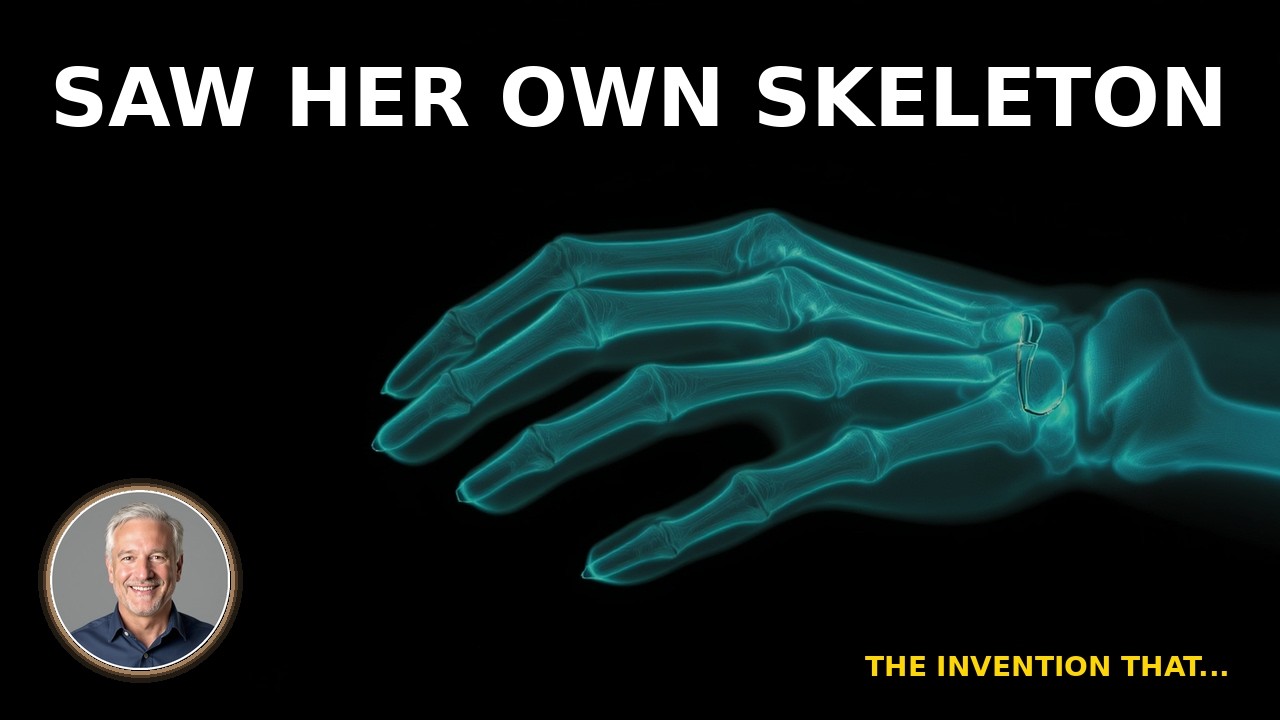
On November 8, 1895, Wilhelm Röntgen was working alone in a darkened laboratory when he noticed a fluorescent screen glowing across the room. He spent six weeks barely eating or sleeping, telling no one. When he finally showed his wife, he asked her to place her hand on a photographic plate. She saw her own skeleton and said she had seen her own death.