Tom McCall served as Oregon’s thirty-first governor from 1967 to 1975, but his significance extends far beyond the boundaries of any single state office. He was one of the most consequential environmental politicians of the twentieth century, a man who used elected power to reshape the relationship between American government and the natural world at a moment when that relationship was being contested everywhere.
A Journalist Turned Crusader
Before he entered politics, McCall spent years as a radio and television journalist in Oregon, a background that shaped everything about how he governed. He understood storytelling, symbolism, and the power of a well-timed confrontation. Born in 1913 and raised partly on a Massachusetts farm before his family relocated to the Pacific Northwest, he developed an early and visceral attachment to landscape that never left him.
His first major act of environmental advocacy came not from the governor’s office but from a television broadcast. In 1962, working as a journalist, McCall produced a documentary called Pollution in Paradise that exposed the catastrophic contamination of the Willamette River, once so choked with industrial waste and raw sewage that fish could not survive its lower stretches. The broadcast reached Oregonians in their living rooms with footage they could not ignore. It was a masterclass in using media to manufacture political will, and it worked. Cleanup efforts accelerated, and the Willamette’s recovery became one of the earliest success stories of the American environmental movement.
The Governor Who Pushed Back
When McCall won the governorship in 1966, he brought the same combative clarity to state policy. His tenure produced a cascade of landmark legislation that other states and the federal government would eventually scramble to replicate. Oregon’s Bottle Bill, signed in 1971, was the first mandatory deposit law for beverage containers in the United States, reducing roadside litter by an estimated 83 percent. The Beach Bill guaranteed public access to all 363 miles of Oregon’s coastline, blocking private development from claiming what McCall believed belonged to everyone. His administration also pioneered statewide land use planning, establishing urban growth boundaries that contained sprawl and protected farmland in ways that urban planners still study today.
What made McCall genuinely unusual among politicians of his era was his willingness to be openly hostile to unchecked growth. In a period when most governors competed fiercely to attract new industry and new residents, McCall famously told a television interviewer in 1971 that while visitors were welcome to come to Oregon, they should not plan to stay. The comment caused a national stir. He meant it, at least partly, as provocation — but it also reflected a sincere conviction that economic development divorced from environmental consequence was a form of theft from the future.
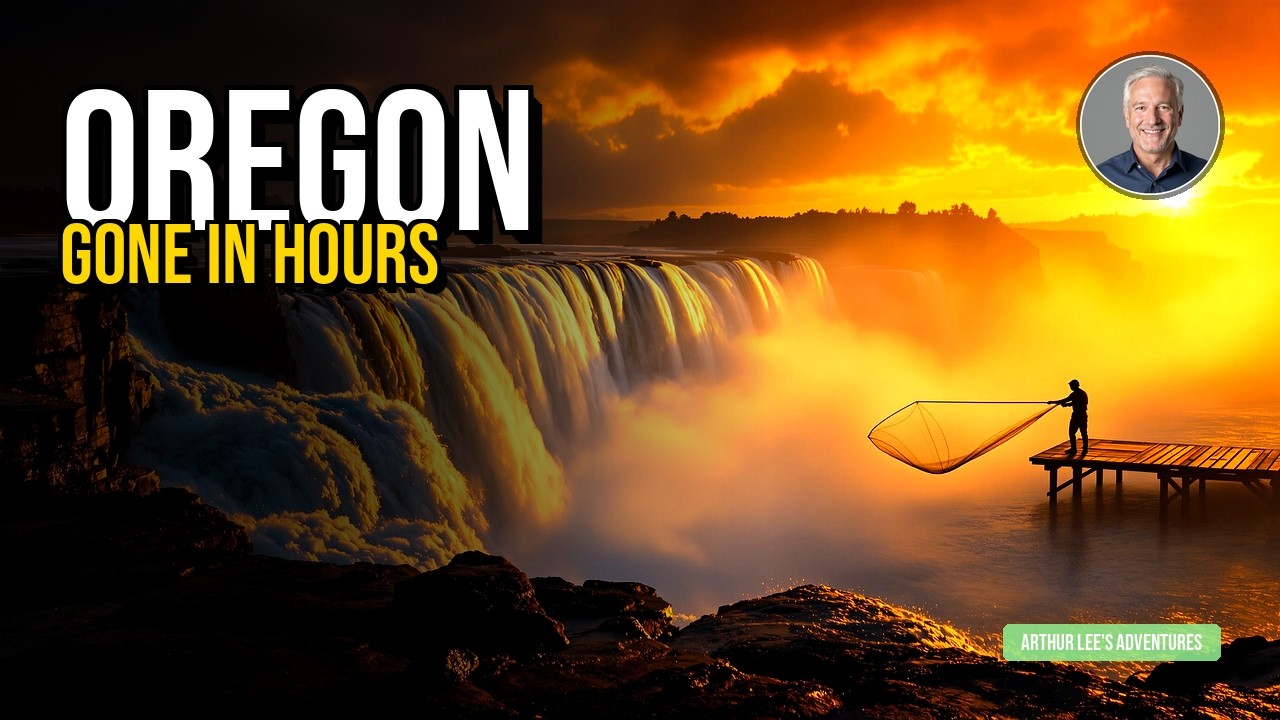
His connection to the story of Celilo Falls, the ancient Columbia River fishing site buried by The Dalles Dam in 1957, illuminates the world McCall was reacting against. The flooding of Celilo represented a model of mid-century American development that treated rivers, landscapes, and the people who depended on them as obstacles to progress rather than as values worth preserving. McCall spent his career arguing that Oregon could chart a different course, that prosperity and conservation were not opposites.
A Legacy Written in Law and Water
McCall left office in 1975 due to term limits and was later diagnosed with prostate cancer, which he discussed publicly with characteristic bluntness. He died in January 1983, having watched some of his legislative achievements survive and others come under pressure from development interests that never fully accepted his vision.
His legacy is embedded in the physical fabric of Oregon in ways that remain visible. The Willamette River runs clean enough to swim in. Oregon’s beaches remain open to every person who reaches them. The urban growth boundaries around Portland have shaped that city’s character for half a century. In an era of reflexive anti-government sentiment, McCall demonstrated that state government, wielded with imagination and nerve, could protect something that markets alone would never save.
He remains a model not just for environmentalists but for anyone who believes that political courage and public communication, combined at the right moment, can permanently alter what a place looks like and who it belongs to.