The City That Died
50,000 People Were Given 3 Hours to Leave Forever
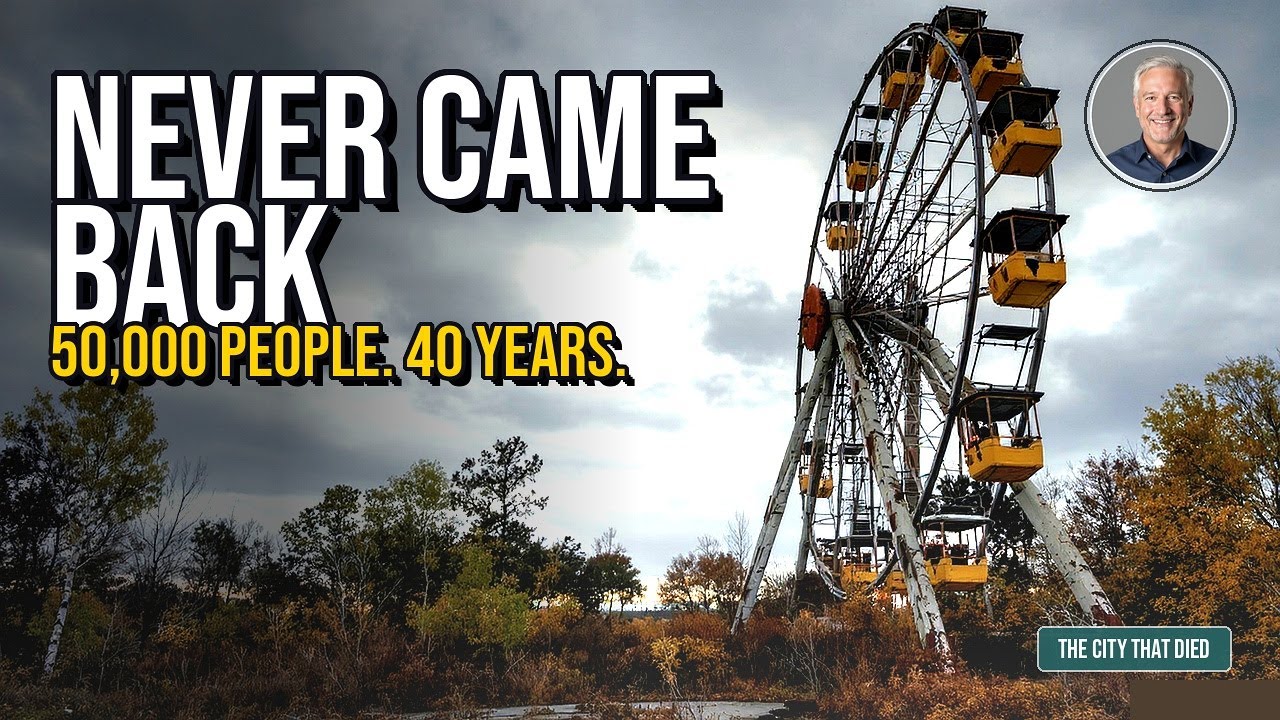
The amusement park was scheduled to open on May 1, 1986 — five days after the disaster. It never welcomed a single child.
Lead scientist investigating Chernobyl disaster
1936-1988
Appears in 1 documentary
Valery Alekseyevich Legasov was already one of the Soviet Union’s most prominent nuclear scientists when a phone call at 2 AM on April 26, 1986, thrust him into the role that would define his legacy and ultimately cost him his life. As deputy director of Moscow’s Kurchatov Institute of Atomic Energy, Legasov had spent his career advancing Soviet nuclear science. But the explosion at Chernobyl’s Reactor 4 would transform him from loyal party scientist into something far more dangerous to the regime: a man willing to tell the truth about systematic failures that reached the highest levels of Soviet power.
Within hours of the disaster, Legasov was appointed to the government commission investigating the accident. Unlike many of his colleagues who sought to minimize the crisis, Legasov immediately grasped its true magnitude. He flew over the burning reactor core in a helicopter, witnessing firsthand the graphite fires spewing radioactive material across Europe. His technical expertise made him indispensable, but his growing insistence on transparency made him increasingly isolated within the Soviet scientific establishment.
Legasov’s real significance lies not just in his role managing the immediate crisis, but in his evolution from establishment scientist to whistleblower. As the commission’s work progressed, he became convinced that the accident resulted from fundamental flaws in Soviet reactor design and safety protocols—flaws that had been deliberately concealed from the international scientific community. The RBMK reactor’s positive void coefficient, which made it inherently unstable under certain conditions, was a state secret. Control rods that could actually increase reactivity when inserted—a fatal design flaw—had never been disclosed even to the plant operators.
At the International Atomic Energy Agency meeting in Vienna in August 1986, Legasov faced an impossible choice. Sent as the official Soviet representative, he was expected to blame operator error and minimize systemic problems. Instead, he delivered a remarkably candid presentation that shocked Western scientists with its technical honesty. While he couldn’t reveal state secrets about reactor design, his careful admissions signaled that the disaster’s roots ran far deeper than human error.
This act of scientific integrity came at enormous personal cost. Upon returning to Moscow, Legasov found himself increasingly marginalized. His proposals for sweeping nuclear safety reforms were blocked. He was denied promotion to full membership in the Soviet Academy of Sciences—a devastating blow for a scientist of his stature. The man who had helped prevent an even greater catastrophe was being erased from the official narrative.
Legasov’s final act of defiance came in the form of audio recordings—five cassette tapes he secretly recorded in the months before his death by suicide on April 27, 1988, exactly two years after the Chernobyl explosion. These tapes contained his uncensored account of the disaster, the cover-up, and the systemic problems plaguing Soviet nuclear science. Hidden away for years, they eventually reached journalists and historians, providing crucial evidence for understanding both Chernobyl’s causes and the Soviet system’s inability to confront its own failures.
Legasov’s tragedy illuminates a broader pattern in Soviet history: the tension between scientific truth and political expedience that undermined technological progress throughout the USSR’s final decades. His willingness to prioritize scientific integrity over political survival makes him a unique figure—a party loyalist who ultimately chose truth over power. Today, as the world continues to grapple with nuclear safety and the challenge of speaking truth to power, Valery Legasov stands as both a cautionary tale and an inspiration: the scientist who refused to stay silent, even when silence would have saved his life.
Higginbotham extensively chronicles Legasov's crucial role and tragic fate, drawing on his secret audio recordings. The most detailed account of the scientist's investigation and ultimate sacrifice.
Uses declassified Soviet archives to reveal the political pressures Legasov faced and how his scientific integrity clashed with party doctrine.
Includes perspectives from scientists who worked alongside Legasov, capturing the human cost of speaking truth in the Soviet system.
The amusement park was scheduled to open on May 1, 1986 — five days after the disaster. It never welcomed a single child.