The City That Died
50,000 People Were Given 3 Hours to Leave Forever
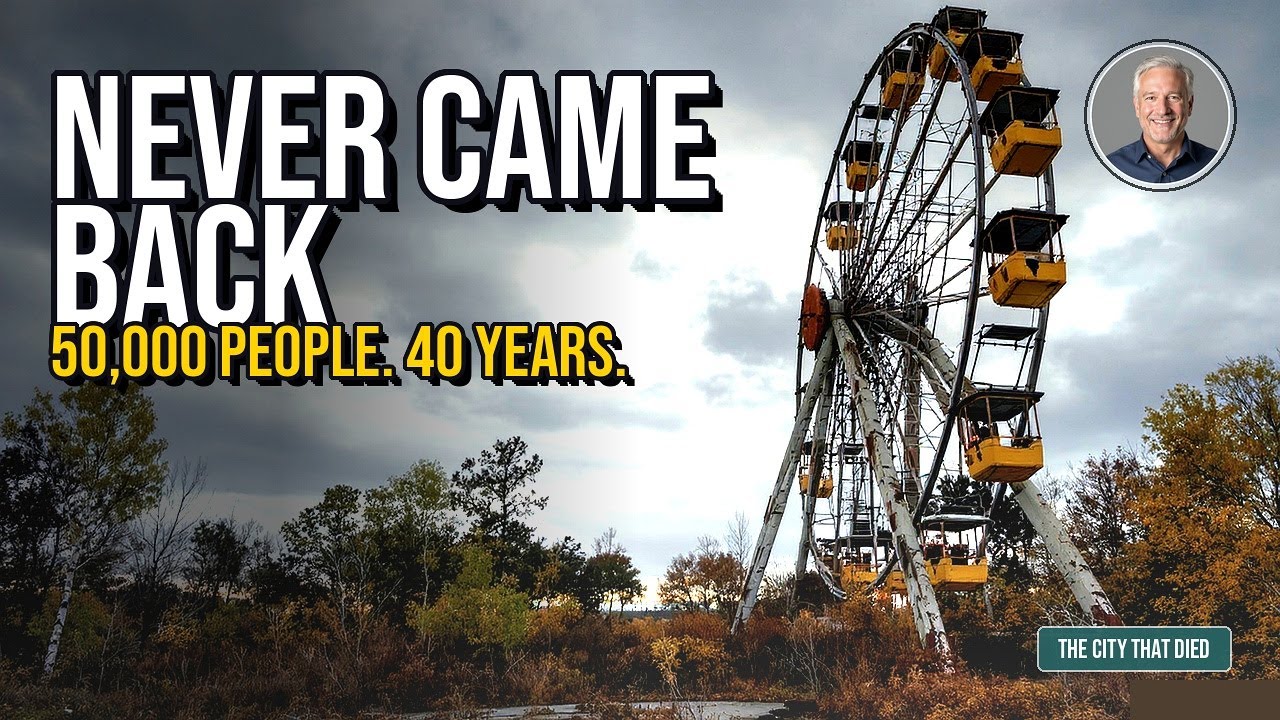
The amusement park was scheduled to open on May 1, 1986 — five days after the disaster. It never welcomed a single child.
Chernobyl first responder firefighter
1961-1986
Appears in 1 documentary
In the early hours of April 26, 1986, 25-year-old Vasily Ignatenko was asleep in his apartment in Pripyat when the alarm sounded at Fire Station No. 2. As a lieutenant in the Pripyat fire brigade, Ignatenko had responded to countless emergencies, but nothing could have prepared him for what awaited at the Chernobyl Nuclear Power Plant. The reactor four explosion had created an inferno unlike anything the world had ever seen—a fire that burned with the fury of a split atom, spewing invisible death into the night sky.
Ignatenko and his fellow firefighters arrived at the plant within minutes, their equipment designed for ordinary blazes, not nuclear catastrophe. They climbed onto the roof of the turbine hall, directly adjacent to the destroyed reactor, where chunks of radioactive graphite—each piece more lethal than standing next to an X-ray machine for hours—lay scattered like deadly confetti. The men worked with characteristic Soviet determination, dousing flames while unknowingly absorbing doses of radiation that would prove fatal within weeks. Ignatenko’s courage in those crucial first hours helped prevent the fire from spreading to reactor three, potentially averting an even greater catastrophe.
What makes Vasily Ignatenko historically significant extends far beyond his individual heroism. His story embodies the human cost of the Soviet Union’s nuclear ambitions and the culture of secrecy that made Chernobyl possible. Like many first responders that night, Ignatenko received no warning about radiation dangers—a silence that reflected decades of Soviet policy prioritizing state secrets over human safety. His death, just 14 days after the explosion at Moscow Hospital No. 6, became one of the most documented cases of acute radiation syndrome, providing crucial medical data that would inform future nuclear emergency protocols.
Ignatenko’s wife Lyudmila, who was pregnant at the time, stayed by his bedside as he succumbed to radiation poisoning, witnessing his body’s systematic breakdown. Her testimony, later recorded by Nobel laureate Svetlana Alexievich, transformed Vasily from a statistic into a human face of nuclear catastrophe. Through her words, millions came to understand that behind the technical discussions of roentgens and containment zones were real people who paid the ultimate price for decisions made in distant offices.
Vasily Ignatenko’s sacrifice illuminates a broader historical truth about the nuclear age: its greatest heroes are often those who had no choice but to confront forces beyond human comprehension. His story connects to a lineage of atomic-age first responders, from Hiroshima’s rescue workers to the “liquidators” who would later contain Chernobyl’s damage. These individuals faced invisible enemies that challenged humanity’s understanding of heroism itself.
Today, Ignatenko represents both the nobility of those who serve others and the tragic cost of nuclear hubris. His memory endures in Pripyat’s abandoned fire station, in radiation safety protocols worldwide, and in the sobering recognition that some technologies demand a vigilance that matches their power. In an age when nuclear energy remains both promise and peril, Vasily Ignatenko’s story serves as an eternal reminder that behind every technical failure stands a very human truth: courage in the face of the incomprehensible, and the price some pay for the choices of others.
Features extensive testimony from Ignatenko's wife Lyudmila about his final days, making this the most intimate portrait of his story.
Provides detailed reconstruction of Ignatenko's actions during the first hours of the disaster and his subsequent medical treatment.
The amusement park was scheduled to open on May 1, 1986 — five days after the disaster. It never welcomed a single child.