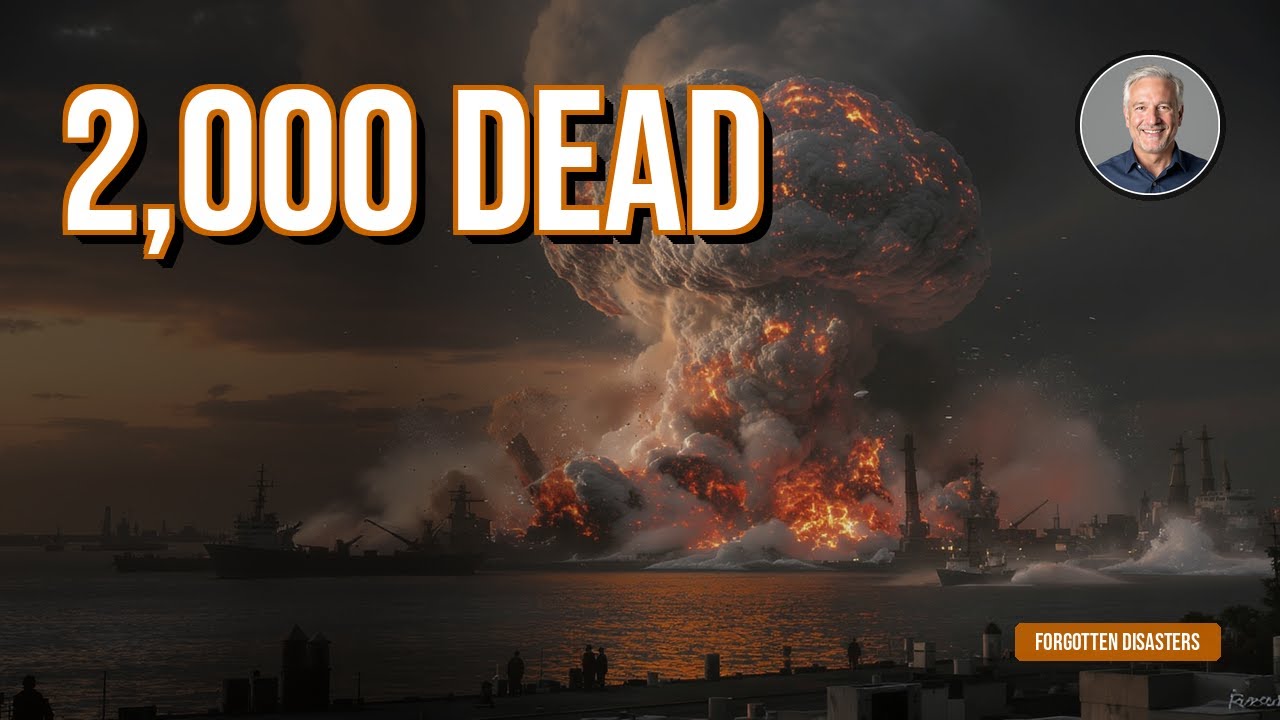
Vincent Coleman’s final telegraph message lasted just two minutes, but those 120 seconds saved hundreds of lives and transformed an ordinary railway dispatcher into one of Canada’s greatest heroes. On the morning of December 6, 1917, as two ships collided in Halifax harbor and set off a chain reaction that would produce the largest man-made explosion before the atomic age, Coleman made a choice that defined not just his legacy, but the very meaning of heroism under fire.
The Morning of December 6, 1917
Coleman arrived for his morning shift at the Richmond Railway Yard telegraph office at 8:30 AM, expecting another routine day coordinating train schedules in wartime Halifax. The bustling port city had become a crucial staging ground for Allied convoys heading to Europe, and Coleman’s job keeping rail traffic moving safely was more important than ever. But at 8:45 AM, the French cargo ship Mont-Blanc, loaded with 2,653 tons of explosives, collided with the Norwegian vessel Imo in Halifax’s narrow harbor channel.
As the Mont-Blanc caught fire and drifted toward Pier 6, Coleman and his colleagues initially joined the crowds gathering to watch the spectacular blaze. Like most Halifax residents that morning, they had no idea they were witnessing the fuse burning toward history’s most devastating accidental explosion. When a sailor ran up shouting warnings about the ship’s explosive cargo, Coleman’s colleagues fled—but Coleman himself turned back toward his telegraph key.
The Message That Changed Everything
Coleman had remembered something crucial: the overnight passenger train from Saint John, New Brunswick, carrying nearly 300 passengers, was due to arrive in Halifax at 9:05 AM. In eighteen minutes, those passengers would roll directly into the path of destruction. Racing back to his telegraph station, Coleman began tapping out the message that would define his legacy: “Hold up the train. Ammunition ship afire in harbor making for Pier 6 and will explode. Guess this will be my last message. Good-bye boys.”
The message reached the incoming train just in time. The engineer immediately stopped the locomotive and reversed course, carrying his passengers to safety. But Coleman never left his post. At 9:04:35 AM, the Mont-Blanc exploded with the force of 2.9 kilotons of TNT, instantly killing Coleman and approximately 2,000 other Halifax residents. The blast flattened the Richmond district, shattered windows 60 miles away, and created a tsunami that swept debris far inland.
A Legacy Written in Sacrifice
Coleman’s story resonates far beyond the tragic circumstances of December 6, 1917, because it captures something essential about moral courage under extreme pressure. In those final moments, faced with certain death, Coleman chose duty over survival—not the abstract duty of following orders, but the profound human duty of protecting innocent lives. His decision represents the kind of split-second moral clarity that defines true heroism.
The Halifax Explosion marked a turning point in disaster response, leading to improved international maritime safety protocols and emergency communication systems. But Coleman’s individual sacrifice became something more: a reminder that ordinary people, thrust into extraordinary circumstances, can choose to embody humanity’s highest ideals. His telegraph key was never recovered from the devastation, but his final message survived, transmitted across the continent and preserved in the historical record as testament to the power of individual conscience in moments of crisis.
Today, Coleman is remembered not just as a victim of the Halifax Explosion, but as proof that heroism isn’t about fearlessness—it’s about choosing what matters most when everything is at stake.