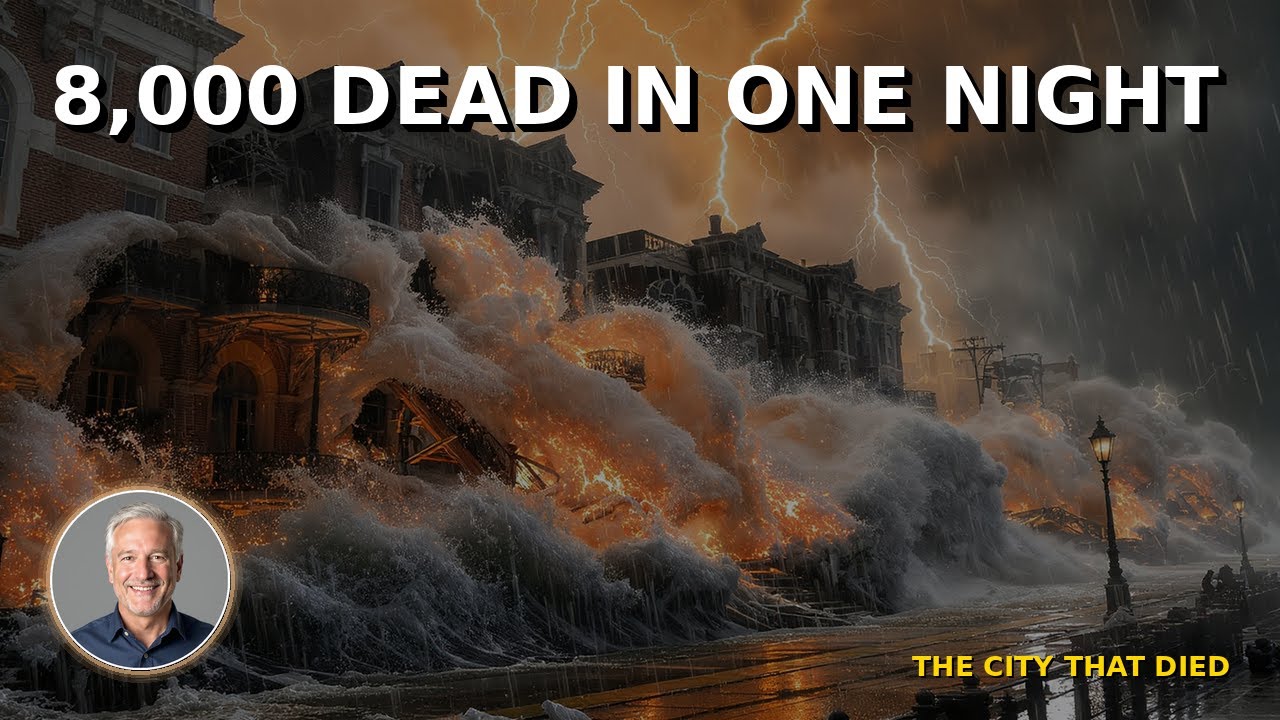
Walter Gresham emerged as one of the most unlikely heroes of the deadliest natural disaster in American history. As chief of police in Galveston, Texas, during the catastrophic hurricane of September 8, 1900, Gresham faced an unprecedented crisis that would test both his leadership abilities and his humanity in ways no law enforcement official had ever confronted.
When the Great Galveston Hurricane made landfall with winds exceeding 145 mph and a storm surge reaching 15 feet, it transformed the prosperous island city into a hellscape within hours. Gresham, who had served as police chief since 1898, found himself responsible for maintaining order in a city where traditional authority structures had completely collapsed. With an estimated 8,000 to 12,000 residents dead and the city’s infrastructure obliterated, Gresham’s small police force became the primary coordinators of rescue and recovery operations.
The scale of death overwhelmed all conventional methods of handling casualties. Bodies lay scattered throughout the debris-filled streets, trapped under collapsed buildings, and washed up continuously along the shoreline. Gresham made the difficult decision to implement mass disposal methods that violated every cultural and religious norm of proper burial. Under his direction, workers loaded corpses onto barges and dumped them three miles out in the Gulf of Mexico. When the bodies began washing back to shore with each tide, creating a gruesome cycle that lasted for weeks, Gresham authorized the construction of massive funeral pyres throughout the city.
Leadership Under Impossible Circumstances
These funeral pyres, which burned on street corners for weeks, became the most haunting symbol of Galveston’s devastation. Gresham’s decision to cremate rather than bury the dead was driven by urgent public health concerns, as the September heat and contaminated water supply threatened to trigger epidemic disease. Working with limited manpower and resources, he organized crews to systematically collect bodies and maintain the pyres around the clock.
Gresham’s approach reflected the broader transformation of American disaster response in the early 20th century. Unlike previous disasters where communities relied primarily on volunteer efforts and religious organizations, the Galveston hurricane demonstrated the need for coordinated government leadership. His methods, though controversial, established precedents for mass casualty management that would influence disaster response protocols for decades.
Legacy and Historical Significance
Walter Gresham’s handling of the Galveston recovery represents a pivotal moment in American municipal leadership under extreme crisis. His willingness to make unpopular but necessary decisions under impossible circumstances exemplified the pragmatic approach that characterized Progressive Era governance. The hurricane’s aftermath also accelerated Galveston’s adoption of the commission form of city government, a reform movement that spread to hundreds of American cities.
More broadly, Gresham’s experience illustrated how natural disasters could serve as catalysts for institutional change. The methods he pioneered for mass casualty management, emergency coordination, and public health protection during disasters became standard practices adopted by cities across America. His leadership during those horrific weeks in September 1900 helped establish the framework for modern emergency management, demonstrating that effective disaster response required strong executive authority willing to override normal social conventions when public welfare demanded it.
The image of funeral pyres burning throughout Galveston under Gresham’s direction remains one of the most powerful symbols of both human vulnerability to natural forces and the stark choices leaders must make when civilization’s normal structures collapse.