William T. Love was an ambitious entrepreneur whose failed utopian city project became one of America’s most notorious environmental disasters. In the 1890s, Love envisioned a model industrial community that would harness the power of Niagara Falls, but his grand scheme left behind a toxic legacy that would poison families for generations.
The Dream of a Model City
In 1892, Love proposed an audacious plan to build a canal connecting the upper and lower Niagara River, bypassing the famous falls. His vision extended far beyond simple transportation—he intended to create a complete industrial utopia called “Model City.” The canal would generate cheap hydroelectric power for factories, while workers would live in a carefully planned community with tree-lined streets, parks, and modern amenities.
Love’s timing seemed perfect. The 1890s marked the dawn of the electrical age, and industrialists across America were seeking reliable power sources. He successfully lobbied the New York State Legislature, securing a charter for his Niagara Falls Power and Development Company. The legislation granted him extraordinary powers, including the right to appropriate private property and generate electricity for industrial use.
Construction began in 1894 with great fanfare. Love hired hundreds of workers who began excavating what would become known as the Love Canal—a trench roughly one mile long, fifteen feet wide, and forty feet deep. For several years, the project progressed steadily, with Love promoting his vision to potential investors and industrial partners.
When Dreams Meet Reality
Love’s grand experiment collapsed within a decade, victim to both economic forces and technological change. The economic panic of 1893 had already strained his finances, but the decisive blow came from an unexpected source: the invention of alternating current electrical transmission. This breakthrough meant that electricity could now be transmitted over long distances without significant power loss, eliminating the competitive advantage of Love’s on-site power generation.
By 1910, financial reality had crushed Love’s utopian dreams. The partially completed canal sat abandoned, a testament to one man’s overreach. Love himself faded from public view, his name surviving only in the geographic feature he had created. The incomplete waterway gradually filled with groundwater, becoming a marshy area that local residents used for swimming and fishing.
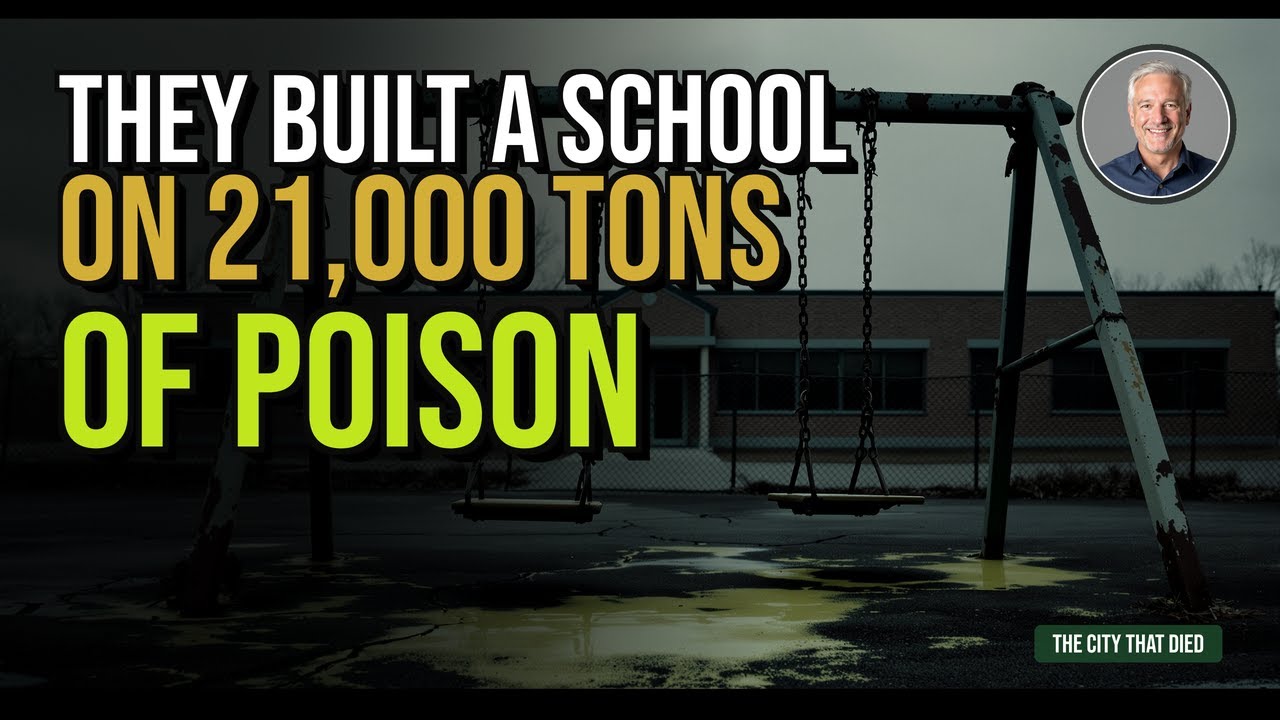
The site remained largely forgotten until the 1940s, when Hooker Chemical Company purchased the property. Between 1942 and 1953, Hooker used Love’s excavation as a convenient dump for industrial waste, burying over 21,000 tons of toxic chemicals in what had once been intended as the foundation of American industrial progress.
A Legacy Written in Poison
Love’s story embodies the hubris of Gilded Age capitalism, when entrepreneurs believed that technology and determination could overcome any obstacle. His failure was not unusual—the era was littered with abandoned schemes and bankrupt visionaries. What makes Love’s legacy unique is how his abandoned project became a receptacle for mid-century America’s casual relationship with industrial waste.
The tragic irony is profound: Love’s canal, designed to improve human life through industrial progress, ultimately became the mechanism for one of the century’s worst environmental health disasters. In the 1970s, chemicals began seeping into basements and backyards, forcing the evacuation of nearly 1,000 families and galvanizing the modern environmental movement.
William Love’s name is now permanently associated with environmental contamination and corporate malfeasance, though he died long before chemicals were ever dumped in his canal. His story serves as a cautionary tale about the unintended consequences of grand ambitions and the ways in which abandoned infrastructure can become tomorrow’s public health crisis.