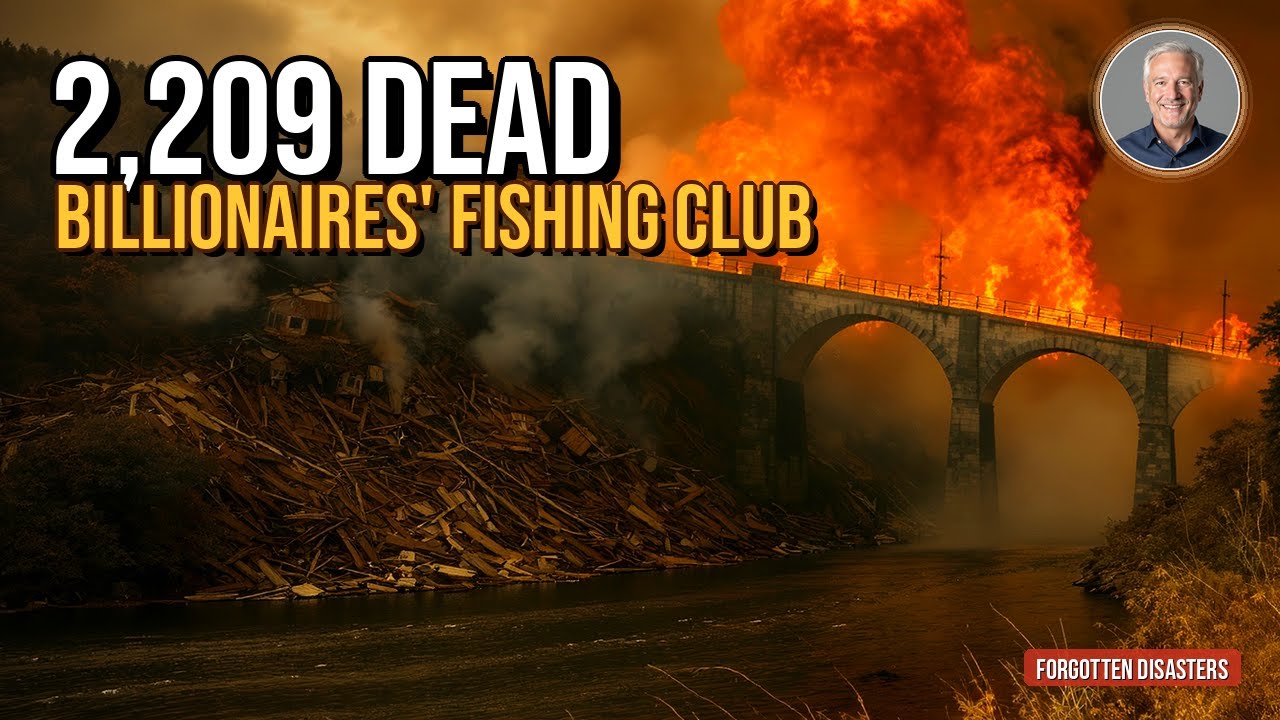
The Billionaires’ Fishing Club That Killed 2,209 People: What Really Happened at Johnstown
How a private resort for America’s wealthiest industrialists turned a Pennsylvania mountain lake into a 20-million-ton death sentence for the working families living in the valley below.
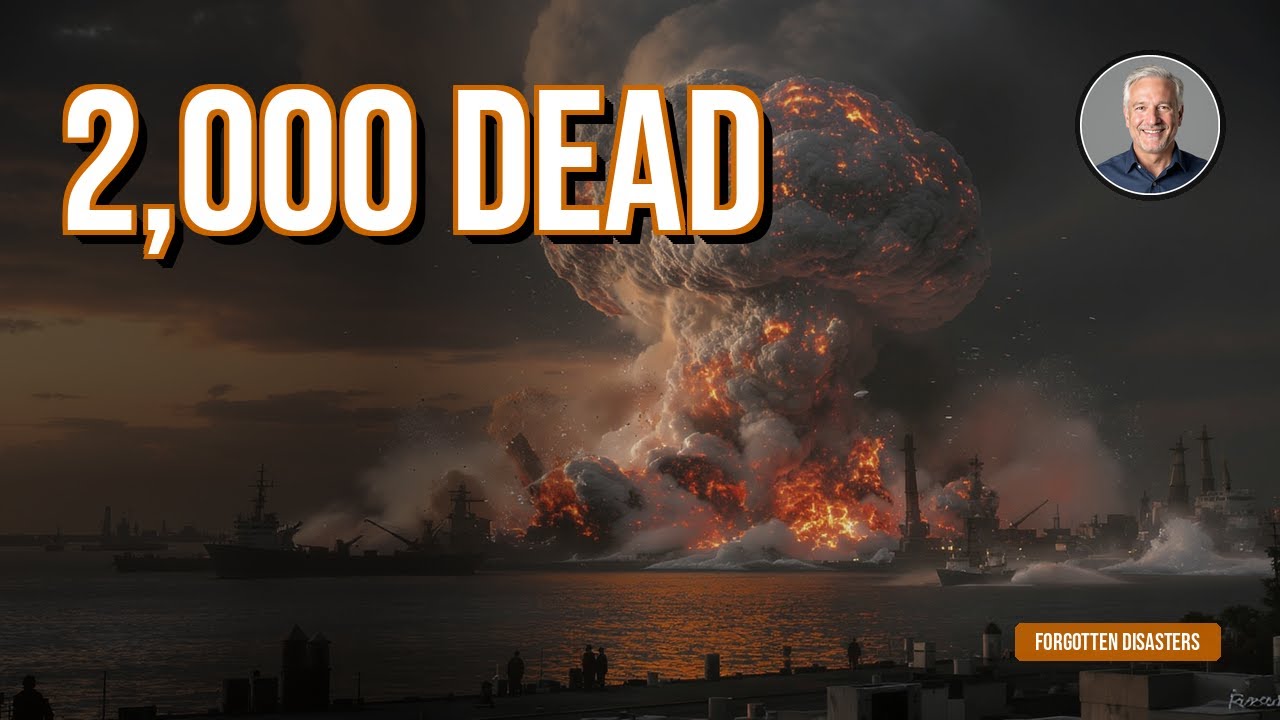
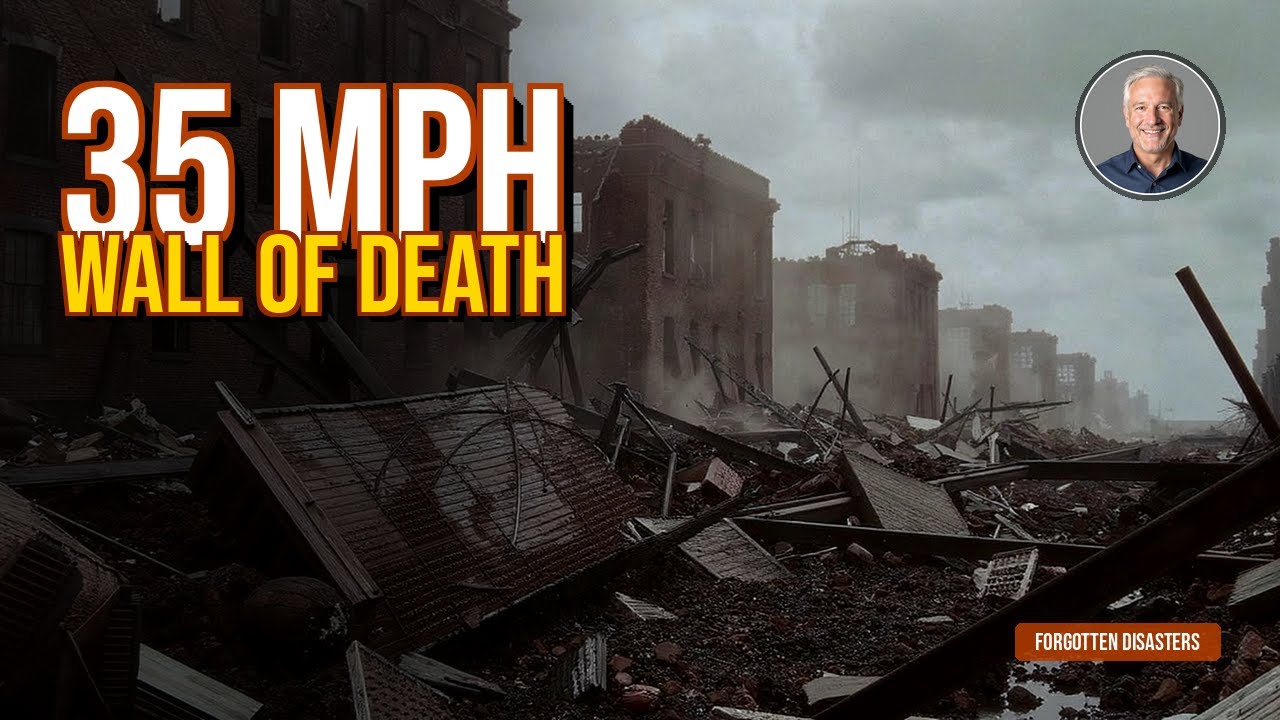
On the afternoon of May 31, 1889, a wall of water roughly 60 feet high and half a mile wide erased the city of Johnstown, Pennsylvania from the map in approximately ten minutes. The flood killed 2,209 people — more American civilians than had died in any single disaster since the Civil War. It destroyed 1,600 homes. It carried debris 90 miles downstream. It left 27,000 people homeless.
The official cause was a dam failure. The actual cause was something considerably more uncomfortable: a group of the wealthiest men in America had spent years quietly dismantling every safety feature on an earthen dam holding back 20 million tons of water, and they had done it so the fishing would be better.
That sentence deserves to sit for a moment before we continue.
The Lake Above the City
Lake Conemaugh was not a natural feature of the Allegheny Mountains. It had been created in the 1840s as a reservoir for the Pennsylvania Main Line Canal, held in place by the South Fork Dam — at the time, one of the largest earthen dams in the United States. The dam stood 72 feet tall and stretched nearly 900 feet across South Fork Creek. When full, the reservoir held approximately 20 million tons of water.
By the 1870s, the canal system had become obsolete, replaced by railroads. The dam fell into disrepair, was partially drained, and was largely forgotten by the state of Pennsylvania, which had owned it. In 1879, a group of Pittsburgh businessmen purchased the lake and the surrounding land for a private resort. They called it the South Fork Fishing and Hunting Club.
The membership list reads like a who’s-who of Gilded Age industrial power. Andrew Carnegie, whose steel empire was reshaping American manufacturing. Henry Clay Frick, Carnegie’s business partner and one of the most aggressive managers in American labor history. Robert Pitcairn, a superintendent of the Pennsylvania Railroad. Benjamin Ruff, the club’s first president. Somewhere between 60 and 100 members in total, depending on the year, each paying a $800 membership fee — roughly $26,000 in today’s money — plus annual dues.
Below their private lake, roughly 14 miles downstream through a steeply narrowing valley, sat Johnstown: a thriving steel and iron town of around 30,000 people, many of them working-class immigrants employed by the very same industrialists who were fishing above them.
Every Modification Made It Weaker
The dam the club inherited was already in rough shape. It had partially failed in 1862 and been improperly repaired. When the South Fork Fishing and Hunting Club took it over, they conducted what can only be described as a systematic dismantling of every engineering safeguard the structure possessed.
First, the discharge pipes. The original dam had a system of iron discharge pipes that allowed the water level to be controlled — excess water could be let out to relieve pressure during heavy rain. The club removed them. The iron was sold for scrap.
Second, the spillway. Without the discharge pipes, the spillway — a channel cut into the earth beside the dam that allowed overflow to pass safely around the structure — became the only pressure relief mechanism the dam had. The club installed wire mesh screens across the spillway opening to prevent their expensive stocked fish from escaping into the creek below. During heavy rains, these screens clogged with debris: leaves, branches, mud. The spillway became effectively useless precisely when it was most needed.
Third, and most critically, the height of the dam itself. To allow a road to be built across the top of the dam — convenient for club members arriving by carriage — the crest was lowered by approximately two feet. This reduction cut the dam’s capacity and, more importantly, reduced the margin between the normal water level and the top of the dam to almost nothing. Engineers who examined the structure in the years before the disaster warned that the dam was dangerously inadequate. Their warnings were forwarded to the club. The club did not respond.
Every single modification served the comfort and recreation of the members. Every single modification made the structure less capable of surviving a serious rainstorm.
May 30–31, 1889: The Storm
The storm that arrived over western Pennsylvania on May 30, 1889 was extraordinary. Some gauges recorded 6 to 8 inches of rain in 24 hours. The watershed above Lake Conemaugh was saturated. By the morning of May 31, the lake was rising at a rate that alarmed even the club’s own employees.
By mid-morning, water was flowing over the crest of the dam. Workers attempted frantically to raise the height of the spillway, to cut new overflow channels, to do anything that might relieve the pressure. Nothing worked. At approximately 3:10 PM, the dam gave way.
The wave that descended the valley was not, by contemporary accounts, simply a wall of water. It was a moving mass of debris — buildings, trees, railroad cars, locomotives, barbed wire from a nearby factory — that picked up mass and destructive power as it traveled. It reached Johnstown in approximately 36 minutes.
Survivors described hearing a roar before they saw anything. Then the wave arrived.
The Aftermath and the Question of Accountability
Clara Barton, then 67 years old and the founder of the American Red Cross, arrived in Johnstown within days and remained for five months — the longest deployment the Red Cross had undertaken to that point. She oversaw the distribution of over $2.5 million in relief funds and supervised the construction of temporary hotels to house survivors. Her work at Johnstown established the organizational model the Red Cross would use for decades.
Daniel Morrell, the former director of Cambria Iron and one of the most prominent voices in the pre-disaster years warning about the dam’s condition, had died in 1885 — four years before his fears were vindicated in the worst possible way.
As for the club members, including Carnegie and Frick: they faced no criminal charges. No member was ever prosecuted. Multiple civil lawsuits were filed by survivors and victims’ families, and every single one was dismissed. The club’s legal defense rested on the argument that the flood was an “act of God” — a legal doctrine that proved remarkably convenient for wealthy defendants throughout the Gilded Age.
Carnegie donated $10,000 to relief efforts and built a library in Johnstown. The library still stands. The 2,209 dead had no comparable monument for many years.
Frick contributed to relief efforts as well, then returned to Pittsburgh and resumed his career. Three years later, he would oversee the Homestead Strike of 1892, bringing in Pinkerton agents against Carnegie Steel workers — a violent confrontation that left ten people dead and became one of the defining labor conflicts in American history.
Johnstown and the Architecture of Gilded Age Impunity
The Johnstown Flood is not simply a story about a dam. It is a story about how power organizes itself to avoid consequences.
The South Fork Fishing and Hunting Club was private property. The dam was on private property. The modifications were made by private citizens to private infrastructure. Under the legal framework of the late 19th century — a framework that had been substantially shaped by the lobbying and influence of the very industrialists who belonged to clubs like this one — private property rights were nearly sacrosanct, and the obligations of wealthy private actors to the public whose safety their decisions affected were minimal to nonexistent.
This was not an accident of law. It was a construction of law, built over decades by the same class of people who were now standing beside a broken dam expressing their condolences.
The Johnstown Flood did not immediately produce sweeping regulatory reform. But it did shift public sentiment in ways that would eventually feed the Progressive Era — the belief that private wealth carried public obligations, that industrial power required public oversight, that the gap between the fishing clubs on the hilltops and the working families in the valleys below was not simply a fact of nature but a political choice that could be made differently.
Why This Story Still Matters
Infrastructure disasters caused or worsened by negligent private actors remain a recurring feature of American life. The legal doctrine of limited liability for corporate and wealthy private defendants has been refined, not abolished. The gap between those whose decisions create risk and those who bear the consequences of those decisions remains as structurally embedded as it was in 1889.
What makes the Johnstown Flood distinctive — and distinctively instructive — is how naked the mechanism was. There was no complex financial instrument obscuring the connection between cause and effect. There was no ambiguous regulatory gray area. A group of rich men had a lake. Below the lake were tens of thousands of people who had no say in how that lake was managed. The rich men made choices that served their recreational preferences. The people below paid with their lives.
The fish screens are what stay with you. Someone looked at a spillway — the last line of defense between a mountain lake and a city — and installed a screen to keep the fish in. Someone made that decision, and no one stopped them, because no one who could have stopped them had any reason to care about the people in the valley.
That is not ancient history. That is a pattern with a very long tail.
The Johnstown Flood National Memorial is located in South Fork, Pennsylvania, and is maintained by the National Park Service. The site includes the remnants of the South Fork Dam and a visitor center documenting the events of May 31, 1889.